Overview: Beyond Luck, The Math of Winning Poker
Welcome, fellow Malaysian poker enthusiasts! Whether you're playing with friends in a cozy mamak session, joining a home game in Kuala Lumpur, or battling it out on poker online Malaysia platforms, one truth stands tall: Texas Hold'em is not just a game of luck. While anyone can win a hand with a lucky river card, consistent winners—the true 'sifus' of the table—understand that poker is a game of skill, information, and calculated decisions. The secret weapon that separates the casual player from the profitable shark is a deep understanding of two fundamental concepts: Pot Odds and Equity. Forget just 'feeling' if you should call a bet. It's time to learn the mathematics that underpins every profitable decision at the poker table. This guide is designed specifically for you, the Malaysian player, to demystify these concepts. We'll break down the 'kiraan' (calculations) in a simple, step-by-step way, using examples you can relate to. Mastering pot odds and equity is your ticket to moving beyond guessing and starting to play with the confidence of a professional. It's the difference between gambling and investing your chips wisely. This guide will provide you with the tools to analyse any situation on the flop, turn, or river, and determine mathematically whether a call, raise, or fold is the most profitable long-term play. Ready to elevate your game and start stacking chips? Let's dive in.
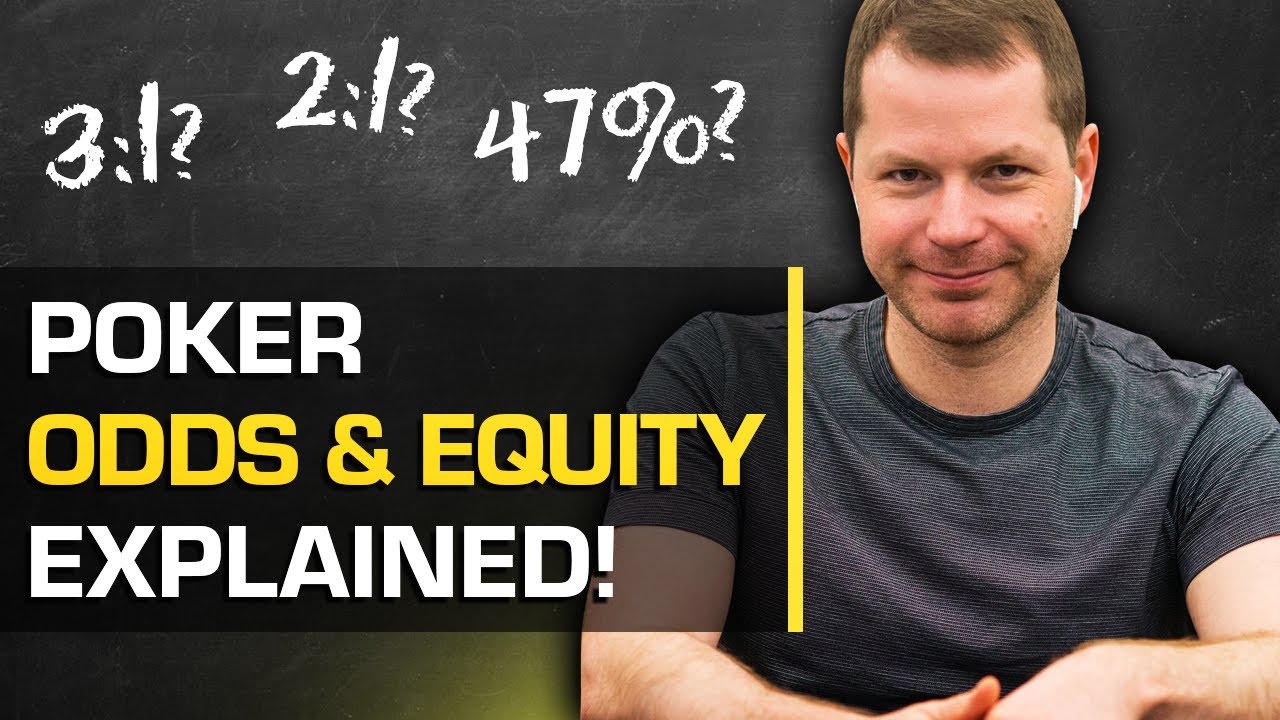
Understanding the core math is the first step. The video above gives a great visual introduction to the concept of pot odds, a critical skill for any aspiring player. We will build on this foundation throughout this guide, applying it to real-world scenarios you'll encounter in every single session you play.
Rules & Setup: The Foundation for Calculation
Before we can calculate odds, we must have a flawless understanding of the game's structure. While most Malaysian players know the basic flow of Texas Hold'em, let's quickly recap the key stages, as each one is a decision point where our mathematical strategy will be applied. Think of this not as a beginner's lesson, but as a blueprint of the battlefield.
The Basic Structure
Texas Hold'em is a community card game. Each player receives two private cards ('hole cards'), and five community cards are dealt face-up in the middle of the table. The goal is to make the best possible five-card poker hand using any combination of your two hole cards and the five community cards.
The Betting Rounds
The game unfolds in four distinct betting rounds. Your ability to calculate pot odds and equity is crucial in every round after the first.
- Pre-Flop: The action starts after everyone gets their two hole cards. The player to the left of the big blind begins. You can call, raise, or fold. This round is about the potential of your starting hand. While pot odds are less direct here, the concept of risk vs. reward is already in play.
- The Flop: Three community cards are dealt face-up. This is the 'moment of truth' where your hand takes shape and where our guide truly comes into play. You now have five cards available (your two hole cards + three flop cards) to assess your hand's strength and potential. Another round of betting occurs, starting with the first active player to the left of the dealer button.
- The Turn: A fourth community card is dealt. This card can complete your hand, your opponent's hand, or be a complete blank. It often makes betting decisions more expensive and critical. A final round of betting follows.
- The River: The fifth and final community card is dealt. All the cards are now on the table. There is one last round of betting. After this, if more than one player remains, we have the 'showdown'.
- The Showdown: The remaining players reveal their hole cards. The player with the best five-card hand, using any combination of their two hole cards and the five community cards, wins the pot.
Understanding this sequence is non-negotiable. Why? Because you can only calculate your chances of winning (equity) and the reward for taking that chance (pot odds) when you know how many cards are yet to come. A flush draw on the flop has two chances to hit (the turn and the river), while the same draw on the turn only has one. This fundamental difference dramatically changes the math and, consequently, your correct decision.
Strategy Guide: The Sifu's Secret - Pot Odds & Equity
This is the heart of our guide. Here, we transform you from a player who hopes to win into one who expects to win over the long run. We will learn to think in terms of probabilities and expected value, not just strong or weak hands.
Part 1: Pot Odds - Are You Getting the Right Price?
Imagine you're at a pasar malam. You see a watch for RM50. Is it a good price? You don't know, unless you know its actual value. Pot odds is the 'price' the pot is offering you to continue in a hand.
Definition: Pot odds are the ratio between the size of the total pot and the amount you must pay to call the bet.
How to Calculate Pot Odds (Step-by-Step):
Let's use a simple example. You're playing online, and the currency is in RM.
- The pot has RM100 in it before the current betting round.
- Your opponent, an aggressive player from Penang, bets RM50.
- The total pot is now RM100 + RM50 = RM150.
- You have to call RM50 to stay in the hand.
Step 1: Calculate the final pot size if you call.
Current Pot (RM100) + Opponent's Bet (RM50) + Your Call (RM50) = RM200.
Step 2: Compare the cost of your call to the final pot size.
Your call is RM50. The final pot you could win is RM200.
Step 3: Express this as a ratio.
You are risking RM50 to win RM200. This is a ratio of 200:50, which simplifies to 4:1. Your pot odds are 4-to-1.
Step 4: Convert to a Percentage (Crucial for comparison later).
To convert a ratio like X:Y to a percentage, use the formula: Y / (X + Y).
In our example (4:1), it's 1 / (4 + 1) = 1/5 = 20%.
This means you need to win this hand more than 20% of the time for the call to be profitable in the long run.
Part 2: Equity - What's Your Real Chance to Win?
Pot odds tell you the 'price'. Equity tells you the 'value'. Equity is your percentage chance of winning the hand at showdown.
Definition: Equity is the share of the pot that is rightfully yours based on your probability of winning.
Calculating exact equity is complex, but there's a brilliant shortcut every poker sifu uses: The Rule of 2 and 4.
How to Calculate Equity (The Easy Way):
Step 1: Count Your 'Outs'.
An 'out' is any card left in the deck that will improve your hand, likely making it the winning hand.
Example: You have A♥ K♥ (Ace-King of hearts). The flop comes J♥ 7♥ 2♠. You have a flush draw. You want to see another heart. How many are left?
There are 13 hearts in a deck. You see four of them (two in your hand, two on the flop).
13 - 4 = 9 hearts remaining. You have 9 outs to make your flush.
Step 2: Apply the Rule of 2 and 4.
- On the Flop (with two cards to come): Multiply your outs by 4 to get your approximate percentage chance of hitting your hand by the river. In our example: 9 outs x 4 = 36%. You have roughly a 36% chance to make your flush.
- On the Turn (with one card to come): Multiply your outs by 2 to get your approximate percentage chance of hitting on the river. If you missed on the turn and still have 9 outs: 9 outs x 2 = 18%. You now have an 18% chance.
Part 3: The Golden Rule - Putting It All Together
This is the moment it all clicks. You now have the two pieces of the puzzle: the price (pot odds) and the value (equity).
The Golden Rule of Poker: You should call a bet if your equity is greater than the required pot odds percentage.
Equity > Pot Odds % = Profitable Call
Let's revisit our example:
- Pot Odds: The pot was RM150, and you had to call RM50. We calculated your required pot odds as 20%.
- Equity: You had a flush draw with 9 outs. We calculated your equity as ~36% (using the Rule of 4 on the flop).
The Decision:
Your Equity (36%) is much greater than the Pot Odds % (20%).
This is a clear, mathematical, and highly profitable CALL.
Even if you miss your flush this time, making this call is the right decision. If you repeat this exact situation 100 times, you will win 36 times and lose 64 times. But every time you win, you win a bigger pot than what you risked. This is how professional players make money consistently.
Part 4: Implied Odds - The Art of Future Money
Sometimes, your immediate pot odds aren't good enough. But that doesn't always mean you should fold. Implied odds refer to the money you can expect to win on future streets (turn and river) if you hit your hand.
Consider this: Pot is RM100. Opponent bets RM100. You must call RM100. The pot is offering you 2:1 odds (RM200 pot for a RM100 call), which requires 33% equity. Your flush draw only gives you 36% equity with two cards to come, but let's say you're on the turn. Your equity is now only 18%. Based on direct odds, this is a fold.
BUT! If you know your opponent has a very strong hand (like a set) and a large stack of chips behind, you can expect to win a lot more money from them if you hit your flush on the river. This 'implied' extra money can make the initial unprofitable call a very profitable one.
Implied odds are best when:
- Stacks are deep: Both you and your opponent have lots of chips left to bet.
- Your draw is hidden: Your opponent won't see it coming, like hitting a straight with 6-7 on an A-K-8-9 board.
- Your opponent is aggressive or a 'calling station': They are likely to pay you off.
Odds & Statistics: The Numbers Behind Winning
Poker is a game of incomplete information, but statistics can illuminate the path. Understanding the probability of common situations is essential for quick, accurate decision-making at the table. These numbers are the foundation upon which your equity calculations are built. Below is a table of common drawing hands you'll encounter on the flop, their outs, and their probability of improving. Memorising these will give you a massive edge.
The percentages are your equity. You can compare these numbers directly to the pot odds you're being offered to make an informed decision instantly.
| Hand Draw (On the Flop) | Outs | Equity (Turn or River) % | Equity (River Only) % | Min. Pot Odds to Call |
|---|---|---|---|---|
| Flush Draw (e.g., 4 cards to a flush) | 9 | ~35% | ~19.6% | 2:1 |
| Open-Ended Straight Draw (OESD) | 8 | ~31.5% | ~17.4% | 2.2:1 |
| Flush Draw + OESD Combo | 15 | ~54.1% | ~32.6% | Almost any |
| Gutshot Straight Draw (Inside Straight) | 4 | ~16.5% | ~8.7% | 5:1 |
| Pair + Flush Draw | 12-14 | ~46%-51% | ~26%-30% | 1:1 to 1.2:1 |
| Two Overcards (e.g., AK on a J-T-2 board) | 6 | ~24.1% | ~13% | 3:1 |
| Set (looking to make a Full House/Quads) | 7-10 | ~28%-38% | ~15%-22% | Varies |
| Pair (looking to make Two Pair/Trips) | 5 | ~20.3% | ~10.9% | 4:1 |
Understanding the Table
- Hand Draw: The type of incomplete hand you hold after the flop.
- Outs: The number of cards in the deck that will complete your draw.
- Equity (Turn or River) %: Your chance of hitting your hand on either the turn OR the river. This is calculated using the (Outs x 4) approximation, with the more precise value listed. Use this number when facing a bet on the flop.
- Equity (River Only) %: Your chance of hitting your hand on the river, assuming you missed on the turn. This is calculated using the (Outs x 2) approximation. Use this when facing a bet on the turn.
- Min. Pot Odds to Call: This shows the minimum pot odds ratio you need for a call to be break-even. If the odds are better (e.g., you need 3:1 but are getting 5:1), it's a profitable call.
Key Pre-Flop Probabilities
Your journey starts before the flop. Knowing the rarity of premium hands helps in judging your own hand's strength and your opponents' likely holdings.
- Chance of being dealt Pocket Aces (AA): 0.45% (1 in 221 hands). When you get them, play them aggressively!
- Chance of being dealt any Pocket Pair: 5.9% (1 in 17 hands).
- Chance of being dealt AK (suited or offsuit): 1.2% (1 in 83 hands).
- Chance of flopping a set (with a pocket pair): ~12%. This is a crucial number. You won't hit a set most of the time, so you need good implied odds to play small pairs.
- Chance of flopping a flush (with two suited cards): 0.84%. It's very rare. You are far more likely to flop a flush draw.
By internalising these statistics, you arm yourself with knowledge. When an opponent makes a big bet, you won't be guessing. You'll be evaluating the price, checking your equity based on these stats, and making a calculated, long-term profitable decision. That's the Malaysian sifu way.
How to Play: Applying Math in a Malaysian Game
Theory is great, but let's bring it to the table. Here's a practical, step-by-step walkthrough of a hand, applying our newfound knowledge in a typical Malaysian online or home game scenario.
The Scene: You're playing a RM1/RM2 No-Limit Hold'em cash game. You have a stack of RM200. An opponent, let's call him 'Uncle Lim', is a tight player who you've seen only play strong hands. He also has about RM200.
Step 1: Pre-Flop
The action folds to you in middle position. You look down at A♦ 9♦. This is a decent speculative hand. You raise to RM6 (a standard 3x the big blind). Uncle Lim, in the big blind, calls. Another player folds.
Pot Size: RM1 (small blind) + RM6 (your raise) + RM6 (Uncle Lim's call) = RM13.
Step 2: The Flop - The Decision Point
The flop comes down: K♦ 7♦ 2♠.
This is an excellent flop for you! You have the Ace-high flush draw (the nut flush draw). Uncle Lim, being first to act, checks.
You have two options: check behind to see a free card, or bet. Given you have a strong draw and initiative, a bet is often the better play. You bet RM8 into the RM13 pot (a little over half pot).
Now, Uncle Lim thinks for a moment... and check-raises to RM25! Uh oh.
This is where amateurs panic. We do the math.
Action: You must decide whether to call Uncle Lim's RM25 raise.
Analysis in Real Time:
- Calculate the Pot Odds:
- The pot was RM13. You bet RM8. Uncle Lim raised to RM25.
- Total in the pot before your decision: RM13 (pre-flop pot) + RM8 (your bet) + RM25 (Uncle Lim's raise) = RM46.
- The cost for you to call is not RM25. You already put RM8 in. So you need to add RM17 more (25 - 8).
- So, you are risking RM17 to win a pot of RM46.
- Pot Odds = RM46 : RM17. This is roughly 2.7 : 1.
- Let's convert to percentage: 17 / (46 + 17) = 17 / 63 = ~27%.
- Your 'price' to call is 27%. You need more than 27% equity to call profitably.
- Calculate Your Equity:
- What are your outs? You have the nut flush draw. There are 13 diamonds in the deck. You see four (A♦, 9♦ on your hand, K♦, 7♦ on the board). So, 13 - 4 = 9 outs.
- Using the Rule of 4 (since we are on the flop with two cards to come): 9 outs x 4 = 36% equity.
- Make the Golden Rule Decision:
- Your Equity (36%) is greater than the Pot Odds % you need (27%).
- Equity (36%) > Pot Odds (27%) = PROFITABLE CALL.
- You calmly make the call of RM17.
Step 3: The Turn & Implied Odds
The turn card is the 3♣. A complete blank. The board is now K♦ 7♦ 2♠ 3♣.
Pot Size: RM13 + RM8 + RM25 + RM17 = RM63.
Uncle Lim, who is known for being tight, now bets RM40. This is a big bet, more than half the pot. Let's re-evaluate.
Second Analysis:
- New Pot Odds:
- The pot has RM63. Uncle Lim bets RM40. Total pot is now RM103.
- You must call RM40 to win a pot of RM103.
- Pot Odds = RM103 : RM40. This is roughly 2.5 : 1.
- Percentage required: 40 / (103 + 40) = 40 / 143 = ~28%.
- New Equity:
- You still have 9 outs to hit your flush.
- But now there is only ONE card to come (the river). We must use the Rule of 2.
- 9 outs x 2 = 18% equity.
- The Decision & Implied Odds:
- Your Equity (18%) is now LESS than the Pot Odds % you need (28%).
- Based on direct odds, this is a FOLD.
- BUT! Let's consider implied odds. You both started with RM200. After you call this RM40, you will have RM132 left (200 - 6 - 8 - 17 - 40). Uncle Lim will have RM129 left. If you hit your nut flush on the river, it's very likely you can get all of his remaining RM129. Your flush will be very disguised. He might have a King (like AK or KQ) and will find it hard to fold.
- So, you are not just calling RM40 to win RM103. You are calling RM40 for a chance to win his entire remaining stack of RM129. The potential reward is much higher than the immediate pot. This is a classic situation where strong implied odds can make an otherwise incorrect call, a correct one. Given the deep stacks relative to the bet, a call is justifiable.
This walkthrough shows how the math isn't static. It changes on every street. By constantly recalculating your odds and equity, and factoring in advanced concepts like implied odds based on your opponent's tendencies, you move from a simple card player to a strategic poker warrior.
Expert Verdict: From Kaki Judi to Poker Sifu
We've journeyed through the mathematical core of Texas Hold'em, from the simple definition of pot odds to the dynamic application in a high-pressure hand. The conclusion is clear and undeniable: to win consistently at poker in Malaysia or anywhere else, you must embrace the numbers. Relying on gut feelings, lucky charms, or trying to 'out-guess' your opponents without a logical framework is a recipe for long-term loss. It's the difference between being a 'kaki judi' (a pure gambler) and a true 'poker sifu' (a master of the craft).
Mastering pot odds and equity is the single most significant step you can take to elevate your game. It provides a constant, reliable guide in the chaotic world of bluffs, big bets, and bad beats. When you know your odds, you play with a quiet confidence. You're no longer a victim of the cards; you are a manager of risk and a seeker of profitable opportunities.
Here are the key takeaways to remember:
- Price vs. Value: Always think of a call in these terms. Pot odds are the price you're paying. Equity is the value of your hand's potential. Only 'buy in' when the value is higher than the price.
- The Rule of 2 and 4 is Your Best Friend: You don't need to be a math genius. This simple shortcut allows you to calculate your equity in seconds at the table. Count your outs, multiply, and you have your number.
- Every Street is a New Puzzle: The math changes with every card dealt and every bet made. Stay vigilant and recalculate. What was a correct call on the flop might be a clear fold on the turn.
- Don't Fear the Math, Embrace the Profit: For some, these calculations might seem daunting at first. But like any skill, it becomes second nature with practice. Start by practicing away from the table. Review hands you've played. Soon, you'll be doing it instinctively.
The journey to becoming a feared and respected player at the poker table is paved with discipline and a commitment to learning. By understanding and consistently applying the principles of pot odds and equity, you are building the foundation for a lifetime of profitable poker. So, the next time you're facing a big bet on a draw, take a breath. Don't let emotion guide you. Do the 'kira-kira'. Count the pot, count your outs, compare the numbers, and make the mathematically correct play. That is the path to victory.