Overview: Why Pai Gow Poker is a Malaysian Favourite
Welcome, fellow card game enthusiasts! If you've ever walked through the vibrant halls of Resorts World Genting or browsed a Malaysian online casino, you've likely seen the calm, focused tables of Pai Gow Poker. It's a game that combines the strategic depth of poker with a unique, slower pace, making it a favourite among players who prefer thoughtful gameplay over frantic betting. Unlike the high-speed action of Baccarat or the intense bluffs of Texas Hold'em, Pai Gow Poker offers a different kind of thrillâÃÂÃÂthe thrill of optimisation and endurance.
Originally derived from the Chinese domino game of Pai Gow, this modern poker variant uses cards and has a simple objective: create two poker hands from the seven cards you're dealtâÃÂÃÂa five-card 'high hand' and a two-card 'low hand'. To win, both of your hands must beat the dealer's corresponding hands. The catch? The high frequency of 'pushes' (ties), where you win one hand and lose the other, results in your bet being returned. This makes Pai Gow Poker one of the best games for extending your playtime and enjoying a long, social session at the tables without decimating your bankroll.
But to truly succeed, you need a strategy. And in the world of Pai Gow Poker, there is no strategy more reliable or easier to learn than the 'House Way'. This is the pre-determined set of rules the dealer MUST use to set their hands. By learning and mimicking the House Way, you essentially play with the same logic as the casino, minimising mistakes and ensuring you're making mathematically sound decisions. This guide is your ultimate sifu for mastering the Pai Gow Poker House Way, designed specifically for our players in Malaysia. We'll break down every rule, every hand, and every scenario so you can sit down at any table with confidence.
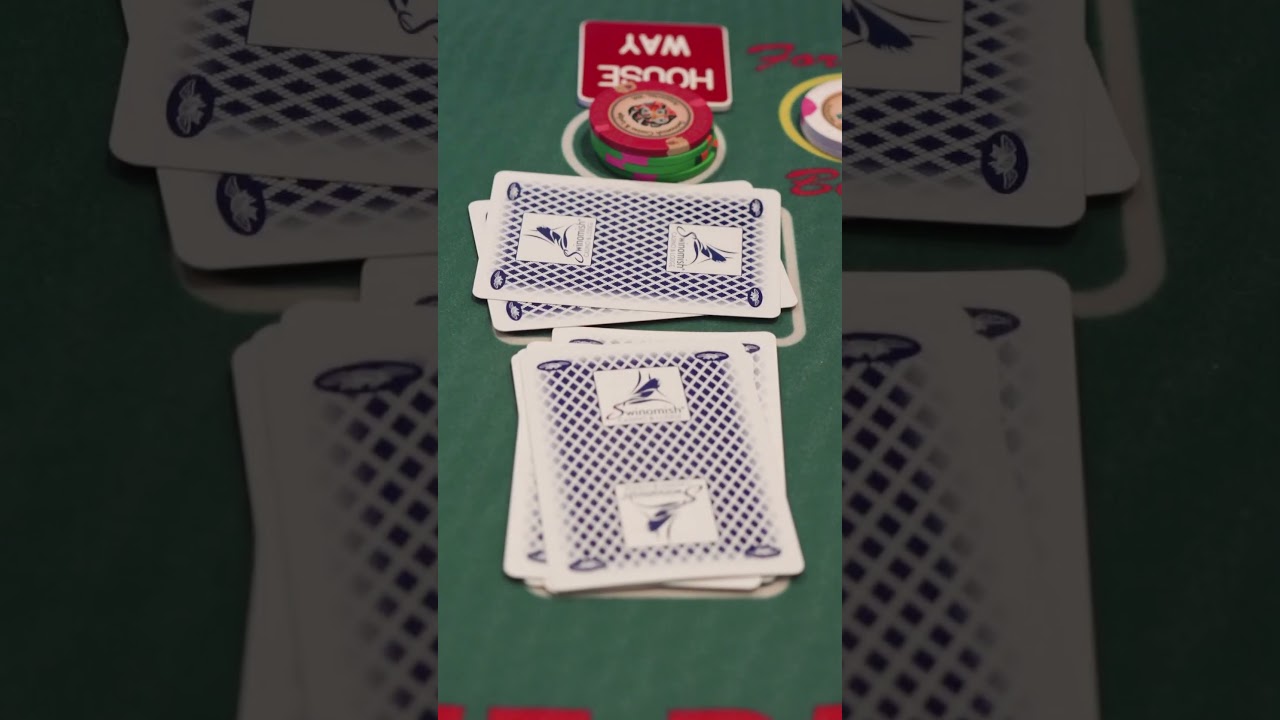
In this comprehensive guide, you'll learn not just the 'what' but the 'why' behind the House Way. We'll transform you from a hopeful beginner into a calculated player who understands the nuances of splitting pairs, preserving straights, and maximising the potential of every seven-card deal. Whether you're playing for fun with friends or aiming for serious wins at the casino, this is your complete playbook. Let's begin!
Pai Gow Poker Rules & Setup: The Foundation of Your Game
Before diving into strategy, you must have a rock-solid understanding of the rules. Pai Gow Poker might seem complex at first, but the core concepts are straightforward. Let's break it down into easy-to-digest pieces for our Malaysian players.
The Deck and The Joker
Pai Gow Poker is played with a standard 52-card deck plus one Joker. This 53-card deck is key. The Joker is a semi-wild card. Here's how it works:
- It can be used to complete a Straight.
- It can be used to complete a Flush.
- It can be used to complete a Straight Flush or Royal Flush.
- If it cannot be used for any of the above, the Joker automatically becomes an Ace.
This means having a Joker is always valuable, as it's at least an Ace. A hand with four Aces and a Joker becomes the legendary 'Five Aces', the single highest-ranking hand in the game, beating a Royal Flush.
The Objective: Beating the Banker
After placing your bet, you and the dealer (also known as the banker) are each dealt seven cards. Your goal is to arrange these seven cards into two separate poker hands:
- The High Hand (or 'Back Hand'): A five-card poker hand.
- The Low Hand (or 'Front Hand'): A two-card poker hand.
There is one golden, unbreakable rule: Your five-card High Hand must be of a higher poker rank than your two-card Low Hand. For example, if your Low Hand is a pair of 7s, your High Hand *must* be a pair of 8s or better (like two pair, a straight, etc.). If you set your hands incorrectly (a 'foul' hand), you automatically lose your bet. For the two-card hand, a pair is the best possible hand, followed by high cards (e.g., A-K beats Q-J).
Hand Rankings
Pai Gow Poker uses standard poker hand rankings, with a few small quirks:
- Five Aces (Four Aces + Joker) - The absolute best hand.
- Royal Flush
- Straight Flush
- Four of a Kind
- Full House
- Flush
- Straight
- Three of a Kind
- Two Pair
- One Pair
- High Card
Important Note on Straights: The A-2-3-4-5 straight, often called the 'Wheel', is considered the second-highest straight in Pai Gow Poker, ranking just below A-K-Q-J-10 but above K-Q-J-10-9.
The Showdown: How You Win, Lose, or Push
Once all players have set their hands, the dealer reveals and sets their hand according to the strict House Way rules. Then, the comparison happens:
- You WIN: If both your High Hand and your Low Hand are better than the dealer's corresponding hands. Your bet is paid out 1:1, minus a 5% commission.
- You LOSE: If both the dealer's High Hand and Low Hand are better than yours, or if one is better and the other is a tie ('copy'). You lose your entire bet.
- It's a PUSH: If you win one hand but lose the other. Your bet is returned to you. No money is exchanged. This is the most common outcome and is what gives the game its low volatility.
- What is a 'Copy'? If one of your hands is identical in rank to the dealer's hand (e.g., you both have an Ace-King low hand), this is a 'copy', and the dealer wins that specific comparison. This is a small but crucial part of the house edge.
The Commission
In almost all casinos, you pay a 5% commission on your net winnings. This is the primary source of the house edge. If you bet RM100 and win, you receive your RM100 back plus RM95 in winnings (RM100 minus the RM5 commission). You do not pay commission on a push.
The Option to Bank
In many live games, players have the opportunity to 'bank'. This means you play against all other players at the table, including the dealer, for one round. You must have sufficient funds to cover all bets on the table. When you are the banker, you win on all copy hands, which is a significant advantage. However, you also risk losing to multiple players at once. For beginners, it's best to stick to playing against the dealer's bank until you are very comfortable with the game.
The Ultimate House Way Strategy: Play Like the Casino
This is the heart of our guide. The 'House Way' is not a secret; it's a fixed set of rules the dealer must follow. By learning it, you eliminate guesswork and play a mathematically sound game. Different casinos may have minor variations, but the logic presented here is the most common and will serve you well anywhere in Malaysia and beyond. Let's break it down by the type of hand you're dealt from your seven cards.
No Pair (High Card)
This is the weakest starting hand, but you can still set it optimally. The strategy is simple: you want to make your High Hand and Low Hand as competitive as possible.
- Rule: Place your single highest-ranking card in the five-card High Hand. Then, place your second- and third-highest cards in the two-card Low Hand. The remaining four cards complete your High Hand.
- Example: You are dealt A, K, 10, 8, 5, 4, 2 (no flush or straight). The High Hand should contain the Ace. The Low Hand gets the King and the 10 (K-10). Your High Hand becomes A-8-5-4-2. This gives you the best possible chance of winning the Low Hand, which is often key to securing a push.
One Pair
With a single pair, your goal is to create a strong Low Hand without weakening your High Hand too much.
- Rule: Always keep the pair in your five-card High Hand. From the remaining five cards, place the two highest-ranking cards in your Low Hand.
- Example: You are dealt a pair of Jacks: J, J, A, Q, 9, 5, 2. The pair of Jacks MUST stay in the High Hand. Your two highest kickers are Ace and Queen. So, your Low Hand becomes A-Q. Your High Hand is J-J-9-5-2. This is a very strong setup, with a powerful Low Hand and a solid High Hand.
Two Pair
This is where the strategy gets more nuanced and is the most common decision point that separates beginners from experienced players. The correct play depends on the ranks of your pairs and your highest kicker.
- High Pair + Low/Medium Pair (e.g., Aces and 6s): Always split. Place the higher pair in the High Hand and the lower pair in the Low Hand. This creates two very strong hands.
- Two Medium-High Pairs (e.g., Kings and Jacks): Always split. Pair of Kings in the High Hand, pair of Jacks in the Low Hand.
- One High Pair + One Medium Pair (e.g., Queens and 8s): Always split. Queens in back, 8s in front.
- The Kicker Rule (Crucial!): When you have two pairs, and one is NOT a high pair (Jacks or lower), check your highest kicker. If you have an Ace kicker, it's often better to keep the two pairs together in the High Hand and play the Ace in your Low Hand. Example: You have 9, 9, 5, 5, A, K, 2. The House Way is to play A-K in the Low Hand and 9-9-5-5-2 in the High Hand. This gives you a strong chance to win the High Hand and a very strong Low Hand.
- No Ace Kicker: If you have two medium/low pairs (e.g., 10s and 6s) and no Ace, you revert to splitting. Generally, a 'two pair split' strategy is to put the highest pair in back and the lowest pair in front. However, some house ways use a point system. A simple, effective rule is: with two pairs, play the smaller pair in front unless the remaining cards are so weak that keeping them together is better. For most cases, splitting is correct. For example, with 10-10-6-6-Q-J-2, play 6-6 in front and 10-10-Q-J-2 in back.
Three Pair
A rare but simple hand to set. You have three pairs from seven cards.
- Rule: Place the highest-ranking pair in your two-card Low Hand. The other two pairs will form the foundation of your five-card High Hand.
- Example: You are dealt K, K, 8, 8, 4, 4, 7. Your Low Hand should be K-K. Your High Hand is 8-8-4-4-7. This creates an exceptionally strong Low Hand.
Three of a Kind
Here, the strategy depends on what rank the three of a kind is.
- Three Aces: Always split them. Play a pair of Aces in the High Hand and use the third Ace in your Low Hand along with your next highest kicker. Example: A, A, A, K, 10, 8, 5. Low Hand: A-K. High Hand: A-A-10-8-5.
- Any other Three of a Kind (Kings, Queens, etc.): Always keep them together in the High Hand. Place your two highest remaining cards in the Low Hand. Example: Q, Q, Q, A, J, 9, 3. Low Hand: A-J. High Hand: Q-Q-Q-9-3.
Straights, Flushes, and Straight Flushes
These hands give you great power, but also great decisions. The goal is to see if you can play both the big hand AND a strong low hand.
- With No Pair: If your seven cards make a straight, flush, or straight flush, and you have no pair or better alongside it, the decision is about your Low Hand. You must decide whether to keep the big hand intact or break it up to improve your Low Hand. The House Way almost always keeps the straight or flush intact and plays the two highest remaining 'dangler' cards in the Low Hand. Example: You have a heart flush: AâÃÂÃÂ¥ KâÃÂÃÂ¥ 10âÃÂÃÂ¥ 8âÃÂÃÂ¥ 4âÃÂÃÂ¥ and two other cards, 9âÃÂà6âÃÂæ. Keep the flush in the High Hand. Play 9-6 in the Low Hand.
- With a Pair: If your cards form a straight or flush but also contain a pair, you must decide which is stronger. Often, you'll break the straight/flush to play the pair in a way that strengthens the Low Hand.
- With Two Pairs: If your seven cards give you two pairs AND a straight or flush, you almost always ignore the straight/flush and play your hand according to the Two Pair rules. A strong two-pair hand is generally better than a flush with a weak low hand.
- The 'Freeroll' Play: If you can maintain the straight or flush in the High Hand AND still form a strong low hand (e.g., a pair), do it. Example: You have 6âÃÂà7âÃÂà8âÃÂà9âÃÂà10âÃÂàand also 7âÃÂÃÂ¥ 7âÃÂæ. You have a straight flush and a pair of 7s. The best play is to put the pair of 7s in the Low Hand and the straight flush in the High Hand. You are almost guaranteed a win.
Full House (Three of a Kind and a Pair)
This is one of the easiest and most powerful hands to set.
- Rule: Always split a full house. The pair goes into your two-card Low Hand, and the three of a kind goes into your five-card High Hand.
- Example: You are dealt K, K, K, 8, 8, 5, 2. Your Low Hand is 8-8. Your High Hand is K-K-K-5-2. This is a monster hand that is extremely difficult for the dealer to beat.
Four of a Kind
The strategy for four of a kind is based on rank, aiming to balance the hands for the best chance at a full win.
- High Rank (Aces, Kings, Queens, Jacks): Always split. Play one pair in the High Hand and one pair in the Low Hand. Example: K, K, K, K, A, 5, 2. Low Hand: K-K. High Hand: K-K-A-5-2.
- Medium Rank (7s through 10s): Split them into two pairs UNLESS you have an Ace or a high pair you can play in your Low Hand instead. If you have 8, 8, 8, 8, A, K, 3, it's better to play A-K in the Low Hand and keep the 8-8-8-8 in the High Hand.
- Low Rank (6s and below): Never split. Always keep the four of a kind together in the High Hand and play your two best kickers in the Low Hand. The four of a kind is almost a guaranteed win for the high hand, so you focus on winning the low hand with your kickers.
Five Aces (Four Aces + Joker)
The best hand in the game.
- Rule: Always split. Play a pair of Aces in the Low Hand and the remaining three Aces in the High Hand. This is the ultimate power play, giving you the best possible Low Hand and an unbeatable High Hand.
By memorising and applying these House Way rules, you are playing Pai Gow Poker with the discipline and mathematical advantage of the casino itself. This is the path to consistent, long-term success.
Pai Gow Poker Odds & Statistics: The Numbers Behind the Game
A true sifu understands the mathematics that govern the game. Pai Gow Poker is a game of probabilities, and knowing the key statistics can help you manage your expectations and appreciate the strategy. The high push rate makes it a game of low volatility, but the house still maintains its edge primarily through the 5% commission and winning on copy hands.
Here are some of the most important statistics every Malaysian Pai Gow Poker player should know:
| Statistic | Probability / Value | What it Means for You |
|---|---|---|
| Push (Tie) | ~41.5% | This is the most frequent outcome. Nearly 2 out of every 5 hands will result in a push, preserving your bankroll and extending your playtime. |
| Player Wins | ~28.6% | You can expect to win both hands and get paid (minus commission) a little less than one-third of the time when using optimal strategy. |
| Banker Wins | ~29.9% | The banker wins slightly more often, thanks to winning on 'copy' hands. This small difference is a core component of the house advantage. |
| Overall House Edge | ~2.7% | This is the casino's average profit on each bet. It's higher than Blackjack (~0.5%) but much lower than games like American Roulette (~5.26%) or slot machines. |
| Commission's Impact | ~2.2% | The 5% commission on wins accounts for the vast majority of the house edge. Without it, the game would be nearly even. |
| Player Foul Hand | ~0.2% | The probability of a player accidentally setting their hand incorrectly. This is an instant loss, highlighting the importance of learning the rules. |
| Advantage of Banking | ~0.3% | When you act as the banker, the odds shift slightly in your favour (by about 0.3%) because you now win on copy hands against all other players. |
| Probability of a Pair | ~42% | You will be dealt at least one pair in your seven cards around 42% of the time. This is the most common starting point for setting your hand. |
Understanding these numbers reinforces the core nature of Pai Gow Poker. It's not a get-rich-quick game. It's a strategic battle of attrition where the goal is to outlast the dealer and capitalise on the ~28.6% of hands where you have a clear advantage. The high push rate means your bankroll will not see the wild swings common in other casino games, making it an excellent choice for a more relaxed, strategic, and longer-lasting gambling experience. By following the House Way, you ensure you are playing as close to these optimal probabilities as possible, minimising your losses and maximising your chances to come out ahead.
How to Play: A Step-by-Step Guide to Your First Hand
Feeling ready to hit the tables? Let's walk through a complete round of Pai Gow Poker. Imagine you've just sat down at a table in a bustling Malaysian casino. Here's what happens next.
Step 1: Place Your Bet
The round begins with you placing your wager in the designated betting circle on the table. Check the table minimums and maximums. Let's say you place a RM50 chip.
Step 2: The Deal
The dealer will shuffle the 53-card deck. Then, they will deal out seven stacks of seven cards each. The remaining four cards are discarded. A random number generator (or dice roll in some live games) determines which player gets the first stack of cards. The deal then proceeds counter-clockwise. You receive your stack of seven cards, face down.
Step 3: Set Your Two Hands
This is the most important part of the game for the player. Pick up your seven cards and carefully evaluate them. Your task is to split them into a five-card High Hand and a two-card Low Hand. Remember the golden rule: the five-card hand must rank higher than the two-card hand.
Let's use an example. You are dealt: KâÃÂà, KâÃÂæ, 8âÃÂã, 8âÃÂÃÂ¥, QâÃÂà, 7âÃÂæ, 2âÃÂã.
You have two pairs: Kings and Eights. According to the House Way strategy for two pairs, you should split them. The higher pair goes to the back, the lower pair to the front.
- Your Low Hand (Front): 8âÃÂã, 8âÃÂÃÂ¥ (a pair of eights)
- Your High Hand (Back): KâÃÂà, KâÃÂæ, QâÃÂà, 7âÃÂæ, 2âÃÂã (a pair of Kings)
You place the two-card hand in the 'front' position (closest to the dealer) and the five-card hand in the 'back' position (closest to you), both face down.
Step 4: The Dealer's Turn
Once all players have set their hands, the dealer turns over their own seven cards. They will then arrange their cards according to the strict, pre-determined House Way. This is done in full view of all players, ensuring transparency.
Let's say the dealer's hand is set as:
- Dealer's Low Hand: AâÃÂæ, 10âÃÂã (Ace-high)
- Dealer's High Hand: JâÃÂà, JâÃÂÃÂ¥, 9âÃÂà, 5âÃÂæ, 3âÃÂã (a pair of Jacks)
Step 5: The Showdown and Payout
The moment of truth! The dealer will now compare their hands to yours, one by one.
- Low Hand Comparison: Your Pair of Eights vs. the Dealer's Ace-high. Your hand is stronger. You win this comparison.
- High Hand Comparison: Your Pair of Kings vs. the Dealer's Pair of Jacks. Your hand is stronger. You win this comparison.
Result: Because you won both the Low Hand and the High Hand, you win the bet! The dealer will pay you RM50 in winnings. However, they will take a 5% commission. So, you receive RM47.50 (RM50 x 0.95). You collect your original RM50 bet plus your RM47.50 winnings.
Alternative Scenario (A Push): What if the dealer's High Hand was a pair of Aces instead of Jacks? In that case, you would win the Low Hand (Eights beat Ace-high) but lose the High Hand (Aces beat Kings). This is a push. You wouldn't win or lose any money; the dealer would simply push your RM50 bet back to you. This happens frequently and is what makes the game so enjoyable for long sessions.
Expert Verdict: Is Pai Gow Poker Right for You?
After breaking down the rules, strategy, and statistics, we arrive at the final question: is Pai Gow Poker the right game for a Malaysian player like you? Our expert verdict is a resounding yes, but with a few important considerations.
The Pros: Why You Should Play
- Low Volatility and Bankroll Friendly: This is the game's biggest selling point. With a push rate of over 41%, your money lasts significantly longer than in most other casino games. You can enjoy hours of entertainment on a modest bankroll, making it perfect for a social evening out or a long, relaxed online session.
- Strategic and Engaging: Pai Gow Poker is not a mindless game of chance. The process of setting your hand is a constant puzzle. Applying the House Way strategy gives you a sense of control and mastery. Every hand is a new challenge, keeping the game engaging without being mentally taxing like high-level poker.
- Slower Pace of Play: The rounds are slower, the decisions are deliberate, and the atmosphere is generally more relaxed than at a craps or roulette table. If you dislike frantic, high-pressure gambling environments, Pai Gow Poker's calm and collected nature will appeal to you.
- Excellent for Beginners to Learn Poker: Because you see seven cards and have to form poker hands, it's a fantastic way to become familiar with hand rankings and basic poker concepts in a lower-risk setting.
The Cons: When to Be Cautious
- Slow Winnings: The flip side of low volatility is that large, quick wins are rare. The game is a grind, not a sprint. If you're seeking a massive jackpot or a quick adrenaline rush, you might find Pai Gow Poker too slow.
- The 5% Commission: While the House Way mitigates the house edge, the commission ensures the casino always has a long-term advantage. Over time, this 5% tax on your wins will eat into your profits.
- Complexity for Absolute Novices: While we've broken it down, the initial rulesâÃÂÃÂespecially setting the two hands and the foul ruleâÃÂÃÂcan be intimidating for someone who has never played a card game before. It takes a few hands to get comfortable.
The Final Word for Malaysian Players
Pai Gow Poker strikes a beautiful balance. It has deep roots in Asian gaming culture, which resonates with many players in Malaysia, yet it's presented with the familiar structure of Western poker. It's a thinking person's game that rewards patience and discipline over reckless betting.
For the Malaysian player who appreciates strategy, wants to make their entertainment budget last, and enjoys a more social and less intimidating casino experience, Pai Gow Poker is an almost perfect fit. By adopting the House Way strategy outlined in this guide, you're not just playing; you're playing optimally. You are giving yourself the best possible chance to push, the best chance to win, and the best chance to walk away from the table with a smile on your face, whether you're playing online or under the bright lights of Genting Highlands.
So take this knowledge, practice setting a few hands, and approach the game with the confidence of a sifu. Good luck, and may your hands always be set for success!