Omaha Poker: The Action Game Taking Malaysia by Storm
Welcome, kawan-kawan, to the ultimate guide for mastering Omaha poker in Malaysia. If you've ever played Texas Hold'em and thought, 'This is great, but I wish there was more action,' then Omaha is the game you've been waiting for. Known as the 'great game' by poker professionals, Omaha, particularly its Pot-Limit variant (PLO), is an electrifying experience filled with huge draws, massive pots, and complex decisions. While Hold'em is the undisputed king of poker, Omaha is the thrilling heir apparent, gaining immense popularity in online card rooms and private games across Malaysia, from Kuala Lumpur to Penang.
What makes Omaha so exciting? The answer lies in the deal. Instead of two hole cards, each player receives four. This simple change exponentially increases the number of possible hand combinations, leading to more players seeing flops and more multi-way pots. The action is relentless, and the swings can be significant, but for the skilled player, this high variance translates to higher potential profits. This guide is designed to take you from a curious beginner to a confident Omaha player, ready to navigate the complexities and reap the rewards. We'll break down everything you need to know, from the absolute must-know rules to the advanced strategies that separate the 'ikan' (fish) from the 'sifu' (master).
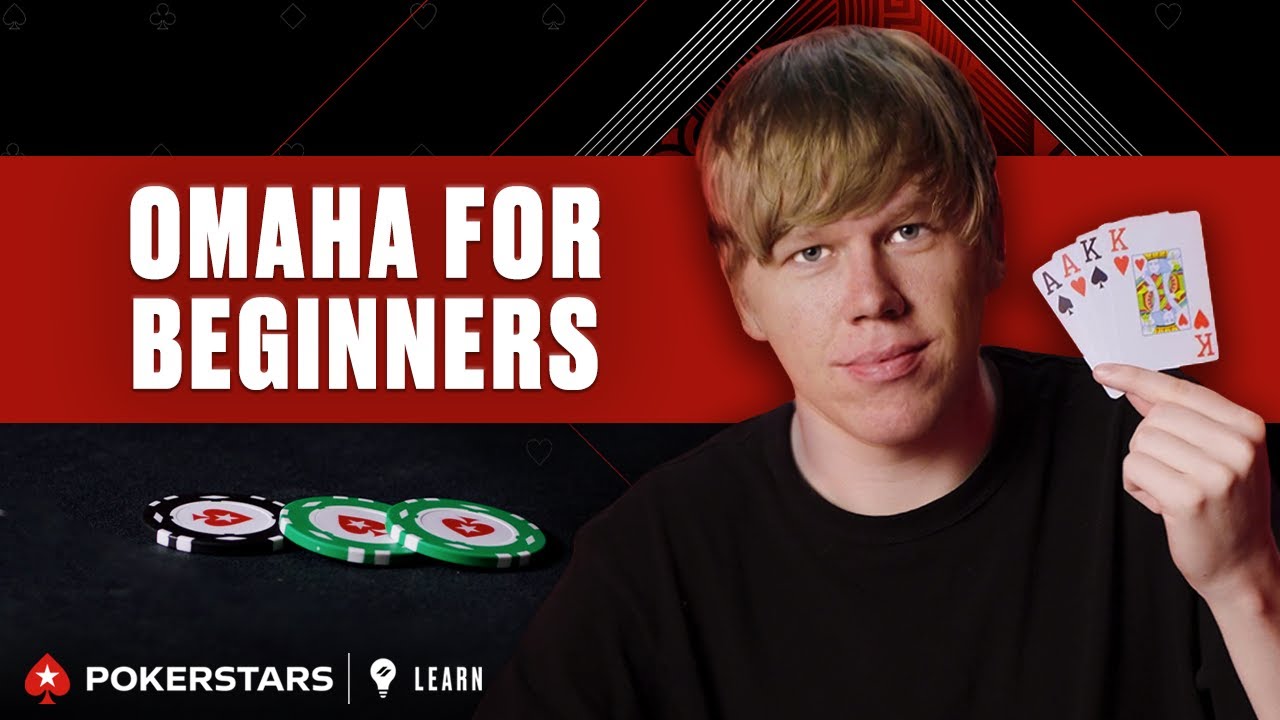
This guide is your roadmap. We will cover the critical differences from Hold'em, the importance of starting hand selection, the power of position, and the mathematical discipline required to succeed. Whether you're playing for Ringgit at a home game or grinding online tournaments, the principles within this guide will give you a significant edge over the competition. Get ready to embrace the action, because the world of Omaha poker awaits.
The Essential Rules of Omaha Poker
Before you can dream of scooping massive pots, you must understand the foundational rules of Omaha. While the game flow and hand rankings are identical to Texas Hold'em, there is one golden rule that changes everything. Understanding this rule is not optional; it is the single most important concept in the game.
The Golden Rule of Omaha: Two and Three
In Omaha, you MUST use EXACTLY TWO of your four hole cards and EXACTLY THREE of the five community cards (the flop, turn, and river) to make your best five-card poker hand. Not one, not three, not four from your hand. Exactly two. This is the source of 90% of beginner mistakes. For example, if you hold A♠️ K♠️ 7♦️ 2♣️ and the board is Q♠️ J♠️ 8♠️ 4♠️ 2♦️, you do NOT have the nut flush. You only have one spade in your hand (A♠️), so you cannot make a flush. To make a flush, you must have two spades in your hole cards to combine with three spades on the board. In this example, your best hand is just a pair of twos, using your 7♦️ 2♣️ and the board's Q♠️ J♠️ 2♦️. This rule cannot be overemphasized.
Game Flow and Betting Rounds
The structure of a hand is familiar to any Hold'em player. The game proceeds in the following stages:
- The Blinds: Before any cards are dealt, two players post forced bets. The player to the left of the dealer button posts the 'small blind', and the player to their left posts the 'big blind'.
- The Deal (Pre-Flop): Starting with the small blind, each player is dealt four cards face down. This is your starting hand, or 'hole cards'.
- First Betting Round (Pre-Flop): The action begins with the player to the left of the big blind. They can fold (discard their hand), call (match the big blind), or raise. Action continues clockwise around the table.
- The Flop: After the pre-flop betting round is complete, three community cards are dealt face up in the middle of the table.
- Second Betting Round: Starting with the first active player to the left of the dealer button, another round of betting occurs.
- The Turn: A fourth community card is dealt face up.
- Third Betting Round: Another round of betting takes place, following the same format.
- The River: The fifth and final community card is dealt face up.
- Final Betting Round: The last round of betting happens.
- The Showdown: If two or more players remain after the final betting round, they reveal their hands. The player who can make the best five-card hand using exactly two of their hole cards and three from the board wins the pot.
Betting Structures
Omaha can be played in several formats, but one is overwhelmingly the most popular.
- Pot-Limit Omaha (PLO): This is the most common and celebrated form of Omaha. In PLO, the maximum you can bet or raise at any time is the current size of the pot. Calculating a 'pot-sized' raise can be tricky: it's the total amount in the pot, plus all the bets on the table, plus the amount you would need to call. For example: If the pot is 10 MYR and a player bets 5 MYR, the total pot is now 15 MYR. To raise the maximum, you first notionally 'call' the 5 MYR, making the pot 20 MYR. You can then raise that 20 MYR. So your total bet is 25 MYR (5 to call + 20 to raise). This structure encourages building big pots with strong hands and draws.
- No-Limit Omaha (NLO): Less common due to its extremely high variance. Players can bet all of their chips at any time. It's a wild ride reserved for the bravest souls.
- Fixed-Limit Omaha (FLO): Bets and raises are in fixed increments. This format is more common in Hi/Lo split versions of the game.
For the rest of this guide, we will focus primarily on Pot-Limit Omaha (PLO), as it is the format you will most likely encounter in Malaysia and online.
Winning Omaha Strategy for Malaysian Players
Omaha is a game of draws, redraws, and playing for the 'nuts' (the best possible hand). Forget the small-ball tactics of Hold'em; in PLO, you need to think big. This section will arm you with the core strategies to crush the games.
1. Starting Hand Selection: The Foundation of Success
With four cards, nearly every hand looks playable. This is a trap. Strong Omaha hands have all four cards working together. You're looking for hands with multiple ways to make the nuts. Key features of a premium starting hand include:
- Connectedness: Cards that are close in rank, giving you straight potential. A hand like T♠️ 9♦️ 8♣️ 7♥ ('rundown') is powerful because any two-card flop from 6-J gives you a strong straight draw.
- Suitedness: Having two cards of the same suit is good. Having two cards of one suit and two of another (e.g., A♠️ K♠️ T♦️ 9♦️) is called 'double-suited' and is extremely powerful, giving you two different flush draws.
- High-Card Value: Hands with Aces and Kings are strong, but they are much stronger when they are suited and connected. A hand like A♠️ K♠️ Q♦️ J♦️ is a monster, with straight, flush, and high-pair potential. A hand like A♠️ K♣️ 7♦️ 2♥ is very weak because the cards don't work together.
- Pairs: High pairs (AA, KK) are strong, but they need help. A hand like A♠️ A♦️ J♠️ T♦️ is a premium hand because it has a high pair, is double-suited, and has straight potential. A hand like A♠️ A♣️ 7♦️ 2♥ is much weaker. You will only flop a set about 12% of the time, so your other two cards must provide backup plans.
Avoid 'Dangler' Hands: A 'dangler' is a low, unconnected, offsuit card in your starting hand that doesn't coordinate with the other three (e.g., K♠️ Q♠️ J♦️ 4♣️ - the 4♣️ is the dangler). These hands are significantly weaker and should often be folded.
2. The Power of Position: Your Greatest Weapon
If position is important in Hold'em, it's the king, queen, and entire royal court in Omaha. Because so many hands have drawing potential, being able to act last on the flop, turn, and river is a massive advantage. Acting last gives you crucial information:
- You see if your opponents check or bet, indicating strength or weakness.
- You can take a free card with your draw if they check to you.
- You can make a value bet or a semi-bluff with more confidence.
- You can control the size of the pot, building it when you're strong and keeping it small when you're speculative.
As a beginner, be very tight from early positions (Under the Gun, UTG+1) and only play premium hands. As you get closer to the button, you can open up your range and play more speculative but coordinated hands.
3. Playing the Flop: Draw to the Nuts
The flop is where Omaha hands are truly defined. Your primary goal on the flop is to assess if you have a strong made hand or, crucially, a draw to the nut hand. Drawing to a second-best hand in a multi-way Omaha pot is a recipe for disaster. This is called being 'freerolled', where you and an opponent might both have a flush draw, but they have the draw to the higher flush. If the flush hits, you make your hand and lose the maximum.
Key Flop Questions:
- Do I have the nuts right now? (e.g., top set on a non-coordinated board)
- Am I drawing to the nuts? (e.g., an ace-high flush draw, an open-ended straight draw that makes the best possible straight)
- How many opponents are in the hand? The more players, the stronger your hand needs to be to continue.
- What is the board texture? Is it 'wet' (e.g., T♠️ 9♠️ 7♦️, full of draws) or 'dry' (e.g., K♠️ 7♦️ 2♣️, few draws)?
4. Pot-Limit Betting and the Semi-Bluff
The Pot-Limit betting structure is integral to PLO strategy. You need to be comfortable betting the pot to extract value and protect your hand. A common and powerful play in PLO is the 'semi-bluff'. This is when you bet or raise with a hand that isn't currently the best but has a strong chance of improving to the nuts. For example, betting the pot on the flop with a nut flush draw and a gutshot straight draw. This is powerful for two reasons:
- Your opponents might fold, and you win the pot immediately.
- If they call, you still have excellent equity to hit your hand on the turn or river and win a much bigger pot.
Respect large bets in PLO. When an opponent makes a pot-sized bet on the turn or river, they are usually representing a very strong hand. Don't make 'crying calls' with your second-best hands. Learn to make disciplined folds.
5. Adapting to the Malaysian Playing Style
In many Malaysian games, both live and online, you'll encounter a loose-aggressive (LAG) style. Players love to see flops and aren't afraid to gamble. How do you counter this?
- Tighten Up: Play a tighter range of starting hands than your opponents. Let them make mistakes with their weaker, dominated hands.
- Play in Position: This is your counter-attack. Use your positional advantage to isolate the weaker players and put them in tough spots post-flop.
- Value Bet Relentlessly: When you make a strong hand (two pair, a set, a flush), don't get fancy. Bet for value. Loose players love to call, so make them pay. Your mantra should be 'Value, value, value'.
- Avoid Complex Bluffs: Against players who will call down with any pair or weak draw, elaborate multi-street bluffs are a waste of money. Stick to semi-bluffs and straightforward value betting.
By playing a disciplined, positionally aware, and nut-oriented game, you can exploit the common tendencies of looser opponents and build a significant long-term edge. Jangan main-main, play smart!
Omaha Odds & Probabilities: The Numbers You Need to Know
Omaha is a mathematical game at its core. While you don't need to be a math genius, understanding some key odds and probabilities will drastically improve your decision-making. Knowing when you're getting the right price to draw is the difference between a winning and losing player.
Key Pre-Flop Probabilities
Your four-card hand holds a universe of possibilities. Here are some fundamental probabilities for the hands you're dealt:
- Pocket Aces (AAxx): You'll be dealt a pair of aces approximately once every 109 hands (about 0.92%). When you get them, make sure the other two cards are working hard!
- Any Pocket Pair: The odds of being dealt any specific pair (like KKxx, QQxx) are the same as AAxx. You'll get any pocket pair roughly 1 in 17 hands.
- Double-Suited Hand: A powerful hand with two flush draws. You'll be dealt a double-suited hand about 2.35% of the time, or roughly 1 in 42 hands.
- Suited Ace: Having an Ace with another card of the same suit (Axs) is crucial for making the nut flush. You'll have a suited Ace in your hand about 26% of the time.
- Four-Card Rundown: Being dealt four connected cards like 9876 happens about 1% of the time.
Post-Flop Odds: Making Your Hand
The real calculations begin on the flop. You need to know your chances of hitting your draw and compare that to the pot odds. The 'Rule of 4 and 2' is a useful shortcut. To estimate your percentage chance of hitting your draw: multiply your number of 'outs' (cards that will complete your hand) by 4 on the flop (with two cards to come), or by 2 on the turn (with one card to come).
Here's a table of common drawing odds and probabilities that every serious Omaha player should be familiar with:
| Situation | Outs | Flop to River % | Turn to River % |
|---|---|---|---|
| Flopped Open-Ended Straight Draw | 8 | ~32% | ~17% |
| Flopped Flush Draw (9 outs) | 9 | ~35% | ~19% |
| Flopped Set (with pocket pair) | - | ~12% | - |
| Flopped Flush Draw + Straight Draw | 15 | ~54% | ~32% |
| Flopped Gutshot Straight Draw | 4 | ~16% | ~9% |
| Improving a Set to a Full House/Quads | 7 (unpaired board) | ~30% | ~16% |
| Improving Two Pair to a Full House | 4 | ~16% | ~9% |
Understanding Pot Odds
Pot odds are the heart of poker math. They represent the ratio between the size of the pot and the amount you have to call to continue in the hand.
Calculation: Pot Odds = (Pot Size + Bet Size) / (Bet Size)
Example: The pot is 80 MYR. Your opponent bets 20 MYR. The total pot is now 100 MYR, and you have to call 20 MYR to continue. Your pot odds are 100-to-20, which simplifies to 5-to-1. To express this as a percentage, you divide the call amount by the total pot after you call: 20 / (80 + 20 + 20) = 20 / 120 = 16.7%.
Putting It Together: You should only call the bet if your chance of winning the hand (your equity) is greater than the pot odds percentage you are being offered. In the example above, you need at least 16.7% equity to make a profitable call. If you are on the flop with a 9-out nut flush draw, your chance of hitting by the river is ~35%. This is much higher than the 16.7% required, making it a very profitable call. If you were on the turn, however, your chance is only ~19%, which is still higher than 16.7%, so it's a correct call. This discipline of comparing your drawing odds to the pot odds is a fundamental skill for long-term success in PLO.
A Step-by-Step Guide: How to Play an Omaha Hand
Theory is one thing, but seeing it in action is another. Let's walk through a complete sample hand of Pot-Limit Omaha to see how these strategic concepts come together. Imagine you're playing in a 2/5 MYR PLO cash game online, with a 500 MYR stack.
The Situation: 6-handed table. You are on the Button (the best position). The blinds are 2 MYR (Small Blind) and 5 MYR (Big Blind).
Pre-Flop: A Premium Hand in Position
The action folds to the player in the Hijack (two seats to your right), who limps in by calling the 5 MYR big blind. The player in the Cutoff (to your right) also limps. The pot is now 17 MYR (2 SB + 5 BB + 5 Limp + 5 Limp).
You look down at your hand: A♠️ Q♠️ J♦️ T♦️
Analysis: This is a monster hand. It's double-suited, giving you draws to the nut flush (A♠️) and a strong flush (J♦️). It's a 'Broadway' rundown, meaning it has incredible straight potential (any K, Q, J, T, or 9 on the board gives you a draw or a made hand). It has high-card strength. This is an easy decision. You want to build a pot and isolate the limpers.
Your Action: You decide to make a pot-sized raise. The pot is 17 MYR. Your raise is 17 MYR on top of your 5 MYR call, for a total bet of 22 MYR. But wait, the PLO raise calculation is: (Pot) + (your call) = 17 + 5 = 22. So a pot sized raise is 22. Wait, that's not right. The formula is 3 * last bet + pot before last bet. Let's use the simpler method: Total Pot (17) + Your Call (5) = 22. You can raise by 22. So your total bet is 27 (5 to call, 22 to raise). Let's round it up slightly to a clean 30 MYR for psychological effect.
Result: The Small Blind and Big Blind fold. The Hijack limper calls your 30 MYR raise. The Cutoff limper folds. It's now heads-up to the flop. The pot is 72 MYR (17 from before + 25 from you that the HJ called + 25 from the HJ).
The Flop: A Dream Scenario
The dealer puts out the flop: K♠️ T♠️ 3♦️
Your Hand: A♠️ Q♠️ J♦️ T♦️
Board: K♠️ T♠️ 3♦️
Analysis: This is an incredible flop for you. You have:
- The Nut Flush Draw: With your A♠️Q♠️ and the K♠️T♠️ on board.
- An Open-Ended Straight Draw: Your QJ with the KT on board means any Ace or 9 gives you a straight. An Ace would give you the nut straight.
- Middle Pair: You have a pair of tens with a good kicker.
You have a 'combo draw' of immense power. You are a favorite against almost any hand except a set (KK, TT, 33). Your opponent, who limped and then called a raise, could have anything, but is unlikely to have flopped a set.
The Action: The Hijack player checks to you. This is your chance to press your advantage. You have massive equity and can win the pot right now with a bet (a semi-bluff) or get called and have a great chance to win a huge pot.
Your Action: You make a pot-sized bet. The pot is 72 MYR, so you bet 72 MYR.
Result: Your opponent thinks for a moment and calls the 72 MYR. The pot is now 216 MYR.
The Turn: Hitting the Nuts
The turn card is the 9♣️.
Your Hand: A♠️ Q♠️ J♦️ T♦️
Board: K♠️ T♠️ 3♦️ 9♣️
Analysis: The 9 completes your straight draw. Using your QJ and the board's KT9, you now have a King-high straight. However, an Ace would give a player an Ace-high straight. So you do not have the nuts. You have a very strong hand but must be cautious. The flush draw is still live.
The Action: Your opponent checks again. What is your play? Your hand is very strong but vulnerable. A player with A-Q in their hand now has the nut straight. A player with two spades still has a flush draw. A player with a set of Kings or Tens is still drawing to a full house. This is a spot for pot control. Checking behind is a valid option to see a free river. However, given the action, betting for value and protection is also strong. A smaller bet, maybe 1/3 to 1/2 pot, would be a good play.
Your Action: You decide to bet for value and to protect against the flush draw. You bet 100 MYR (just under half the pot).
Result: Your opponent calls the 100 MYR. The pot is now 416 MYR.
The River: The Money Card
The river card is the 2♠️.
Your Hand: A♠️ Q♠️ J♦️ T♦️
Board: K♠️ T♠️ 3♦️ 9♣️ 2♠️
Analysis: The river is a beautiful sight. The 2 of spades completes your nut flush. You use your A♠️Q♠️ and the K♠️T♠️2♠️ on the board to make the Ace-high flush. You now have the stone-cold nuts. No other hand can beat you. Your only goal is to get the rest of your opponent's stack.
The Action: Your opponent checks for a third time. You have about 370 MYR left in your stack, and so does your opponent. The pot is 416 MYR.
Your Action: You move all-in for your remaining 370 MYR. This is a clear value bet. You have the nuts, and your opponent has called you down on two streets. They may have a lower flush, a straight, or two pair and might be tempted to make a 'hero call'.
The Showdown: Your opponent groans and calls. They turn over K♦️ Q♦️ J♣️ T♣️. On the turn, they also had a King-high straight. They made a good call on the turn, but the river was a disaster for them. They have to show their hand, and you turn over your A♠️Q♠️J♦️T♦️. You announce 'Nut Flush', and the dealer pushes the massive 1156 MYR pot your way. This hand perfectly illustrates the journey of an Omaha hand: starting with a coordinated multi-way hand, semi-bluffing a huge combo draw on the flop, and getting maximum value when you hit the nuts on the river.
Expert Verdict: Is Omaha the Right Game for You?
We've journeyed through the rules, strategies, and mathematics of Pot-Limit Omaha. Now for the final question: is this the right game for you? The answer depends on your personality, bankroll, and what you seek from poker.
Omaha is, without question, the 'action game'. The variance is significantly higher than in Texas Hold'em. You will experience bigger wins and more brutal losses in the short term. Your Aces will get cracked more often, and you will see powerful hands run down by even more powerful draws. To succeed, you must have the mental fortitude to handle these swings without going on tilt. A solid bankroll management plan is not just recommended; it's essential. A common guideline for PLO cash games is to have at least 50-100 buy-ins for the stake you're playing. For 2/5 MYR with a 500 MYR buy-in, that means a bankroll of 25,000 to 50,000 MYR.
You should play Omaha if:
- You find Texas Hold'em to be too slow or solved.
- You enjoy complex, multi-faceted decision making on every street.
- You have a strong grasp of poker fundamentals like pot odds and position.
- You are disciplined and can handle high variance without letting it affect your decisions.
- You are looking for a game where the average player makes more frequent and bigger mistakes, creating a higher potential profit ceiling for a skilled player.
You might want to stick with Hold'em if:
- You are a brand new poker player. It's generally better to learn the fundamentals with two cards before moving to four.
- You have a limited bankroll or are highly risk-averse.
- You prefer a more straightforward, less swingy poker experience.
Final Word for Malaysian Players
Pot-Limit Omaha is a fantastic, challenging, and potentially very profitable game. The player pools, both live and online in the Malaysian market, are often filled with gamblers who don't understand the basic principles we've outlined in this guide. They overvalue weak hands, draw to non-nut hands, and play poorly out of position. By simply adhering to the core tenets of playing tight from early position, prioritizing coordinated 'nut-making' hands, respecting the power of position, and value betting relentlessly, you will already be far ahead of the curve.
This guide is your foundation. The true path to becoming an Omaha 'sifu' is through practice, study, and experience. Play hands, review your sessions, and constantly analyze your decisions. Embrace the action, respect the variance, and apply these strategies with discipline. Do that, and you'll find yourself on the winning side of those massive Omaha pots. Good luck at the tables, and may your draws always be to the nuts.