Malaysian Mahjong: More Than Just a Game
In Malaysia, the clatter of mahjong tiles is more than just a sound; it's the soundtrack to family gatherings, festive seasons, and late-night sessions with friends. Malaysian Mahjong is a cultural institution, a game of sharp intellect, cunning strategy, and a little bit of luck. While sharing roots with other regional variants, the Malaysian style has its own unique flavour, rules, and rhythms that make it a beloved pastime across the country.
Unlike the rigid, tournament-focused styles you might see elsewhere, Malaysian Mahjong is often more fluid and social. However, don't let the friendly atmosphere fool you. Beneath the surface lies a complex game demanding sharp observation, calculated risks, and a deep understanding of probabilities. The goal is simple: be the first to form a winning hand of 14 tiles. But the path to victory, or 'hu', is paved with countless decisions, from which tile to discard to whether you should risk breaking up a good combination for a chance at a higher-scoring hand.
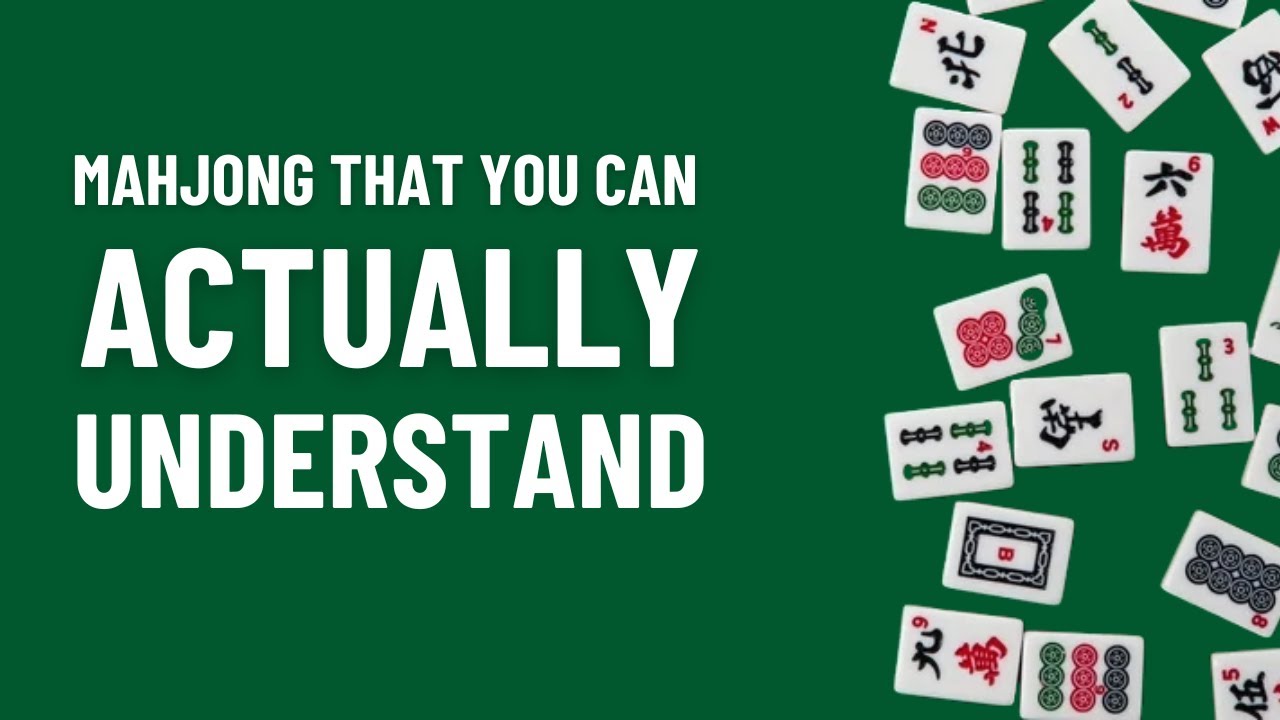
What sets the Malaysian version apart? Key differences include the use of Animal tiles (Cat, Mouse, Rooster, Centipede), a unique scoring system often referred to as 'kaki' or 'tai'/'fan', and specific rules about what constitutes a valid winning hand. This guide is your complete resource for mastering Malaysian Mahjong. We will break down everything from the basic rules and setup to advanced strategies that will help you read the table, anticipate your opponents' moves, and maximize your winnings. Whether you're a complete beginner curious about the game your 'ah ma' plays, or an intermediate player looking to elevate your game, this guide will equip you with the knowledge to play confidently and win.
Malaysian Mahjong Rules & Setup
Before you can strategize, you must understand the fundamentals. Here’s a detailed breakdown of the rules and game setup specific to the popular Malaysian variant.
The Objective
The primary goal in Mahjong is to form a complete, legal hand of 14 tiles. A standard winning hand consists of four sets (either a 'Chow' or a 'Pong') and one pair (the 'eyes'). The first player to achieve this and declare 'Mahjong' or 'Hu' wins the hand.
The Tiles (148 in Total)
A standard Malaysian Mahjong set contains 148 tiles, divided into several categories:
- Suits (108 tiles): These are the backbone of most hands. There are three suits, numbered 1 through 9.
- Circles (Tong): Represent coins or dots.
- Bamboo (Suo): Represent strings of coins or bamboo sticks.
- Characters (Wan): Represent Chinese characters for numbers, with the 'Myriad' character at the bottom.
- Honors (28 tiles): These are special tiles that don't belong to a numbered suit.
- Winds (Feng): East, South, West, North. There are four of each.
- Dragons (Yuan): Red Dragon (Zhong), Green Dragon (Fa), White Dragon (Bai). There are four of each.
- Bonus Tiles (12 tiles): These tiles are not used to form sets but provide bonus points ('kaki' or 'fan') when they are in your hand. You draw a replacement tile when you receive one.
- Flowers: Plum, Orchid, Chrysanthemum, Bamboo (numbered 1-4).
- Seasons: Spring, Summer, Autumn, Winter (numbered 1-4).
- Animals: Cat, Mouse, Rooster, Centipede. These are a signature of Malaysian/Singaporean Mahjong.
Game Setup
- Seating and Winds: Four players sit around a square table. The seats are designated as East, South, West, and North. The East player is the dealer and starts the game. This position rotates counter-clockwise after each hand (or if the non-dealer wins).
- Shuffling and Building Walls: All 148 tiles are placed face down and shuffled thoroughly. Each player then takes 37 tiles and builds a wall in front of them, two tiles high and 18.5 tiles long. The four walls are then pushed together to form a square.
- Breaking the Wall: The dealer (East) throws two dice to determine where to break the wall. The total of the dice is counted counter-clockwise around the players, starting with East as 1. The player chosen then throws the dice again. The sum of both dice rolls determines which stack of tiles to start drawing from. The tiles are drawn clockwise from that point.
- Dealing: The dealer takes the first four tiles (two stacks of two). Then, players South, West, and North do the same in order. This is repeated three times until each player has 12 tiles. Finally, the dealer takes two more tiles (one from the top and one from the bottom of the next stack), and the other players each take one more tile. The dealer ends up with 14 tiles, and the others have 13.
Core Gameplay Actions
- Draw (Mo Pai): On your turn, you draw one tile from the wall.
- Discard (Da Pai): After drawing, you must discard one tile from your hand, placing it face up in the center of the table. Your hand must always return to 13 tiles (or 14 if you're about to win).
- Chow (Chi / Makan): This is forming a sequence of three consecutive tiles in the same suit (e.g., 3, 4, 5 of Bamboo). You can only 'Chow' from the discard of the player immediately to your left. You must announce 'Chow', take the tile, and lay down the completed sequence face up. You then discard a tile to end your turn.
- Pong (Peng): This is forming a set of three identical tiles (e.g., three Red Dragons or three 8 of Circles). You can 'Pong' a discard from any player. Announce 'Pong', take the tile, lay down the set face up, and discard a tile. Your turn to draw from the wall is skipped, and play continues with the player to your right.
- Kang (Gang): This is forming a set of four identical tiles. There are three types:
- Exposed Kang: If you already have a 'Pong' and draw the fourth matching tile yourself, you can declare 'Kang', add it to the exposed set, and draw a replacement tile from the back of the wall.
- Concealed Kang: If you have all four identical tiles in your hand, you can declare 'Kang', place them face down (or two face up, two face down), and draw a replacement tile.
- Robbing a Kang: If a player declares an exposed Kang (by adding a self-drawn tile to an existing Pong), and you need that tile to complete your hand, you can 'rob the Kang' to win. This is a high-value win.
- Winning (Hu): When you have a 13-tile hand and a discarded tile or a self-drawn tile completes your 4 sets and a pair, you can declare 'Mahjong' or 'Hu'. A hand won from a discard is called 'Rong Hu', while a self-drawn win is 'Zimo'.
Winning Mahjong Strategy: From Beginner to Sifu
Mahjong is a game of shifting probabilities. A winning strategy isn't a fixed formula but a flexible approach that adapts to your hand, your opponents' actions, and the flow of the game. Here's how to level up your strategic thinking.
Beginner Strategy: Build Fast, Play Safe
When you're starting out, your primary goal should be to complete a hand as quickly as possible, even if it's a low-scoring one. This teaches you hand-building fundamentals.
- The Discarding Order: Your first few discards are crucial for shaping your hand. A good general order is:
- Lone Animal/Flower tiles (if you don't have the matching pair).
- Lone Wind and Dragon tiles that are not your seat wind or the prevailing wind.
- Edge tiles (1s and 9s) that don't connect to anything.
- Middle tiles (4, 5, 6) from a suit where you have very few tiles.
- Prioritize Pairs: A winning hand needs a pair (the 'eyes'). Early on, try to form a pair. A hand with 13 unique tiles is very weak. Holding onto potential pairs like 22, 55, or two East Winds is vital.
- To 'Chow' or Not to 'Chow': A common beginner question. 'Chow' ('makan') is great for speed. If the player to your left discards a tile that completes a sequence for you, it's often a good idea to take it to progress your hand. However, remember that 'Chow' exposes part of your hand and limits your flexibility.
- The Power of 'Pong': 'Pong' is generally more powerful than 'Chow'. It creates a higher-scoring set and allows you to disrupt the turn order by taking a discard from any player. If you have a pair and someone discards the third matching tile, seriously consider calling 'Pong', especially if they are Honor tiles.
- Keep it Concealed: As much as possible, try to build your hand without calling 'Chow' or 'Pong'. A fully concealed hand ('men qian qing') is worth extra points ('kaki') and keeps your opponents guessing.
Intermediate Strategy: Balancing Speed, Value, and Defense
Once you're comfortable with the basics, it's time to think more deeply. The game is no longer just about your own hand, but about the entire table.
- Hand Assessment: At the start of a round, evaluate your 13 tiles. Ask yourself:
- How many tiles away from a winning hand am I? (A good starting hand might be 4-5 tiles away).
- What is the potential of this hand? Do I have multiple pairs of Honors for a potential 'Pong Pong' hand? Do I have 8-9 tiles of the same suit for a potential Flush?
- Is this a fast hand or a valuable hand? A hand with many connected tiles (e.g., 2,3,4,5,6 of Bamboo) is fast. A hand with two Dragon pairs and a Wind pair has high-value potential.
- The Art of Defense (Playing Safe Tiles): This is what separates intermediate players from beginners. As the game progresses and discard piles grow, you must identify who is likely close to winning ('teng pai' or 'waiting'). Look for clues:
- A player has two exposed 'Pong' sets. They are very likely waiting for a pair or a final set.
- A player starts discarding middle tiles (like 4, 5, 6) from their hand. They have likely solidified their hand's structure and are now discarding their useless tiles.
- Tile Efficiency: Think about which tiles give you the most 'chances'. For example, holding a 3 and a 4 of Circles is good, as you can draw a 2 or a 5 to complete a 'Chow'. Holding a 3 and a 5 is even better, as only a 4 can complete it, but it gives you a two-sided wait. The best is holding something like 3,4,5,6. You can discard the 3 and wait on 2,5, or discard the 6 and wait on 4,7. Understanding these combinations maximizes your chances of drawing a useful tile.
Advanced Strategy: The Sifu's Mindset
Advanced play is about information warfare and subtle manipulation.
- Reading the Discards: The discard pile is a story. If a player discards a 2 of Bamboo early, and then a 5 of Bamboo, it's unlikely they are collecting the Bamboo suit. If no one is discarding Character tiles, it's possible one or more players are collecting them for a Flush. If a certain Dragon tile hasn't been seen by the mid-game, it's highly likely someone is holding a pair or even a concealed 'Pong' of them. Use this information to guide your own discards and strategy.
- The 'Suicide' Tile Strategy: A high-risk, high-reward tactic. If you are reasonably sure a tile is safe because it's been discarded before, but you need it for your hand, you might hold onto it. Conversely, if you have a dangerous tile (e.g., a lone Red Dragon late in the game), but discarding it will improve your hand significantly towards a high-value win, you might take the calculated risk.
- Baiting and Misdirection: Discard tiles to give false information. For example, if you are building a Full Flush in the Circles suit, you might discard a low Circle tile (like a 1 or 2) early on to suggest you are not collecting that suit. This might trick an opponent into discarding a high Circle tile later, which you can then 'Pong' or use to win.
- Know Your 'Kaki': Deeply understand the scoring sheet. Know which combinations give the most points. Aim for hands that have multiple scoring elements, like a 'Pong Pong' hand that is also a Half Flush. This knowledge allows you to pivot your hand mid-game from a low-value target to a high-value one if the right tiles come your way.
Mahjong Odds, Probabilities & Winning Hands
While luck plays a role in what tiles you draw, a strong player understands and manipulates probability. Mahjong is a game of statistics. Knowing the value of different hands and the likelihood of achieving them is critical for making informed strategic decisions.
The scoring in Malaysian Mahjong is typically done using 'tai' (or 'fan'), which translates to 'points'. Each winning hand has a base value, and various combinations add more 'tai'. The final payout is calculated based on the total 'tai'. Below is a table of common winning hands in Malaysian Mahjong, their typical 'tai' value, and the difficulty of achieving them. Note that 'tai' values can vary slightly from group to group, so always confirm the house rules!
A 'Chup' is the maximum limit for payment on a single hand, often 5 or 10 'tai'.
| Winning Hand (Pinyin/English) | Typical 'Tai' (Points) | Description | Difficulty |
|---|---|---|---|
| Ping Hu (All Chows) | 1 | A hand with four Chow sets and a pair. Must not contain any Dragon/Wind Pongs. | Easy |
| Dui Dui Hu / Pong Pong (All Pongs) | 2-3 | A hand with four Pong/Kang sets and a pair. | Medium |
| Hun Yi Se (Half Flush) | 3-4 | A hand composed of only one suit (e.g., Circles) plus Honor tiles (Winds/Dragons). | Medium-Hard |
| Qing Yi Se (Full Flush) | 6-7 (Often Limit) | A hand composed entirely of one suit. No Honor tiles. Extremely powerful. | Hard |
| Xiao San Yuan (Small Three Dragons) | 4-5 | A hand with two Pong sets of Dragons and a pair of the third Dragon. | Hard |
| Da San Yuan (Big Three Dragons) | Limit (e.g., 10) | A hand with three Pong/Kang sets of all three Dragons (Red, Green, White). | Very Hard |
| Xiao Si Xi (Small Four Winds) | Limit (e.g., 10) | A hand with three Pong sets of Winds and a pair of the fourth Wind. | Very Hard |
| Da Si Xi (Big Four Winds) | Limit (e.g., 10) | A hand with four Pong/Kang sets of all four Winds. A monster hand. | Extremely Hard |
| Zi Yi Se (All Honors) | Limit (e.g., 10) | A hand composed entirely of Wind and Dragon tiles. | Extremely Hard |
| Shi San Yao (Thirteen Orphans) | Limit (e.g., 10) | A special hand consisting of one of each 1 & 9 tile, one of each Wind, one of each Dragon, plus one duplicate of any of these 13 tiles to form the pair. | Extremely Hard |
Understanding Probabilities
- Starting Hand Quality: With 136 functional tiles (excluding bonus tiles), the number of possible starting hands is astronomical. However, you can quickly gauge your hand's potential. A hand with 8 or more tiles from the same suit has a good chance of becoming a Flush. A hand with 3-4 pairs has potential for an All Pongs hand.
- Waiting Probabilities: The number of 'outs' you have is key. If you are waiting for a single tile to complete your hand (e.g., a 5 of Circles) and you can see one on the discard piles, there are only 3 left in the game out of all remaining tiles. If you have a two-sided wait (e.g., a 2-3 of Bamboo waiting for a 1 or 4), you have up to 8 potential winning tiles. This is a much stronger position.
- The Animal Tile Gamble: In Malaysian Mahjong, the Animal tiles add a unique layer of luck. Getting your 'own' animal (Cat matches Mouse, Rooster matches Centipede, or vice versa) gives you a bonus 'tai'. If you draw a set of all four, it's a huge bonus. Holding onto an animal tile is a gamble: it takes up a slot in your hand but offers a potential payout if you draw its partner or win the hand. Generally, if you don't have its partner by the mid-game, it's a safe tile to discard.
How to Play a Hand of Malaysian Mahjong: A Step-by-Step Guide
Ready to play? Let's walk through a typical hand from start to finish. This guide assumes a 4-player game.
Step 1: The Setup
Players sit down, and the dealer (East) is determined, usually by a dice roll. All 148 tiles are shuffled face-down. Each player builds a wall of 37 tiles (18.5 stacks of 2). The walls are pushed together to form a square city.
Step 2: Breaking the Wall & Dealing
The dealer rolls two dice. Let's say they roll a 9. Counting counter-clockwise starting from the dealer, the 9th position is the dealer's own wall. The dealer then rolls again, let's say a 5. They count 5 stacks in on their wall and break it, drawing tiles clockwise from that point. The dealer takes 4 tiles, then South, West, and North take 4 tiles each. This is repeated three times. Finally, the dealer takes two more tiles, and everyone else takes one. The dealer now has 14 tiles; everyone else has 13.
Step 3: Arranging the Hand & Bonus Tiles
Players arrange their tiles, usually standing up on the table facing them, concealed from others. If a player has any Flower, Season, or Animal tiles, they must declare them, place them face-up to the side, and draw a corresponding number of replacement tiles from the back end of the wall. This continues until no player has bonus tiles in their active hand.
Step 4: The First Turn
The dealer (East) starts the game. Since they have 14 tiles, they do not draw. They assess their hand and discard one tile into the center of the table, announcing its name (e.g., '8 of Bamboo').
Step 5: The Cycle of Play
Play proceeds counter-clockwise. The next player (South) has three choices:
- Draw: If nobody wants the discarded tile, South draws the next available tile from the wall. They then discard one tile from their hand.
- Chow: If the discarded tile (from East) completes a sequence in South's hand, they can shout 'Chow' or 'Makan', take the tile, expose the sequence, and then discard a different tile.
- Pong or Kang: If any player (South, West, or North) has a pair that matches East's discard, they can shout 'Pong'. They take the tile, expose the triplet, and discard a tile. This player's turn is next, disrupting the normal counter-clockwise flow. If they have three matching tiles and East discards the fourth, they can call 'Kang'.
This cycle of drawing, discarding, and calling continues around the table.
Step 6: Waiting ('Teng Pai')
As a player gets closer to winning, they will have a hand of 13 tiles that needs just one more specific tile to be complete. This is called being 'in a waiting state' or 'teng pai'. For example, your hand might be (111 Bamboo), (345 Characters), (888 Circles), (West, West), and a lone 6 of Circles. You are waiting for a 6 of Circles to complete your fourth set and win.
Step 7: Winning the Hand ('Hu')
There are two ways to win:
- Winning from a Discard ('Rong Hu'): If a player discards the exact tile you are waiting for, you can declare 'Mahjong!' or 'Hu!'. You show your complete winning hand. The player who discarded the winning tile is responsible for paying for their own loss and often for the other two non-winning players as well (depending on house rules).
- Self-Draw ('Zimo'): If you draw the winning tile yourself from the wall, you declare 'Zimo!'. This is generally a better way to win, as all three other players must pay you.
Step 8: Scoring and Payment
Once a winner is declared, the hand is scored. The base hand value and all extra combinations ('kaki' or 'tai') are calculated. For example, a 'Pong Pong' hand (2 tai) that is also a 'Half Flush' (3 tai) would be worth 5 tai in total. Players then pay the winner based on the agreed-upon monetary value per 'tai'. The tiles are then shuffled, and a new hand begins with the dealer position rotating.
Expert Verdict: The Enduring Appeal of Malaysian Mahjong
Malaysian Mahjong is far more than a simple game of collecting tiles. It is a masterful blend of skill, psychology, and social interaction that has cemented its place in the heart of Malaysian culture. Its complexity is not a barrier but an invitation—a challenge to sharpen the mind, develop patience, and learn to read the subtle cues of your opponents. The thrill of turning a mediocre starting hand into a high-scoring 'Full Flush', the tension of deciding whether to discard a dangerous tile, and the shared laughter and groans around the table are experiences that create lasting bonds.
For new players, the initial learning curve can seem steep. The sheer number of tiles, the variety of winning hands, and the fast-paced nature of the game can be intimidating. However, our expert advice is to persevere. Start with the basics: focus on building the simplest winning hand ('ping hu') and practice identifying safe discards. Play with friends or family who are willing to teach and be patient. Every hand you play, win or lose, is a learning opportunity.
For the intermediate player, the journey truly begins. This is where you move beyond your own tiles and start playing the table. Mastering defensive play—knowing when to abandon your own ambitions to prevent an opponent from winning big—is the single most important skill that will elevate your game. This is the essence of Mahjong's strategic depth: it's not always about winning, but often about not losing badly.
Ultimately, the beauty of Malaysian Mahjong lies in its balance. It rewards both bold, aggressive plays and cautious, defensive strategies. It contains deep mathematical probability while allowing for flashes of intuition and gut feeling. It is a competitive endeavor that, paradoxically, brings people closer together. Whether you play for small stakes with your 'kakis' or for bragging rights at a family reunion, Malaysian Mahjong is a rewarding, endlessly replayable game. It is a worthy and essential part of the Malaysian gaming landscape, and a skill that will bring you a lifetime of enjoyment and camaraderie.