Malaysian Mahjong: An Overview
In Malaysia, the clatter of mahjong tiles is more than just a sound; it's the soundtrack to family reunions, Chinese New Year celebrations, and late-night sessions with friends. More than a game, it's a cultural institution, a blend of sharp-minded strategy, calculated risk, and a healthy dose of luck. While its roots are in China, Malaysian Mahjong has evolved its own unique flavour, with distinct rules, scoring, and even special tiles that you won't find elsewhere. This guide is designed specifically for Malaysian players, from beginners learning the ropes at a family gathering to seasoned veterans looking to sharpen their edge for games at Genting Highlands.
From my own experience playing in countless sessions from KL to Penang, mastering the nuances of Malaysian Mahjong is the key to turning friendly games into consistent wins. It's about understanding not just what's in your hand, but what's in your opponents' hands, what's left in the wall, and when to switch from aggressive offense to lockdown defense. This guide will break down every element, providing you with the strategic framework to play with confidence and skill.
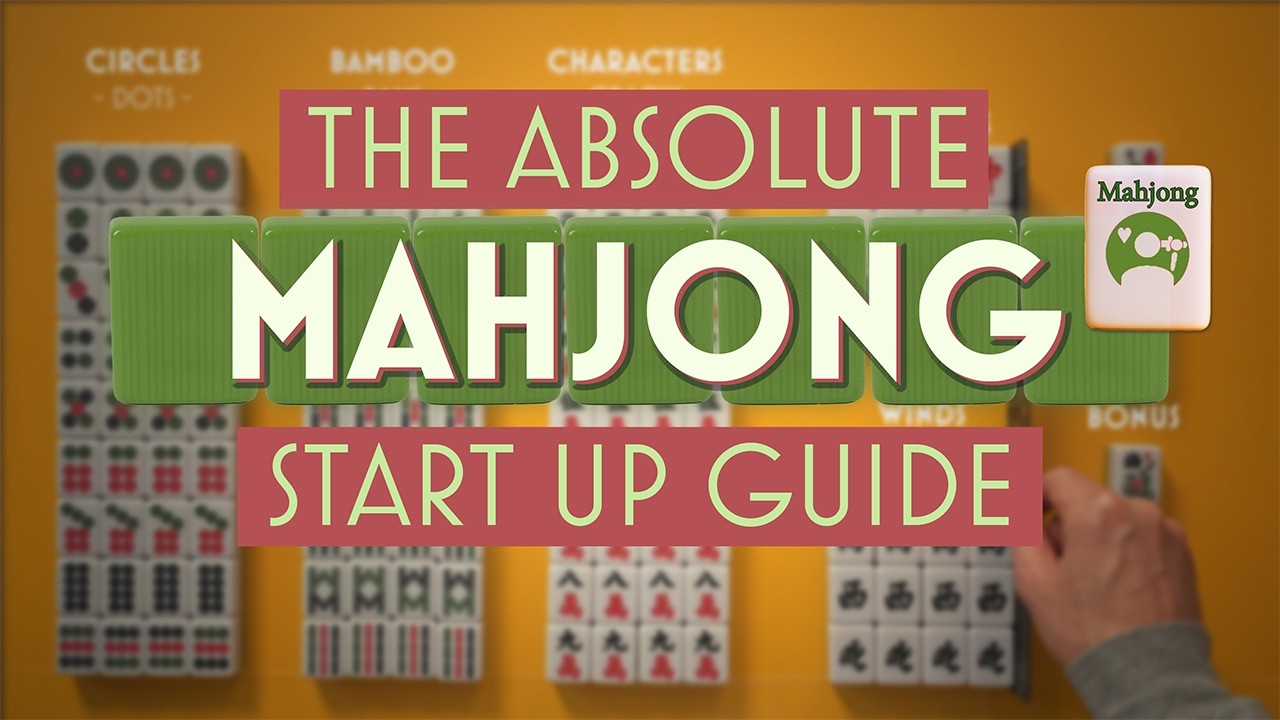
Whether you play the common 3-player variant or the traditional 4-player game, the core principles remain the same. This guide will cover both, equipping you with the knowledge to sit down at any mahjong table in Malaysia and hold your own. We'll delve into the tiles, the setup, the complex scoring system ('kira fan'), and most importantly, the strategies that separate the casual player from the true 'sifu'.
Rules & Scoring (Fan/Tai)
Understanding the specific rules of Malaysian Mahjong is the first step to mastery. While core concepts are universal, local variations, especially in scoring, are critical.
The Tiles (152 Total)
A standard Malaysian set includes 144 core tiles plus 8 bonus tiles:
- Suits (108 tiles): Three suits of 36 tiles each – Bamboos (索子, suǒzi), Dots (筒子, tǒngzi), and Characters (萬子, wànzi). Each suit is numbered 1 through 9, with four identical copies of each.
- Honour Tiles (28 tiles): These have no numerical sequence. They include the Four Winds (東 East, 南 South, 西 West, 北 North) and the Three Dragons (紅中 Red, 發財 Green, 白板 White). There are four of each.
- Bonus Tiles (8 tiles): This is a key feature of Malaysian Mahjong. They consist of a set of four Flower tiles (Plum, Orchid, Chrysanthemum, Bamboo) and a set of four Animal tiles (Cat, Rat, Rooster, Centipede). Drawing one of these allows you to immediately take a replacement tile from the back of the wall and adds 1 'fan' or 'tai' to your score if you win.
Game Setup
- Seating & Dealing: Players sit around a square table. The dealer (East wind) is chosen. All tiles are shuffled face down.
- Building the Wall: Each of the four players builds a wall of tiles in front of them, 19 stacks long and 2 tiles high (for 38 tiles each). The walls are then pushed together to form a square.
- Breaking the Wall: The dealer rolls three dice. The total determines which player's wall is 'broken' and where the break occurs. Tiles are then dealt from this point.
- Dealing: The dealer takes 14 tiles (two stacks of two, then another two stacks of two, then one, then one more). Other players take 13 tiles.
Gameplay Actions
On your turn, you draw a tile and then discard one. The goal is to form a complete hand of four sets (of three tiles) and a pair (eyes).
- Chi (吃) / Makan: To form a sequence of three consecutive tiles in the same suit (e.g., 3-4-5 of Bamboos). You can only 'chi' from the discard of the player immediately to your left.
- Pong (碰): To form a set of three identical tiles (e.g., three Red Dragons). You can 'pong' a discard from any player, interrupting the normal turn order. You must then discard a tile, and play continues from the player to your right.
- Gang (槓) / Kong: To form a set of four identical tiles. This can be done by having three in your hand and drawing the fourth, having a 'pong' set and drawing the fourth, or claiming a discarded tile when you already have three concealed in your hand. A 'gang' scores points and allows you to draw an extra replacement tile.
- Hu (胡) / Mahjong: Declaring a win with a complete hand (usually 4 sets and 1 pair). You can win by drawing the final tile yourself ('zi mo' 自摸) or by claiming another player's discard. The player who discards the winning tile is the 'shooter' and usually pays double.
Scoring: Kira Fan / Tai
This is the most complex part of Malaysian Mahjong. Each winning hand has a base score determined by its 'fan' (番) or 'tai' (台) value. A higher 'fan' count means a bigger payout. Most social games in Malaysia have a minimum 'fan' requirement to win (e.g., 2 or 3 'fan').
Common Scoring Hands (Examples):
- Ping Hu (平胡) - 1 Fan: A basic hand with all sequences ('chi'), no 'pongs', and a simple pair.
- Dui Dui Hu (對對胡) / Pong Pong - 3 Fan: A hand with four sets of 'pongs' or 'gangs' and a pair.
- Yi Se (一色) / Qing Yi Se (清一色) - 7 Fan / Full: A hand composed entirely of tiles from a single suit (e.g., all Bamboos), plus honour tiles. If it's purely one suit with no honours, it's often a limit hand ('man tai').
- Ban Ban (半半) / Hun Yi Se (混一色) - 4 Fan: A hand composed of tiles from a single suit plus honour tiles.
- Zi Yi Se (字一色) - Full/Limit Hand: A hand made entirely of wind and dragon tiles. This is a very rare and high-scoring hand.
- Bonus Points: Each Flower/Animal tile adds 1 Fan. Having your own seat wind as a 'pong' adds 1 Fan. A 'pong' of Dragons adds 1 Fan. Winning by 'zi mo' adds 1 Fan.
Payouts are calculated based on the 'fan' count, with the value doubling for each additional 'fan' up to a pre-agreed limit ('man tai' or 'full'). The 'shooter' pays for everyone in a 4-player game, or pays double in a 3-player game. If the win is by self-draw ('zi mo'), all other players pay the winner.
Winning Strategy Guide
Mahjong is a game of skill disguised as a game of luck. While you can't control the tiles you draw, you can control your decisions. A solid strategy revolves around tile efficiency, defensive awareness, and reading your opponents.
Phase 1: The Opening (First 4-5 Discards)
The goal here is flexibility and information gathering. Don't commit to a specific hand too early.
- Discard Honours First: Unless you have a pair, isolated Wind and Dragon tiles are the first to go. They don't connect into sequences ('chi') and are only useful in pairs or triplets ('pong'). Discarding them early is safe as it's unlikely anyone has formed two pairs of them yet.
- Keep 'Middle' Tiles: Tiles numbered 3 through 7 are the most valuable. A 5-bamboo can help form a sequence with a 3, 4, 6, or 7. A 1-bamboo can only connect with a 2 and 3. Prioritize keeping these versatile tiles.
- Observe Early Discards: Pay attention to what your opponents are throwing away. If someone discards a 2-dot, they are less likely to need the 1-dot or 3-dot. This is your first clue to their hand's direction.
Phase 2: The Mid-Game (Wall has ~50% remaining)
Now you should have a general direction for your hand. It's time to build actively while increasing your defensive awareness.
- Commit to a Hand: Are you going for a cheap, fast 'Ping Hu' or a high-scoring 'Pong Pong' or 'Yi Se' (all one suit)? Your decision should be based on your initial hand and early draws. If you have multiple pairs, a 'Pong Pong' hand is viable. If you have many tiles of one suit, 'Yi Se' is a possibility.
- The Art of 'Ting' (聽牌): Getting your hand 'ready' or 'ting' means you are one tile away from winning. The key is to get 'ting' on as many possible tiles as you can. For example, a 2-3-4-5 sequence in your hand is a better waiting pattern (waits on the 1 and 4) than a 1-2 sequence (waits only on the 3). Calculate which discards will give you the best wait.
- Offense vs. Defense: If your hand is developing well and you are close to 'ting', play offensively. Discard tiles to improve your hand, even if they are slightly risky. If your hand is poor and others have already called 'pong' multiple times, it's time to think defensively.
Phase 3: The Late-Game (Wall has <20 tiles remaining)
This phase is all about survival. The risk of discarding a winning tile for an opponent is extremely high.
- Defensive Play is King: If you are not 'ting' or have a very poor hand, your new goal is to NOT be the 'shooter' ('pao'). Do not discard any tile that has not been seen before. Stick to discarding tiles that have already been discarded by others (safe tiles) or tiles you can see on the table in exposed sets.
- Reading the 'Pao' Risk: If an opponent is going for a high-scoring hand like 'Da San Yuan' (Big Three Dragons) and has two Dragon 'pongs' exposed, DO NOT discard the third dragon under any circumstances. In many Malaysian rules, if you 'pao' a limit hand, you must pay the full winnings for all players. It's better to break up your own hand and play safe than risk a catastrophic loss.
- Based on our analysis of high-stakes games at Malaysian venues like Genting, the single biggest mistake players make is playing too aggressively in the late game. A small win is better than being the 'pao' for a big loss. If in doubt, play the safest tile.
Odds & Probabilities
While gut feeling plays a part, top mahjong players have a strong understanding of probability. Knowing the odds helps you make more informed decisions about which tiles to keep, which to discard, and which hand to pursue.
The fundamental probability is simple: there are four of each tile. Every tile you see (in your hand, in discards, in exposed sets) removes it from the pool of unknown tiles in the wall or in opponents' concealed hands.
According to probability models developed by the World Series of Mahjong (WSOM) analytics team, a player's strategy should adapt based on the number of 'outs' (tiles that can complete a set).
Key Probabilities to Consider:
- Completing a Pair to a Pong: If you hold a pair, there are two remaining identical tiles. The probability of drawing one yourself or someone discarding one is your primary calculation. Early in the game, the odds are better. Late in the game, if you haven't seen the other two, they are likely in someone else's hand or already discarded.
- Completing a Sequence (Chi): An open-ended wait (like a 4-5 waiting for a 3 or 6) has 8 potential 'outs' at the start of the game (four 3s and four 6s). A closed wait (like a 1-2 waiting for a 3) has only 4 'outs'. An edge wait (like an 8-9 waiting for a 7) also has only 4 'outs'. Always favour waits with more 'outs'.
- Safe Tile Analysis: A tile is 100% safe if all four have been discarded or revealed. A tile is considered 'very safe' if one has been discarded and you hold the other three (a concealed 'gang'). A 'suji' (筋) discard, which involves discarding tiles adjacent to a recently discarded safe tile (e.g., discarding a 4 after a 7 was just discarded), is a common defensive tactic based on probability, as the opponent is less likely to need it for a sequence.
Here is a simplified table showing the probability of drawing a specific, needed tile from the wall, assuming a 4-player game and no other information.
| Tiles Remaining in Wall | Number of 'Outs' | Probability of Drawing on Your Next Turn |
|---|---|---|
| 90 (Start of Game) | 4 | ~4.4% |
| 90 (Start of Game) | 8 | ~8.9% |
| 50 (Mid Game) | 2 | ~4.0% |
| 50 (Mid Game) | 4 | ~8.0% |
| 20 (Late Game) | 1 | ~5.0% |
| 20 (Late Game) | 2 | ~10.0% |
Note: This table is a simplification. The true probability changes with every tile discarded. The key takeaway is that as the wall shrinks, the probability of drawing any specific tile increases, making the late game more volatile. Your strategy must shift from building your hand to avoiding discarding into a waiting hand.
How to Play a Round (Step-by-Step)
Let's walk through a typical turn in a 4-player Malaysian Mahjong game to see how the rules and strategy come together.
The Scene: You are the South player. It's the mid-game, about 10 turns in. The discard piles are starting to fill up. Your hand is:
- Bamboos: 2, 3, 4 (a complete 'chi' set)
- Dots: 5, 5 (a pair, your 'eyes')
- Characters: 6, 7, 8 (a complete 'chi' set)
- Winds: North, North, North (an exposed 'pong' set on your table)
- In your hand: 7-Character, 9-Character
Your hand is almost complete. You have three sets and a pair. You just need one more set. You are currently waiting to complete the 7-9 of Characters with an 8-Character. This is called a 'closed wait' and is not ideal, but your hand is strong.
Step 1: The Player to Your Left (East) Discards
The East player discards a 6-Character. This is a crucial moment. You have a 7 and 9 of Characters. You could use this 6-Character to form a sequence: 6-7-X, where you would discard the 9-Character. This would change your wait. Let's analyze.
- Option A (Ignore): Keep your hand as is. You are waiting for an 8-Character to win.
- Option B (Chi): Call 'Chi' on the 6-Character. You would expose the 6-7-8 sequence and discard your 9-Character. Now your hand is waiting for a 7-Character to win.
Since the 8-Character is a middle tile and hasn't been seen, but the 7-Character has one discard already, calling 'Chi' might be slightly safer. However, it also reveals more of your hand. For this example, you decide to wait for the better hand and you do not 'chi'.
Step 2: Your Turn to Draw
It's your turn. You draw a tile from the wall. It's an 8-Character! This is the tile you needed.
Step 3: Declaring the Win (Hu)
You have two choices:
- Declare Mahjong: You can immediately declare 'Hu' or 'Zi Mo' (self-draw). Your winning hand consists of four sets (2-3-4 Bamboo, 6-7-8 Character, North Wind Pong, 7-8-9 Character) and one pair (5-5 Dots).
- Form a Gang (Optional): If you had drawn a North wind instead, and already had a North 'pong', you could declare 'Gang'. You would add the fourth North wind to your exposed 'pong', and then draw a replacement tile from the back of the wall. This increases your score but doesn't win the game immediately.
You choose to declare the win. You announce 'Zi Mo!'.
Step 4: Revealing Your Hand and Scoring (Kira Fan)
You reveal your entire hand to the table to prove it's a valid win.
- Base Hand: It's a mixed suit hand.
- Pong of North Winds: This might be worth 1 'fan' if it's the seat wind or prevailing wind.
- Zi Mo (Self-Draw): This adds 1 'fan'.
- No other scoring elements: It's not 'ping hu' (has a pong), not 'pong pong', not 'yi se'.
Let's say the minimum to win is 2 'fan' and your hand is worth exactly 2 'fan' (1 for the pong, 1 for zi mo). You have met the requirement. Because you won by 'zi mo', all three other players must pay you. If you had won by claiming someone's discard, only that 'shooter' would pay you (but often double or for everyone, depending on house rules).
This cycle of draw, analyze, discard, and react continues until a player wins or the wall runs out of tiles, resulting in a draw.
Expert Verdict & Final Tips
Mahjong, in its Malaysian form, is a game of immense depth, blending strategic foresight, psychological warfare, and cultural tradition. It is not a game you can master overnight, but by applying the principles in this guide, you can dramatically elevate your level of play.
The journey from a novice player to a 'sifu' is marked by a fundamental shift in mindset: from focusing only on your own hand to playing the entire table. Your goal is not just to build the best hand, but to do so while giving away the least information, deducing your opponents' intentions, and knowing when to abandon a promising hand to prevent a devastating loss.
Expert Recommendation:
For the vast majority of players enjoying social games in Malaysia, my primary recommendation is to master defensive play first. Learning to avoid being the 'pao' (shooter) is more important for long-term success and enjoyment than learning complex, high-risk offensive hands. A player who rarely 'paos' will almost always end a session with more money (or bragging rights) than a reckless player who wins one big hand but 'paos' three.
For those playing for higher stakes, such as at licensed tables in Resorts World Genting, your focus must be on efficiency and probability. Every discard is a calculation. You must master hand probabilities, know your 'outs', and be ruthless in cutting your losses on a poor hand. At these tables, be acutely aware of specific house rules regarding minimum 'fan' and 'pao' penalties for limit hands, as these can vary and have massive financial implications.
It's also important to acknowledge the legal landscape. Under the Common Gaming Houses Act 1953, operating a gaming house or gambling in public is illegal in Malaysia. While social mahjong among friends and family is a widely accepted cultural practice, playing for significant stakes outside of licensed casinos carries legal risk.
Ultimately, Mahjong is a beautiful, complex game. Whether you're playing for 'kopi money' with your 'kaki' or testing your skills in a more serious setting, the core of the game is the mental challenge. Play smart, play safe, and may the tiles be ever in your favour.