Singapore Mahjong: A Malaysian Obsession
Welcome, kakis! If you've ever walked past a kopitiam or a community hall in Malaysia and heard the delightful, rhythmic clatter of tiles, you've encountered the heart of a national pastime: Mahjong. Specifically, the Singaporean variant of Mahjong has found a deep and lasting home here, becoming the de facto rule set for countless social gatherings and competitive sessions. This isn't just a game of luck; it's a battle of wits, a test of patience, and a complex dance of strategy and psychology.
Unlike simpler card games, Singapore Mahjong, with its unique 'tai' scoring system and special animal tiles, offers incredible depth. It's a game where a well-played defensive move is just as beautiful as a high-scoring win. Whether you're a complete beginner eager to learn 'cara main mahjong' or a seasoned player looking to sharpen your strategies and understand the nuances of 'tai' calculation, this guide is your ultimate resource. We'll break down everything from the basic setup to advanced defensive tactics, ensuring you're ready to sit at any table with confidence. Before we dive deep into the tiles, get a feel for the game with this excellent visual overview.
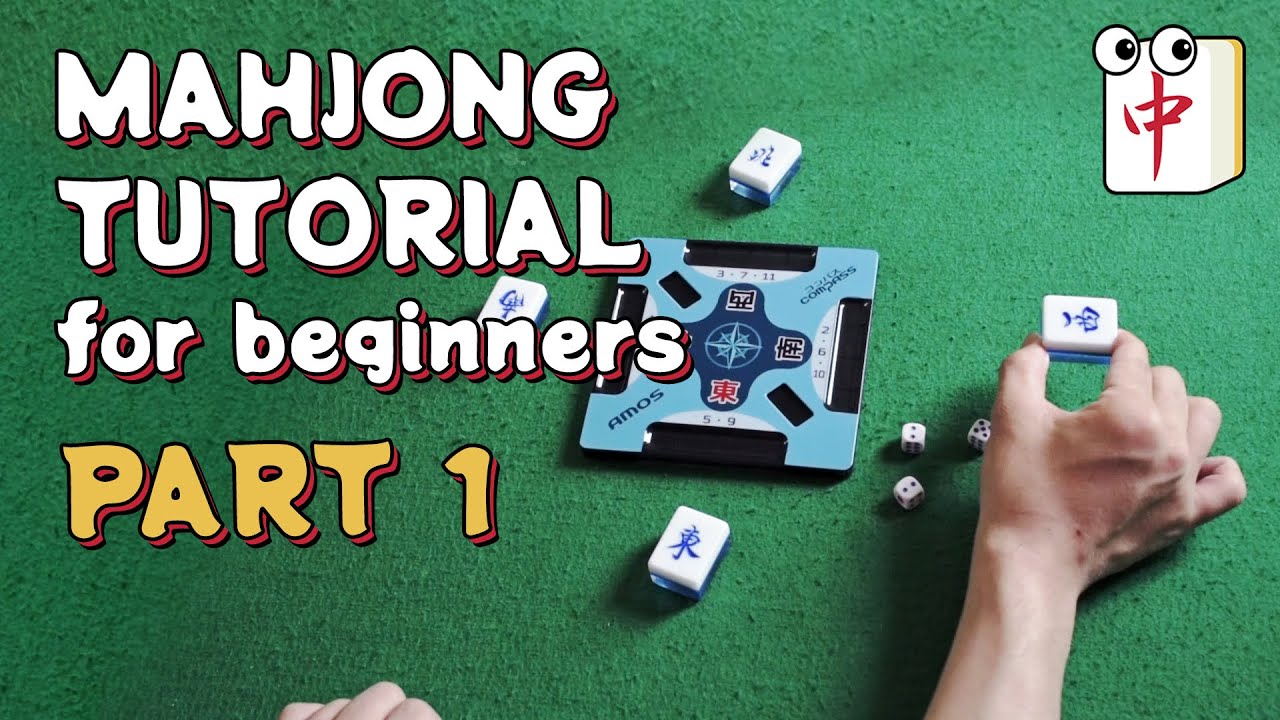
This guide is tailored specifically for the Malaysian context, acknowledging the common house rules and playing styles you'll encounter. We'll demystify the scoring, explain the significance of every tile, and provide actionable strategies that can turn your game from simply playing to strategically winning. Get ready to 'pung', 'chow', and 'hu' your way to victory!
Official Singapore Mahjong Rules & Setup
Understanding the rules is the foundation of any great Mahjong player. Singapore Mahjong has a specific set of rules, particularly around scoring, that sets it apart. Let's build your knowledge from the ground up.
The Tiles: Your Arsenal
A Singapore Mahjong set contains 148 tiles:
- Suited Tiles (108 tiles): These form the bulk of the set. They are divided into three suits, numbered 1 through 9.
- Bamboos (索子, suǒzi): Representing strings of coins.
- Circles/Dots (筒子, tǒngzi): Representing individual coins.
- Characters (萬子, wànzi): Representing tens of thousands of coins.
- Honour Tiles (28 tiles): These do not have a numerical sequence.
- Winds (風牌, fēngpái): East (東), South (南), West (西), North (北). There are four of each.
- Dragons (三元牌, sānyuánpái): Red Dragon (中), Green Dragon (發), White Dragon (白). There are four of each.
- Bonus Tiles (12 tiles): These tiles are not part of forming your hand but provide bonus points ('tai') and sometimes instant payments.
- Flowers (花牌, huāpái): Four tiles, each numbered 1-4.
- Seasons (季節牌, jìjiépái): Four tiles, each numbered 1-4.
- Animals (動物牌, dòngwùpái): Unique to Singapore/Malaysian Mahjong. Typically includes Cat (貓), Mouse (老鼠), Rooster (公雞), and Centipede (蜈蚣).
Game Objective
The primary goal is to be the first player to form a complete, legal hand of 14 tiles. A standard winning hand consists of:
- Four Sets: A set can be a 'Pung' (three identical tiles) or a 'Chow' (a sequence of three tiles in the same suit, e.g., 3-4-5 of Bamboos).
- One Pair: Two identical tiles, known as the 'eyes' (眼) of the hand.
On top of forming this structure, your hand must also meet the table's minimum 'tai' (point) requirement, which is usually 1 'tai'.
The Setup
- Seating and Winds: Players sit around a square table. The winds (East, South, West, North) are used to determine initial seating and the 'prevalent wind' of the round. East is the dealer.
- Building the Walls: All 148 tiles are shuffled face down. Each player then builds a wall in front of them, 18 tiles long and 2 tiles high (one wall will have 19 tiles).
- Breaking the Wall: The dealer (East) rolls three dice. The total determines which player's wall to break and from which point. For example, a roll of 11 means counting 11 stacks counter-clockwise starting from East's wall, then counting 11 tiles from the right end of that wall to start drawing tiles.
- Dealing: The dealer takes the first four tiles, followed by South, West, and North. This is repeated three times. Then, each player takes one more tile, and the dealer takes an extra one, bringing the dealer to 14 tiles and others to 13.
The 'Tai' (台) Scoring System
'Tai' is the point system that determines the value of a winning hand. This is the most critical part of Singapore Mahjong. Without meeting the minimum 'tai' (usually 1), you cannot declare a win. Here is a non-exhaustive list of common 'tai' combinations:
- 1 Tai:
- Pung/Kong of Dragons: A set of Red, Green, or White Dragons.
- Pung/Kong of Seat/Prevalent Wind: A set of the wind corresponding to your seat or the round's prevalent wind.
- Flower/Season Tile: If the tile number matches your seat number (East=1, South=2, etc.).
- Fully Concealed Hand (Men Qian Qing): Winning without calling any 'Chow', 'Pung', or 'Kong' (except a concealed Kong).
- Win by Self-Draw (Zi Mo): Winning by drawing the final tile yourself.
- 2 Tai:
- All Pungs (Dui Dui Hu): A hand with four Pungs/Kongs and a pair.
- Half Flush (Ban Se): A hand composed of only one suit plus honour tiles.
- 4 Tai (and above - usually the limit, or 'la-kap'):
- Full Flush (Qing Yi Se): A hand composed entirely of one suit.
- Small Dragons (Xiao San Yuan): Two Pungs of Dragons and a pair of the third Dragon.
- All Honours: A hand composed entirely of wind and dragon tiles.
- Heavenly Win (Tian Hu): The dealer wins with their initial 14 tiles. (Maximum limit)
- Thirteen Wonders (Shi San Yao): A special hand with one of each 1 & 9 of each suit, one of each wind and dragon, plus one duplicate to act as the eyes. (Maximum limit)
Special Rules: Animals & Payments
- Animal Tiles: When you draw an animal tile (Cat, Mouse, Rooster, Centipede), you reveal it immediately and draw a replacement tile. Animals often trigger instant payouts. For example, drawing the Cat makes the other three players pay you a small amount. Drawing the Rooster means the player who discarded the 'worm' (1 Bamboo) pays you.
- Kangs (Gongs): Declaring a 'Kong' (four identical tiles) earns you an immediate payment from the other players and allows you to draw a replacement tile.
- Shooter Pays All: If you win by claiming a discarded tile, the player who discarded that tile (the 'shooter') pays the full amount on behalf of all three losers. If you win by self-draw ('Zi Mo'), all three players pay you.
Winning Mahjong Strategy: From Beginner to Pro
Mahjong is a game of deep strategy. While luck in drawing tiles plays a role, a skilled player consistently outperforms a lucky one. Here's how to elevate your game.
Beginner Strategy: Build Fast, Learn the Basics
As a new player, your goal is survival and learning. Don't worry about complex, high-scoring hands yet.
- Focus on a Fast Hand: Your primary objective is to get to a 'ready' state (waiting for one tile to win) as quickly as possible. This means being flexible with your hand.
- Embrace the 'Chow': Don't be afraid to call 'Chow'. While it opens your hand and limits its scoring potential, it's the fastest way to form sets and complete your hand. Three 'Chows' and a pair is a common and effective way to learn the game flow.
- Discard Honours Early: At the start of the game, if you don't have a pair of wind or dragon tiles, they are usually safe to discard. Other players are also trying to form their hands and are less likely to want a single honour tile early on.
- Memorise 1-Tai Hands: Know the easiest ways to get your minimum 1 'tai'. Having your own seat flower, a Pung of dragons, or winning by self-draw are common ways. Always have a plan for how you will achieve your minimum 'tai'.
Intermediate Strategy: The Art of Balance and Defence
Once you're comfortable with the basics, it's time to think about maximizing value and minimizing risk.
- The Power of Concealment: A fully concealed hand ('Men Qian Qing') is worth 1 'tai', and winning by self-draw on top of that is another 'tai'. This combination is powerful. Try to keep your hand closed for as long as possible. Only 'Pung' if the set gives you 'tai' (like dragons) or if it's a crucial part of a high-scoring plan (like All Pungs).
- Defensive Play is Key: Mahjong is not just about winning; it's about not letting others win, especially with a big hand.
- Track Discards: Pay close attention to what other players are throwing away. If a player has discarded two '2 of Bamboos', the '1 of Bamboos' and '3 of Bamboos' are now safer to discard to that player.
- Identify Threats: If a player exposes two Pungs of the same suit, they are likely going for a Half or Full Flush. Stop discarding that suit to them! These are called 'obvious' hands.
- Hold Safe Tiles: Towards the end of the game (when about 15-20 tiles are left in the wall), it's often better to break up your own hand to discard a safe tile than to discard a dangerous tile that might give someone a big win. A tile that has been discarded before is generally the safest tile.
- Hand Evaluation: Constantly ask yourself: What is the potential of my hand? Is it worth chasing a 4-'tai' Full Flush, or should I settle for a faster 1-'tai' win? If your initial tiles are a mess of different suits, aim for a faster, cheaper hand. If you start with 8-9 tiles of the same suit, you have the foundation for a powerful flush.
Advanced Strategy: Table Manipulation and Probability
Top-tier players operate on another level, influencing the game and calculating odds instinctively.
- Tile Efficiency: Think about which tiles improve your hand the most. A 4-5 waiting for a 3 or 6 is a two-sided wait, which is better than a 1-2 waiting only for a 3. Advanced players construct their hands to have as many 'outs' (winning tiles) as possible.
- End-Game Hell: In the last row of the wall, the game changes. This is 'end-game'. Discarding any tile is dangerous. The best players have memorized which tiles are still 'live' (not seen on the table) and play hyper-defensively. Sometimes, the goal is simply to force a draw (a hand with no winner) rather than risk being the 'shooter'.
- Baiting and Reading: Advanced players may discard a tile to see how others react. For example, discarding a '5 of Circles' might bait someone into revealing they are collecting that suit. They also 'read' the speed of others' discards. A quick, unthinking discard is different from a player pondering for a long time before discarding a middle tile. The latter might be breaking up a set, indicating danger.
- Exploiting the 'Tai' System: Know the payment chart by heart. Sometimes, forcing a win with 2 'tai' is more profitable over time than constantly failing to build a 4 'tai' hand. Conversely, if you are far ahead in points, you can afford to play more defensively and only go for sure wins, bleeding your opponents dry slowly.
Mahjong Odds, Probabilities, and Payouts
While Mahjong has a significant luck component, understanding the underlying statistics can give you a serious edge. It helps you make informed decisions rather than just hoping for the best draw.
Unlike casino games with a fixed house edge, Mahjong is a player-versus-player game. The 'house' (often the venue or the game host) typically takes a small commission, or 'rake', from the winning pot of each hand, which is usually around 5%. Your real opponents are the other players at the table. Your goal is to have a positive win rate against them over the long term.
Key Probabilities for a Mahjong Player
Thinking in probabilities helps you assess risk and reward.
- Starting Hand: With 136 suited and honour tiles, the chance of being dealt a specific tile in your initial 13-tile hand is approximately 13 * (4/136) = ~38%.
- Drawing a Specific Tile: At the start of the game, with roughly 83 unknown tiles remaining in the wall, your chance of drawing a specific tile you need on your turn is 1/83, or about 1.2%. If there are four of that tile available, the chance is 4/83, or about 4.8%. This is why waits for multiple tiles (e.g., a 3-sided wait) are so much more powerful than waiting for a single tile.
- Pung vs. Chow: It is statistically much harder to form a Pung than a Chow. A Pung requires three identical tiles. A Chow can be formed from a wider range of tiles (e.g., a 4-5 sequence can be completed by a 3 or a 6). This is why you should only expose a Pung if it provides significant strategic value (like 'tai' points or is part of a larger plan).
- Concealed Hand Advantage: The probability of completing a fully concealed hand is lower, which is why it's rewarded with 'tai'. The strategic decision is weighing this lower probability against the higher potential payout. Skilled players know when the board state makes a concealed hand too risky to pursue.
Singapore Mahjong Payout Structure
The payout is what it's all about. Payments are based on the 'tai' value of the winning hand. While the exact monetary value is set by the players ('kaki'), the structure is consistent. Below is a common example table. Note: 'Shooter Pays' means the player who discarded the winning tile pays the full amount. 'Self-Draw' (Zimo) means each of the three other players pays the winner.
| Tai (Points) | Shooter Pays | Self-Draw Payment (per player) | Common Combinations |
|---|---|---|---|
| 1 Tai | $2 | $1 | Seat Flower, Pung of Dragons, Self-Draw |
| 2 Tai | $4 | $2 | All Pungs, Half Flush |
| 3 Tai | $8 | $4 | Half Flush + other Tai |
| 4 Tai | $16 | $8 | Full Flush, Small Dragons |
| 5 Tai (Limit/La-kap) | $32 | $16 | Heavenly Win, Thirteen Wonders, Full Flush + other Tai |
| Animal Bonus | N/A | Instant $1 from each player | Drawing a Cat or Mouse |
| Kong Bonus | N/A | Instant payment from others | Exposing or concealing a Kong |
Important Note: The payment doubles for each 'tai'. This exponential increase means stopping an opponent from getting 3 'tai' instead of 2 'tai' is a huge monetary save. This is why defensive play against high-scoring hands is so critical. Sacrificing your hand to prevent a 'la-kap' (limit) win is almost always the correct play.
How to Play a Hand of Singapore Mahjong: Step-by-Step
Let's walk through a complete hand, from shuffling the tiles to calculating the payment. This is your practical guide to getting started.
Step 1: The Setup ('Kiu Chio')
- Shuffle & Build: All 148 tiles are placed face down on the table and shuffled thoroughly by all players. This is often a noisy, social part of the ritual.
- Build Walls: Each player takes 36 tiles and builds a wall in front of them, 18 tiles wide and 2 tiles high. The walls are then pushed together to form a square.
- Determine Dealer (East): For the very first hand, dice are rolled to determine who is East (the dealer). The dealer's seat is Wind 1, the player to their right is South (2), then West (3), and North (4).
- Break the Wall: East rolls three dice. Let's say the roll is 9. East counts 9 players starting from themself (East -> South -> West -> North -> East...). The 9th player is East. So, the wall is broken from East's own wall. East then counts 9 stacks from the right end of their wall and breaks it, setting aside the tiles to the right as the 'dead wall' (for replacement tiles).
Step 2: The Deal
Starting from the break, the Dealer (East) takes a block of 4 tiles (2x2). Then South, West, and North do the same. This is repeated twice more until every player has 12 tiles. Then, each player takes one final tile in sequence. Finally, the dealer takes one extra tile, bringing their total to 14, while others have 13.
Step 3: The First Turn
The Dealer (East) starts with 14 tiles. They check their hand for any bonus tiles (Flowers, Seasons, Animals). If they have any, they declare them, place them face up, and draw an equal number of replacement tiles from the dead wall. After this, the dealer discards one tile into the center of the table, ending their turn. Now, all players have 13 tiles.
Step 4: The Gameplay Loop
The game proceeds counter-clockwise. The player whose turn it is (starting with South) draws one tile from the wall.
- After drawing, the player has 14 tiles. They can either declare a win ('Mahjong!') if their hand is complete and meets the minimum 'tai', or they must discard one tile.
- The discarded tile is placed face-up in the center.
Step 5: Calling for Discards ('Chow', 'Pung', 'Kong')
When a player discards a tile, any other player can interrupt the normal turn order to claim it to complete a set.
- Chow: Only the player whose turn is next (the player to the right of the discarder) can call 'Chow'. They must have two tiles that form a sequence with the discarded tile (e.g., they have 4-5 of Circles and the discard is a 3 or 6 of Circles). They take the tile, expose the set of three, and then discard a different tile. Play then continues from the player to their right.
- Pung: Any player who has a pair of identical tiles can call 'Pung' when anyone discards the third matching tile. They shout 'Pung!', take the tile, expose the set of three, and then discard. Play then skips to the player to their right. A 'Pung' call overrides a 'Chow' call.
- Kong: A 'Kong' (four identical tiles) can be declared in a few ways. If you have a concealed Pung and draw the fourth tile yourself, you can declare a 'Concealed Kong'. If you have an exposed Pung and draw the fourth tile, you can add it to the Pung. If another player discards the fourth tile and you have a concealed Pung, you can call 'Kong'. In all cases, you expose the set of four, take an immediate payment from the other players, and draw a replacement tile from the dead wall before discarding. A 'Kong' call overrides a 'Chow' call.
Step 6: Winning the Hand ('Hu')
A player wins by forming a legal hand of 4 sets and a pair, which also meets the minimum 'tai' requirement (usually 1 'tai').
- Winning from a Discard: If another player discards the exact tile you need to complete your hand, you can declare 'Mahjong!' or 'Hu!'. You reveal your entire hand to show it's a legal win. This is a 'Shooter' win.
- Winning by Self-Draw ('Zi Mo'): If you draw the winning tile yourself from the wall, you declare 'Zi Mo!'. This is generally better as it scores more 'tai' and gets payment from all three opponents.
Step 7: Scoring and Payment
Once a win is declared and verified, the 'tai' is calculated. The winner counts all their 'tai' from combinations, flowers, winds, etc. This 'tai' value is then cross-referenced with the agreed-upon payment chart. If it was a 'Shooter' win, that one player pays the full amount. If it was a 'Zi Mo', all three losers pay the winner their share.
Step 8: The Next Hand
If the Dealer (East) wins the hand, they remain the dealer. If anyone else wins, the dealership passes to the next player (the original South player becomes the new East). The tiles are shuffled, and a new hand begins.
Expert Verdict: Why Singapore Mahjong Reigns Supreme
After breaking down the rules, strategies, and statistics, it's clear why Singapore Mahjong is more than just a game in Malaysia—it's a cultural pillar. It's a rich, complex, and deeply rewarding experience that perfectly balances skill, luck, and social interaction.
For beginners, the initial learning curve can seem steep. Memorising the tiles, understanding the flow of play, and getting a grasp on the 'tai' system takes time and practice. However, the journey is worth it. The 'Aha!' moment when you first identify a potential Half Flush, or successfully play defensively to stop a big hand, is incredibly satisfying.
For experienced players, the game's depth is nearly infinite. The strategic nuances of hand composition, tile efficiency, and psychological warfare mean that no two games are ever the same. The constant risk/reward calculation—chasing a high-'tai' hand versus securing a quick, cheap win—is a compelling mental exercise. The Singaporean ruleset, with its emphasis on the 'tai' system and the chaos of animal tiles, adds layers of excitement and volatility that keep every player engaged until the very last tile.
Our expert opinion is unequivocal: Singapore Mahjong is one of the most brilliant strategy games ever created. Its popularity in Malaysia is a testament to its quality. It teaches patience, risk management, observation, and adaptability. It's a fantastic social lubricant, bringing friends and family together for hours of friendly competition.
The blend of offensive ambition and defensive caution required to succeed makes it a true test of a player's mettle. While luck will grant you good starting hands, it is skill that will manage those hands to victory and, more importantly, skill that will save you from devastating losses. If you're looking for a game that will challenge your mind and provide a lifetime of learning and enjoyment, look no further. Get your 'kakis' together, build those walls, and may the tiles be ever in your favour.