Malaysian Mahjong Scoring: More Than Just a Game
Welcome, mahjong kakis! If you've ever sat at a table in Malaysia, heard the satisfying clatter of tiles, and felt a bead of sweat form as someone shouts 'Pung!', you know that Mahjong is more than a game—it's a national pastime. But the true heart of Malaysian Mahjong, the element that separates the amateurs from the 'sifus', is its unique and complex scoring system. Forget just winning; winning with style and a high 'Tai' count is what truly matters. This guide is designed to demystify the entire Malaysian Mahjong scoring system, from the humble 'Gai Wu' to the legendary 'Sap Sam Yiu'.
Unlike other variants, Malaysian Mahjong incorporates special animal tiles, unique rules like 'Bao', and a specific way of counting points (Tai or Fan) that culminates in a payment system. This system is not just about luck; it's a deep strategic layer that influences every discard and every 'chow', 'pung', or 'kang' you make. Understanding how to calculate your potential score, and your opponents', is the key to moving from a casual player to a feared opponent at the table.
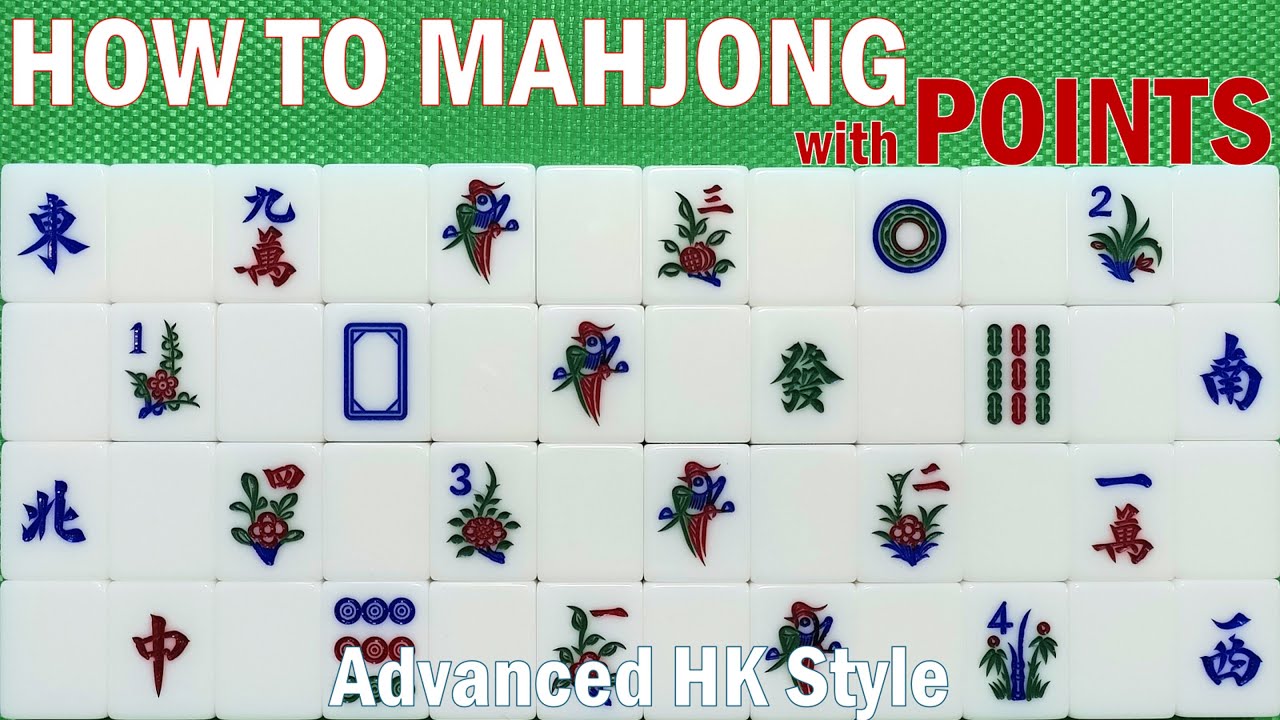
In this comprehensive guide, we will break down every component of the scoring system. We'll cover the fundamental 'Tai' values for different hands, explain the role of flowers and animals, dive into advanced strategies for maximizing your score, and provide a step-by-step process for calculating payment after a win. Whether you play with a 3 Tai or 5 Tai limit, this article will equip you with the knowledge to count points with confidence and make smarter, more strategic decisions during gameplay. Get ready to elevate your game and maybe, just maybe, win enough to pay for the next round of kopi.
The Rules of Scoring: Decoding Tai and Fan
The core of Malaysian Mahjong scoring is the 'Tai' (台) system, also sometimes called 'Fan' (番). Think of Tai as points you accumulate for the composition of your winning hand and for certain bonus tiles. The more difficult or special your hand, the more Tai it's worth. Before any game starts, players must agree on two crucial things: the payment rate (e.g., '1/2', '2/4', '3/6') and the maximum Tai limit (e.g., 3 Tai, 5 Tai, 10 Tai, or no limit). This agreement is critical as it dictates the financial stakes of the game.
Basic Points (Tai) from Hand Patterns
These are the foundational scores for completing specific patterns. Note that some values can vary slightly between groups, so confirming before you play is always wise.
- Gai Wu (鷄糊 - Chicken Hand): 0 Tai. This is the most basic winning hand with no specific scoring elements. In many games, this scores a base amount but has no Tai. Some house rules might award a small amount or require a minimum of 1 Tai to win.
- Pung Pung (碰碰糊 - All Pungs/Kongs): 2 Tai. A hand consisting of four sets of Pungs (three identical tiles) or Kongs (four identical tiles) and a pair.
- Wan Yat Sik (混一色 - Half Flush/Mixed Colour): 2 Tai. A hand composed of tiles from only one suit (Bamboo, Dots, or Characters) plus any combination of Wind and Dragon tiles.
- Ching Yat Sik (清一色 - Full Flush/Pure Colour): 5 Tai (or capped at the table limit). A powerful hand consisting of tiles from only one suit (no Winds or Dragons). This is a high-risk, high-reward hand.
Major Hands (Dai Pai - 大牌)
These hands are legendary and can often win the game on the spot by hitting the table limit.
- Siu Sam Yun (小三元 - Small Three Dragons): 3 Tai. A hand with two Pungs/Kongs of Dragon tiles and a pair of the third Dragon tile.
- Dai Sam Yun (大三元 - Big Three Dragons): 5 Tai (or capped). A hand with three Pungs/Kongs of all three Dragon tiles (Red, Green, White). This is a limit hand.
- Siu Sei Hei (小四喜 - Small Four Winds): 5 Tai (or capped). A hand with three Pungs/Kongs of Wind tiles and a pair of the fourth Wind tile. This is a limit hand.
- Dai Sei Hei (大四喜 - Big Four Winds): Capped at the limit (often considered double the limit). The ultimate Wind hand, with four Pungs/Kongs of all four Wind tiles. Extremely rare.
- Sap Sam Yiu (十三幺 - Thirteen Wonders): Capped at the limit. A special hand consisting of one of each Dragon, one of each Wind, one of '1' and '9' from each of the three suits, and one extra tile from any of these 13 tiles to form the pair. It can 'rob' a Kong.
- Tzi Yat Sik (字一色 - All Honours): Capped at the limit. A hand composed entirely of Wind and Dragon tiles.
Bonus Tai from Tiles and Conditions
These points are added on top of your hand pattern's Tai. This is where scores can escalate quickly!
- Seat/Round Wind: 1 Tai. Having a Pung/Kong of your seat Wind (e.g., East seat getting East Wind) or the prevailing Round Wind. If they are the same (e.g., East player in the East round), this can be 2 Tai.
- Dragon Pung/Kong: 1 Tai. For each Pung or Kong of any Dragon tile (Red, Green, White).
- Flowers and Seasons: 1 Tai each. Each Flower or Season tile you have collected that corresponds to your seat number (e.g., Player 1 getting Flower 1) grants 1 Tai. If you collect all four Flowers or all four Seasons, it's often a special bonus (e.g., instant 5 Tai).
- Malaysian Animal Tiles: 1 Tai each. The Cat, Mouse, Rooster, and Centipede. If you collect the Cat and Mouse, or the Rooster and Centipede, it's often a bonus. Collecting all four is a major bonus (e.g., instant 5 Tai).
- Zimo (自摸 - Self-Draw): 1 Tai. Winning by drawing the final tile yourself from the wall. This also means you get paid by all three other players.
- Gang Shang Hua (槓上花 - Flower on Kong): 1 Tai. Winning with the replacement tile drawn after declaring a Kong. This is often called 'robbing the fifth tile'.
- Hai Di Lao Yue (海底撈月 - Scooping the Moon from the Sea Bottom): 1 Tai. Winning with the very last tile drawn from the wall.
Special Rules: Kang and Bao
- Kang (槓 - Kong): When you declare a Kong, you draw a replacement tile. If another player wins on this replacement tile, it's a special win. Exposed Kongs (from a discard) are paid for instantly by the discarder in some variations. Concealed Kongs are paid by all three players upon reveal.
- Bao (包 - To Be Responsible): This is a crucial rule. If you are responsible for another player completing a very large hand, you may have to 'Bao', meaning you pay for everyone if that player wins. This applies in specific situations:
- Bao Dai Sam Yun: If you discard the third Dragon tile that allows a player to form a Pung of it, and they already have the other two Dragon Pungs exposed, you Bao.
- Bao Dai Sei Hei: Similar to above, but with the fourth Wind tile for a player who has three exposed Wind Pungs.
- Bao Ching Yat Sik: In some rules, if you discard a tile that allows a player to have their 5th or 6th exposed tile of the same suit, you may Bao for a Full Flush win. This rule varies greatly.
Winning Strategy: How to Maximise Your Score
Mastering Malaysian Mahjong isn't just about knowing the rules; it's about applying them with cunning strategy. Scoring strategy can be broken down into two main categories: offensive (building a high-scoring hand) and defensive (preventing others from doing the same). A great player knows when to switch between these modes.
Offensive Strategy: Building a Monster Hand
The goal here is to maximize your Tai count and hit the table limit if possible. This requires careful planning from the moment you receive your starting tiles.
- Assess Your Starting Hand: Look for potential. Do you have multiple tiles of one suit? A few honour tiles? A pair of Dragons or your Seat Wind? Your initial hand dictates your primary strategy. Don't try to force a 'Ching Yat Sik' (Full Flush) with only 5 tiles of one suit. Be realistic.
- Prioritise Bonus Tai: Don't underestimate the power of 'small' points. A Pung of Dragons (1 Tai), your Seat Wind (1 Tai), and winning on a self-draw (1 Tai) can turn a 0 Tai 'Gai Wu' into a respectable 3 Tai hand. Actively hold onto these key tiles if you can form a Pung.
- The Wan Yat Sik Gambit: The 'Wan Yat Sik' (Half Flush) is a fantastic middle-ground strategy. At 2 Tai, it's a solid score, but it also keeps your options open. If you get lucky with draws, you can transition into a much more powerful 'Ching Yat Sik' (Full Flush). It's less risky and keeps opponents guessing.
- Chasing the Limit (Dai Pai): Aiming for hands like 'Dai Sam Yun' or 'Siu Sei Hei' is a high-risk, high-reward play. Only attempt this if your starting hand is very strong (e.g., two pairs of dragons, two pairs of winds). Be aware that exposing two Pungs of Dragons paints a massive target on your back. Every other player will stop feeding you those tiles. This is a game of chicken; sometimes you have to break up other sets to hold onto your precious Dragon tiles.
- The Zimo Advantage: Always aim for a 'Zimo' (self-draw) if possible. Not only does it grant an extra Tai, but the psychological impact is huge, and the payout structure is better as all three opponents pay you. This means being patient and not calling 'Chow' too early, as it limits your ability to change your hand and draw new tiles.
Defensive Strategy: Don't Be the ATM
Sometimes, the best offense is a good defense. If your hand is poor and you see another player exposing high-value Pungs, your goal shifts from winning to not losing badly. Your primary objective becomes not to be the person who discards the winning tile for a massive hand.
- Tile Intelligence: Pay attention to the discards. What suits are being thrown away? What suits are being held? If a player has two exposed Pungs of Bamboo tiles, do not discard any more Bamboo tiles unless you are 100% certain it's safe. The discard pile is a history of the game; read it carefully.
- Identify the Threat: Who is the biggest threat at the table? The player with two exposed Dragon Pungs? The player who hasn't discarded any Character tiles in 10 turns? Once you identify the potential 'big winner', you can tailor your discards to starve them of the tiles they need.
- Play Safe Tiles: 'Safe' tiles are tiles you can see on the table (in discard piles or exposed sets). If all four '8 of Dots' are visible, discarding the '8 of Dots' is impossible. If three 'Red Dragon' tiles are visible, the fourth is a very safe discard. Tiles from a suit that is being heavily discarded by everyone are generally safer.
- The Art of Breaking a Hand: This is a high-level play. If you are certain an opponent is waiting for one specific tile to win a limit hand, and you are holding that tile, you may need to break up your own hand to avoid discarding it. It feels bad to ruin your own chances, but it's better than paying a massive penalty (or worse, having to 'Bao'). This is especially true late in the game when the wall is thin.
- Understanding 'Bao': Know the 'Bao' rules of your table inside and out. Never, ever discard the third Dragon tile to a player with two exposed Dragon Pungs. It's the cardinal sin of defensive mahjong. Your goal is to avoid being the person who pays for everyone else's losses.
Mahjong Odds & Hand Values
While Mahjong is a game of skill, it's also governed by probabilities. Understanding the relative difficulty and value of different hands can help you make more informed strategic decisions. Unlike casino games, Mahjong has no 'house edge' as it's a player-versus-player contest. The 'edge' comes from your skill relative to your opponents. The statistics below are estimates, as the true probability of forming any hand changes dynamically with every tile drawn and discarded.
The following table outlines some of the most common winning hands in Malaysian Mahjong, their base Tai value (before bonuses), and a general assessment of their difficulty. Remember that the final payout is determined by the total Tai count multiplied by the agreed-upon rate, capped at the table limit.
| Hand Name | Minimum Tai Value | Description | Difficulty / Rarity |
|---|---|---|---|
| Gai Wu (鷄糊) - Chicken Hand | 0 Tai | Any valid 4 sets and a pair combination. | Very Low |
| Pung Pung (碰碰糊) - All Pungs | 2 Tai | Four Pungs/Kongs and a pair. | Low-Medium |
| Wan Yat Sik (混一色) - Half Flush | 2 Tai | One suit plus Wind/Dragon tiles. | Medium |
| Siu Sam Yun (小三元) - Small Three Dragons | 3 Tai | Two Dragon Pungs and one Dragon pair. | High |
| Ching Yat Sik (清一色) - Full Flush | 5 Tai (Limit) | Hand is composed of only one suit. | High |
| Dai Sam Yun (大三元) - Big Three Dragons | 5 Tai (Limit) | Three Pungs of all three Dragon tiles. | Very High |
| Siu Sei Hei (小四喜) - Small Four Winds | 5 Tai (Limit) | Three Wind Pungs and one Wind pair. | Very High |
| Sap Sam Yiu (十三幺) - Thirteen Wonders | 5 Tai (Limit) | Special hand with 13 unique terminal/honour tiles. | Extremely High |
| Dai Sei Hei (大四喜) - Big Four Winds | Limit (Often Double) | Four Pungs of all four Wind tiles. | Extremely High |
| Tzi Yat Sik (字一色) - All Honours | Limit (Often Double) | Hand is composed of only Wind/Dragon tiles. | Extremely High |
Probability and Player Strategy
From the table, it's clear there's a trade-off between score and feasibility. While everyone dreams of a 'Sap Sam Yiu', the vast majority of games are won with more modest hands like 'Pung Pung' or 'Wan Yat Sik'.
- The 80/20 Rule: Roughly 80% of your wins will likely come from low-to-mid value hands (0-2 Tai base). Your strategy should reflect this. Focus on building solid, flexible hands.
- The Power of Bonuses: A 'Pung Pung' hand (2 Tai) that is self-drawn (+1 Tai) and includes a Dragon Pung (+1 Tai) is suddenly a 4 Tai hand. This is often a more reliable path to a high score than chasing a difficult 'Ching Yat Sik' from a weak start.
- Opponent Psychology: When you expose a Pung of Dragons, you are signaling your intention. The probability of someone discarding another Dragon tile to you drops dramatically. You must factor in not just the mathematical odds, but also the human element. Will your opponents play defensively and starve you, or will they be focused on their own hands and make a mistake? Your ability to read your opponents is a crucial 'stat' that isn't on any chart.
Ultimately, the stats show that a balanced approach is best. Go for the big hands when the opportunity presents itself with a strong starting hand, but for the majority of games, focus on solid fundamentals, accumulating bonus Tai, and playing tight, defensive mahjong to grind out wins and avoid major losses.
How to Calculate Score: A Step-by-Step Guide
The moment of truth arrives: someone yells 'Mahjong!' or 'Wu!'. The game pauses, and the accounting begins. This process can be intimidating for new players, but it's systematic. Here’s how to calculate the score and payment, step-by-step.
First, a crucial prerequisite: Before playing, you must have agreed on the payment rate and the Tai limit. Common rates are '1/2' (RM1 for 0-2 Tai, RM2 for 3 Tai, etc., doubling) or '3/6' (RM3 for 0-2 Tai, RM6 for 3 Tai, etc.). The limit is the max Tai that can be scored, e.g., 5 Tai.
Step 1: Declare the Win & Reveal Hand
The winning player declares their win, specifying if it was from a discard ('Chut Chong' / 吃铳) or self-draw ('Zimo' / 自摸). They then lay down their entire hand, including the winning tile, for all to inspect.
Step 2: Calculate Base Tai from the Hand Pattern
First, identify the primary pattern of the winning hand. Is it a simple collection of sets, or does it fit a specific category? Assign the base Tai value.
- Example: A hand with four Pungs and a pair.
- Calculation: This is a 'Pung Pung' hand. Base Tai = 2.
Step 3: Add All Bonus Tai
This is where the score climbs. Scrutinize the hand and the player's collected bonus tiles for any and all extras. Add them up systematically.
- Example Continues: The 'Pung Pung' hand also contains a Pung of Red Dragons. The player is sitting in the East seat and has a Pung of East Wind. They also have Flower tile #1 (their seat flower) and an Animal tile (e.g., Cat). Finally, the win was a self-draw.
- Calculation:
- Base 'Pung Pung': 2 Tai
- Pung of Red Dragon: +1 Tai
- Pung of Seat Wind: +1 Tai
- Seat Flower #1: +1 Tai
- Animal Tile (Cat): +1 Tai
- Self-Draw (Zimo): +1 Tai
Step 4: Sum for Total Tai and Apply Limit
Add the base Tai and all bonus Tai together to get the total raw score. Then, compare this to the agreed-upon table limit.
- Example Continues:
- Calculation: 2 (Pung Pung) + 1 (Dragon) + 1 (Wind) + 1 (Flower) + 1 (Animal) + 1 (Zimo) = 7 Tai.
- Apply Limit: The table agreed on a 5 Tai limit. Therefore, even though the hand is worth 7 Tai, the score is capped at 5 Tai. The final payable score is 5 Tai.
Step 5: Determine Payment Based on Rate Chart
Now, convert the final Tai count into a monetary value using the agreed payment rate. The rate is usually expressed as X/Y, where X is the base payment and Y is the payment for the first doubling tier.
A common Malaysian payment structure looks like this (for a '3/6' game with a 5 Tai limit):
- 0, 1, 2 Tai: RM3 (base payment)
- 3 Tai: RM6 (first double)
- 4 Tai: RM12 (second double)
- 5 Tai (Limit): RM24 (third double, capped)
In our example, the 5 Tai win would be worth RM24.
Step 6: Determine Who Pays Whom
The final step is figuring out the cash flow. This depends entirely on whether the win was from a discard or a self-draw.
- Case A: Win from a Discard (Chut Chong / 吃铳)
- The player who discarded the winning tile pays the full amount to the winner.
- In our example, if Player B discarded the tile that let our winner complete their hand, Player B pays the winner RM24. The other two players pay nothing. This is a painful, lonely payment.
- Case B: Win from Self-Draw (Zimo / 自摸)
- This is a party! The winner is paid by all three other players.
- The payment is usually split. In a '3/6' game, the full amount for a Zimo win is often the doubled amount plus the base amount. However, the most common and simpler method is that each of the three losers pays the winner the full calculated amount.
- In our example (Zimo, 5 Tai win worth RM24), Player A, Player B, and Player C each pay the winner RM24. The winner collects a total of RM72. This highlights the immense power and value of winning by Zimo.
Always clarify the specific Zimo payment rules before you play. Some groups have different calculations, but the 'everyone pays full' method is prevalent due to its simplicity and high reward.
Expert Verdict: The Heartbeat of the Game
After breaking down the components, from the humble 'Gai Wu' to the game-ending 'Dai Sei Hei', one thing becomes abundantly clear: the Malaysian Mahjong scoring system is not just a set of rules, but the very soul of the game. It is a beautifully complex engine of risk, reward, and strategy that elevates Mahjong from a simple tile-matching pastime into a deep psychological battle.
The system's genius lies in its flexibility and the agency it gives players. The pre-game negotiation of the payment rate and Tai limit is a crucial ritual that sets the tone for the entire session. A low-limit 'kopi money' game among friends has a completely different feel to a no-limit game among seasoned veterans, yet the core mechanics remain the same. This scalability is what has allowed the game to thrive in every corner of Malaysia, from family living rooms to community centres.
For new players, the scoring can seem daunting. The list of bonus Tai, special hands, and the dreaded 'Bao' rule can feel like a mountain to climb. However, our expert advice is to embrace the journey. Start by mastering the basics: 'Pung Pung', 'Wan Yat Sik', and the value of Dragons and Winds. These foundational hands are the bedrock of consistent play. Don't be afraid to ask questions. Every 'sifu' at the table was once a beginner, and the tradition of passing down knowledge is strong in the Mahjong community.
For intermediate and advanced players, the scoring system offers infinite strategic depth. It forces you to constantly perform a cost-benefit analysis. Is it worth breaking a promising hand to play defensively against a potential 'Ching Yat Sik'? Should you risk exposing a second Dragon Pung, knowing you'll be starved of the third? These are the decisions that define a skilled player. The system rewards not just good hands, but good reads, patience, and courage.
In conclusion, the Malaysian Mahjong scoring system is a masterpiece of game design. It ensures that no two games are alike and that skill, not just luck, is the ultimate arbiter of success. It encourages bold plays while punishing recklessness, creating a dynamic tension that keeps players engaged for hours. Mastering this system is to master the game itself. So, study the hands, understand the Tai, respect the 'Bao', and may your next session be filled with many victorious shouts of 'Zimo!'.