An Introduction to Riichi Mahjong in Malaysia
Welcome to the ultimate guide to Riichi Mahjong for players in Malaysia! While many Malaysians are familiar with the local 3-player mahjong variant, Riichi Mahjong, the Japanese standard, offers a completely different level of strategic depth, complexity, and excitement. If you've ever been captivated by the intense mahjong scenes in anime like 'Akagi' or 'Saki', or played it in video games like 'Yakuza' or the massively popular 'Mahjong Soul', you've witnessed the thrilling world of Riichi. This guide is your comprehensive starting point to move from a curious spectator to a confident player.
Unlike many local versions where the goal is simply to form any winning hand as quickly as possible, Riichi Mahjong introduces a critical constraint: your hand must contain at least one 'yaku' (a specific scoring element) to be valid. This single rule transforms the game from a simple race to a complex puzzle of risk management, defensive play, and strategic planning. Add to this the iconic 'Riichi' declaration, the 'furiten' rule that restricts winning, and a rich system of 'dora' bonus tiles, and you have a game that is endlessly challenging and rewarding.
This guide is designed to bridge the gap for Malaysian players. We will break down the fundamental rules, introduce the essential yaku, and dive deep into the core strategies that separate beginners from seasoned veterans. We'll cover tile efficiency, the crucial art of defense ('betaori'), and the strategic dilemma of pushing your hand versus folding to avoid dealing into a costly opponent. Whether you're a complete newcomer or a Malaysian mahjong veteran looking for a new challenge, prepare to discover why Riichi Mahjong has captured the hearts of millions of strategy enthusiasts worldwide.
Core Riichi Mahjong Rules & Setup
Understanding the foundational rules is the first step to mastering Riichi Mahjong. While the basic goal of forming four sets and a pair is familiar, the specifics of Riichi are what give the game its unique character.
The Tiles
A standard Riichi set has 136 tiles, divided into numbered suits and honor tiles:
- Manzu (Characters): Numbered 1 to 9, represented by Chinese characters for numbers.
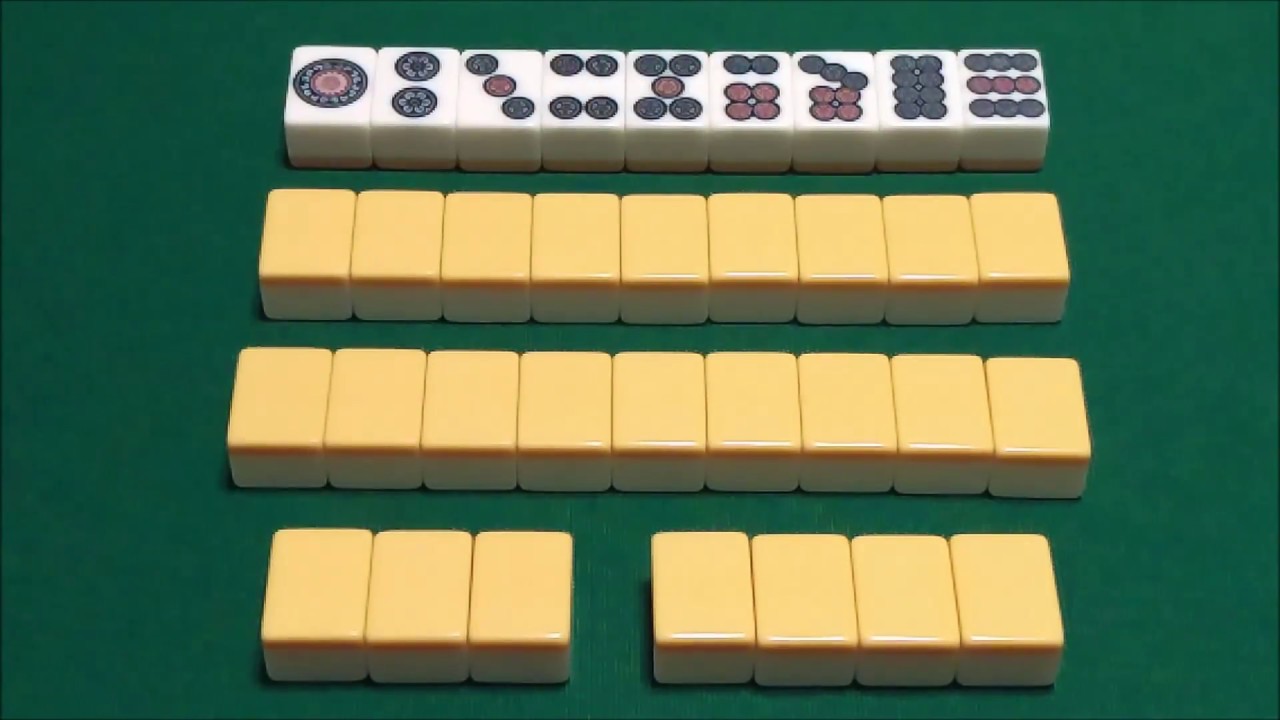
- Pinzu (Circles/Dots): Numbered 1 to 9, represented by circles.
- Souzu (Bamboo): Numbered 1 to 9, represented by bamboo sticks. The 1 of Souzu is typically depicted as a peacock.
- Honor Tiles (Jihai): These do not have numerical sequences. They are divided into:
- Wind Tiles (Kazehai): East, South, West, North.
- Dragon Tiles (Sangenpai): White Dragon (Haku), Green Dragon (Hatsu), Red Dragon (Chun).
Tiles numbered 2-8 are called Simples (Chunchanpai). Tiles 1 and 9 are Terminals (Yaochuhai). Honor tiles are also considered terminals in a broader sense. Some sets also include Red Fives (Aka Dora), which are special bonus tiles.
Game Setup and Flow
- Seating & Dealing: Players are seated according to a random draw, assigned East, South, West, and North. The East player is the initial dealer. Four walls of tiles, 17 tiles long and 2 tiles high, are built.
- Breaking the Wall: The dealer rolls dice to determine where to break the wall. The deal begins from this break.
- The Dead Wall: 14 tiles at the end of the wall are set aside. This is the Dead Wall, which contains replacement tiles for 'kans' and the 'dora' indicators.
- Dealing: Each player is dealt 13 tiles. The dealer (East) starts with 14 tiles and makes the first discard.
- Turns: Play proceeds counter-clockwise. On your turn, you draw one tile from the live wall and discard one tile from your hand into the discard pond in front of you.
Making Melds (Calls)
You can interrupt the normal flow of play to take another player's discard to complete a set. This is called 'exposing' or 'opening' your hand.
- Chii (or Chow): Calling a discarded tile to complete a sequence of three consecutive numbered tiles (e.g., 4-5-6 of Pinzu). You can only 'Chii' from the player to your immediate left.
- Pon (or Pung): Calling a discarded tile to complete a triplet of three identical tiles (e.g., three North winds). You can 'Pon' from any player.
- Kan (or Kong): Calling a discarded tile to complete a quad of four identical tiles. You draw a replacement tile from the Dead Wall. You can also form a closed Kan (using a tile you drew yourself) or add a fourth tile to an existing Pon. Calling 'Kan' opens your hand.
Important: Opening your hand with calls often reduces its value and limits the yaku you can claim. It's a strategic trade-off for speed.
Winning the Hand (Agari)
To win, your hand must consist of four sets (sequences or triplets) and one pair, and it must contain at least one 'yaku'.
- Tsumo (Self-Draw): You draw your winning tile from the wall yourself. All three other players pay you.
- Ron (Winning from a Discard): Another player discards your winning tile. Only that player pays you. You cannot 'Ron' if you are in a state of 'furiten'.
Critical Riichi-Specific Rules
These rules are what define the game.
- Yaku: A specific scoring pattern or condition. You must have at least one yaku to win. Simply having four sets and a pair is not enough.
- Riichi Declaration: If your hand is concealed (no open calls) and you are one tile away from winning (tenpai), you can declare 'Riichi'. You place a 1000-point stick on the table and discard a tile sideways. Your hand is now locked; you cannot change it. The benefit is access to potential high-scoring bonuses (Ippatsu, Ura-Dora) and adding a valuable yaku to your hand.
- Furiten: This is a crucial defensive rule. You are in 'furiten' if any of your potential winning tiles are in your own discard pile. While in furiten, you cannot win by 'Ron' from another player's discard. You can only win by 'Tsumo' (self-draw). This prevents players from waiting on tiles they themselves deemed useless earlier.
- Dora: Dora are bonus tiles that add 'han' (points multipliers) to your hand's value. They are NOT yaku. An indicator tile is flipped on the Dead Wall; the next tile in sequence is the Dora. For example, if the indicator is a 3-Pin, all 4-Pins are Dora. Winning with Dora tiles can massively increase your score, but you still need a separate yaku to win.
Winning Riichi Mahjong Strategy for Malaysians
Success in Riichi Mahjong hinges on balancing four key pillars: Hand Efficiency, Defense, Yaku Building, and Risk Assessment. Moving beyond the 'just make sets' mentality of other mahjong variants is essential.
Pillar 1: Tile & Hand Efficiency
Efficiency is about reaching 'tenpai' (one tile from winning) as quickly as possible. This involves understanding which tiles to keep and which to discard.
- Discard Priority: In the early game (first ~6 turns), the standard discard order is:
- Isolated 'guest' winds (winds that are not the round wind or your seat wind).
- Isolated honor tiles (dragons).
- Isolated terminal tiles (1s and 9s).
- Isolated simple tiles from the middle (e.g., a lone 5-pin).
- Uke-ire (Tile Acceptance): A core concept is maximizing your 'uke-ire', which is the number of tiles that can improve your hand. A shape like 4-6 of Pinzu is waiting for a 5-Pin (1 tile type, 4 tiles total). A shape like 3-4 of Pinzu is waiting for a 2-Pin or 5-Pin (2 tile types, 8 tiles total). Always aim to shape your hand towards multi-sided waits. For example, keeping a 3-4-5-6 block is better than a 3-4-5 triplet, as the former has more flexible waits.
Pillar 2: The Art of Defense (Betaori)
In Riichi, not losing points is often more important than winning them. When an opponent declares 'Riichi' or shows a dangerous open hand, you must often switch to 'betaori' (folding).
- Genbutsu (Safe Tiles): The safest tiles to discard are 'genbutsu' – the exact same tiles that the threatening player has already discarded. Since they cannot win on a tile they have already thrown away (due to furiten), these are 100% safe against them.
- Suji (Muscle Theory): If a player has discarded a 4-pin, the 1-pin and 7-pin are considered 'suji' and are relatively safer. Why? If they were waiting on a 2-3 to make a sequence, they wouldn't have discarded the 4. If they were waiting on 5-6, they wouldn't have discarded the 4. This logic applies to the 1-4-7, 2-5-8, and 3-6-9 lines. It's not foolproof, but it's a powerful defensive tool.
- Kabe (Wall): If you can see all four of a certain tile (e.g., all four 7-sou tiles are visible in discards or your hand), it creates a 'kabe' or wall. This means no one can be waiting on a sequence that uses the 7-sou, such as a 6-8 wait. This makes the tiles on the 'inside' of the wall (e.g., the 5-sou and 6-sou in this case) safer.
Pillar 3: Strategic Yaku Building
Never just collect sets aimlessly. From the very first tile, you should have a potential yaku in mind.
- Beginner-Friendly Yaku: Focus on these first.
- Riichi: The default yaku. Just keep your hand closed and get to tenpai.
- Tanyao (All Simples): A hand with no terminals (1,9) or honor tiles. Can be open or closed. Very fast and flexible.
- Yakuhai (Valued Honors): A triplet of Dragons, the Round Wind, or your Seat Wind. Easy to spot and build.
- Pinfu (No-Points Hand): A closed hand with all sequences, a non-yakuhai pair, and a two-sided wait. Often combines with Riichi and Tanyao for good value.
- Hand Direction: Look at your starting hand. Lots of tiles from one suit? Consider Honitsu (Half Flush). Lots of pairs? Consider Toitoi (All Triplets) or the legendary Chiitoitsu (Seven Pairs). Having a goal prevents you from making inefficient discards.
Pillar 4: Push vs. Fold (Risk Assessment)
This is the ultimate test of a Riichi player. An opponent declares Riichi. Do you continue trying to win ('push'), or do you fold ('betaori')?
- When to Push:
- Your hand is also tenpai or very close (iishanten).
- Your hand is very valuable (e.g., a Mangan-level hand or higher). The potential reward justifies the risk.
- You are the dealer (Oya). Your wins are worth 1.5x more, and retaining the deal is a huge advantage.
- You have many safe tiles to discard while still advancing your hand.
- When to Fold:
- Your hand is slow and low-value (e.g., 3+ tiles from tenpai, worth only 1000 points).
- You have no safe tiles to discard. Discarding a random middle tile is asking for trouble.
- You are far ahead in points late in the game. There's no need to take risks. Preserve your lead.
- The player who declared Riichi is the dealer. Dealing into the dealer is 1.5x more expensive.
A final key decision is Riichi or Damaten? (staying concealed without declaring). If your hand is tenpai but has a yaku without needing Riichi (e.g., Tanyao), you can choose 'damaten'. Pros: You can change your hand if you draw a better tile, and opponents don't know you're tenpai. Cons: You lose out on the potential for Ippatsu and Ura-Dora, and your win might be low value. Generally, if your wait is good and the hand value is low, declaring Riichi is correct. If your wait is bad or the hand is already valuable, damaten can be a powerful stealthy option.
Riichi Mahjong Odds, Probabilities & Yaku List
Riichi Mahjong is a game of managing probabilities. While you can't see your opponents' hands, understanding the likelihood of certain outcomes and the value of different winning hands (yaku) is critical. This section provides a list of common yaku and their values, which form the core scoring system of the game.
A hand's value is determined by its 'Han' and 'Fu'. Han are value multipliers from yaku and dora. Fu are base points calculated from hand composition. For simplicity, we'll focus on Han, as it's the primary determinant of a hand's score. A Yakuman is a limit hand, the highest possible value, trumping all other scoring.
Here is a table of common yaku. 'Closed' refers to a hand with no open calls (Chii, Pon, open Kan). 'Open' refers to a hand where melds have been called.
| Yaku Name | Han (Closed) | Han (Open) | Description |
|---|---|---|---|
| Riichi | 1 Han | N/A | Declared when a concealed hand is tenpai. Costs 1000 points. |
| Tanyao (All Simples) | 1 Han | 1 Han | A hand with no terminal (1,9) or honor tiles. |
| Pinfu (No-Points Hand) | 1 Han | N/A | A concealed hand with 4 sequences, a non-yakuhai pair, and a two-sided wait. |
| Iipeikou (Pure Double Sequence) | 1 Han | N/A | Two identical sequences in the same suit. |
| Yakuhai (Valued Honors) | 1 Han per set | 1 Han per set | A triplet of Dragons, the Round Wind, or your Seat Wind. |
| Chanta (Half-Outside Hand) | 2 Han | 1 Han | Every set and the pair contains at least one terminal or honor tile. |
| Sanshoku Doujun (Mixed Triple Sequence) | 2 Han | 1 Han | The same sequence of numbers in all three suits (e.g., 345 Man, 345 Pin, 345 Sou). |
| Toitoi (All Triplets) | 2 Han | 2 Han | A hand with four triplets and a pair. |
| Chiitoitsu (Seven Pairs) | 2 Han | N/A | A special hand consisting of seven different pairs. |
| Honitsu (Half Flush) | 3 Han | 2 Han | A hand using tiles from only one suit, plus any honor tiles. |
| Junchan (Fully Outside Hand) | 3 Han | 2 Han | Like Chanta, but uses only terminals (1,9) instead of honors. |
| Ryanpeikou (Two Pure Double Sequences) | 3 Han | N/A | A concealed hand with two sets of Iipeikou. A 7-pair shape is not allowed. |
| Chinitsu (Full Flush) | 6 Han | 5 Han | A hand using tiles from only one suit, with no honor tiles. |
| Kokushi Musou (Thirteen Orphans) | Yakuman | N/A | A special hand with one of each terminal and honor tile, plus one duplicate. |
| Suuankou (Four Concealed Triplets) | Yakuman | N/A | A concealed hand with four concealed triplets and a pair. |
| Daisangen (Big Three Dragons) | Yakuman | Yakuman | A hand containing a triplet of each of the three Dragon tiles. |
| Shousuushii (Little Four Winds) | Yakuman | Yakuman | A hand with triplets of three Wind tiles and a pair of the fourth. |
Key Probabilities & Statistics
- Tenpai by Turn 6: A decent hand should be aiming for tenpai around turns 9-12. Reaching tenpai by turn 6 is exceptionally fast, happening less than 10% of the time.
- Dealer Win Rate: The dealer (Oya) has a statistical advantage. They go first and their wins are worth 1.5x. A good player aims for a win rate of over 25% as dealer.
- Deal-in Rate (Houjuu-ritsu): A critical metric for defensive skill. Competitive players aim for a deal-in rate below 15%, with elite players often below 12%. This means for every 100 hands played, they deal into a winning opponent less than 15 times.
- Likelihood of Ippatsu: When you declare Riichi, the chance of winning within one turn (Ippatsu) is roughly 15-20%, depending on your wait.
- Ura-Dora Chance: After winning with Riichi, the chance of hitting at least one Ura-Dora (the bonus indicator under the Dora indicator) is about 30-35%. These odds make declaring Riichi a profitable gamble in the long run.
How to Play a Hand of Riichi Mahjong: Step-by-Step
Let's walk through the thought process of a single hand, from the deal to the conclusion. This illustrates how the strategic concepts come together in practice.
Step 1: The Deal & Initial Hand Assessment
Imagine you are the South player, and the round is East 1. You are dealt the following 13 tiles:
Hand: 2m 4m 5m / 3p 4p / 6s 7s 8s / East, East / White, White, North
Analysis: This is a very strong starting hand.
- Completed Sets: We already have a sequence (6-7-8 of Souzu).
- Pairs: We have two pairs: East Wind and White Dragon. Both of these are Yakuhai (valued honors), as East is the round wind and Dragons are always valued. This is a huge advantage.
- Potential Sets (Taatsu): We have a 2-4m block (waits for 3m), and a 3-4p block (waits for 2p or 5p).
- Isolated Tile: The North wind is the only truly isolated tile.
- Potential Yaku: The most obvious path is Yakuhai. If we make a triplet of either East or White Dragon, we will have a yaku. We could also aim for Toitoi (all triplets) or Honitsu (half flush) if our draws go that way, but Yakuhai is the clearest path.
Step 2: Early Game (Jochaku) - Turns 1-5
Your goal is to get rid of your most useless tile and improve your hand's shape.
- Your First Draw: You draw a 9-sou.
- Your Discard: The North wind is the most useless tile. It's not your seat wind, not the round wind, and doesn't connect to anything. You discard the North.
- Opponent Discards: The other players discard various simples and terminals. No one makes a call.
- Your Second Draw: You draw a 3-sou. This is useless. You discard the 3-sou.
- Your Third Draw: You draw the White Dragon! This is a jackpot.
New Hand: 2m 4m 5m / 3p 4p / 6s 7s 8s / East, East / White, White, White
You now have a concealed triplet of White Dragons. This means your hand already has a yaku (Yakuhai - White Dragon, 1 Han). You are guaranteed to be able to win if you complete the hand.
Step 3: Mid Game - Developing the Hand
Now that you have a yaku, the goal is pure speed to tenpai.
- Your Next Discard: Your hand has a 2-4-5m shape. The 5m is less efficient than the 2-4m block (which waits for 3m). You discard the 5m.
- A Player Calls 'Pon': The West player calls 'Pon' on a Red Dragon. They have exposed their hand. You now know they are likely aiming for a Yakuhai or Honitsu hand. You should be slightly more cautious about discarding honor tiles.
- Your Next Draw: You draw a 3m! Another perfect tile.
New Hand: 2m 3m 4m / 3p 4p / 6s 7s 8s / East, East / White, White, White
You now have three completed sets and a pair of Easts. You are iishanten (one tile away from tenpai). You just need to complete your 3-4p block.
Step 4: Reaching Tenpai
The very next turn, you draw the 2-pin.
New Hand: 2p 3p 4p / 2m 3m 4m / 6s 7s 8s / East, East / White, White, White
Your hand is complete! You have four sets and a pair. You are in tenpai. Your winning tile is the pair you need to break up to win, which is the East wind. Oh wait, that's not right. To be tenpai, you need to be waiting for one tile. Let's rewind the draw. Instead of 2p, let's say you drew another East wind.
Corrected Hand: 2m 3m 4m / 3p 4p / 6s 7s 8s / East, East, East / White, White, White
Now you have four triplets/sequences and are waiting to complete your pair. You discard the 4p. Your hand is now: 2m3m4m / 6s7s8s / EEE / WWW waiting on a 3p. This is tenpai.
Let's use the first scenario which is more instructive. Hand: 2m 3m 4m / 3p 4p / 6s 7s 8s / East, East / White, White, White. You are iishanten, waiting on a 2p or 5p. You draw a 9m. It's useless. You discard it. The player to your right discards a 5-pin.
Step 5: The Decision - Call or Not?
The 5-pin completes your 3-4p sequence. You could call 'Chii' to take it.
- Option A (Call Chii): You call 'Chii', expose the 3-4-5p sequence, and discard a tile. You will be in tenpai, waiting on the East wind to complete your pair. Your hand is open, so you can't declare Riichi. Your win will be worth Yakuhai (White Dragon, 1 Han) + Yakuhai (East Wind, 1 Han) = 2 Han.
- Option B (Don't Call): You ignore the 5-pin and wait to draw a 2p or 5p yourself. Your hand remains closed. If you draw the winning tile yourself, you can declare Riichi.
Analysis: Since you already have two yaku, the value is decent. Calling gives you immediate tenpai. It's a strong move. Let's say you call 'Chii'. You show the 3-4-5p and now must discard. You discard the now-useless 2m. Your hand is now tenpai, waiting for the East wind.
Step 6: Winning or Defending
A few turns pass. Suddenly, the dealer (East player) declares 'Riichi'! This is a dangerous situation. You are tenpai, but they have declared war.
- Push or Fold?: Your hand is tenpai and worth 2 Han. It's a decent hand. Your wait, however, is on an honor tile (East Wind). This is a 'pair wait', which is generally weak. There are only two East Winds left. The dealer is the East player, so it's possible they are holding one or both as their pair. Pushing a dangerous tile is risky. However, you have a very safe tile: the dealer just discarded a 4-sou. You can discard that. You decide to push for one turn by discarding the safe 4-sou you are holding (let's pretend you had one).
- The Win: The West player, who is not in Riichi, discards an East Wind.
You shout 'Ron!'. You reveal your hand. It is a valid winning hand.
Scoring:
- Yaku: Yakuhai (White Dragon) = 1 Han
- Yaku: Yakuhai (Round Wind East) = 1 Han
- Total: 2 Han. You calculate the Fu, and the West player pays you the full amount for your 2 Han hand (likely 2900 or 3900 points).
If the dealer had won, you would have had to pay them. If you had self-drawn the East wind, you would have declared 'Tsumo' and all three players would have paid you.
Expert Verdict: Is Riichi Mahjong Right for You?
Having explored the rules, delved into deep strategy, and walked through a hand, the question remains: is Riichi Mahjong the right game for you, the discerning Malaysian player?
Our expert verdict is a resounding yes, provided you are seeking a game of profound strategic depth and are willing to embrace a steep but rewarding learning curve. Riichi Mahjong is not just 'another mahjong'; it is to other variants what chess is to checkers. The addition of yaku, furiten, and defensive play elevates it from a game of speed and luck to a sophisticated battle of wits, deduction, and risk management.
For the Malaysian Mahjong Player
If your experience is primarily with 3-player or other local Malaysian 'kaki', the transition to Riichi will be eye-opening. The biggest mindset shift is moving away from simply winning fast. In Riichi, a quick, cheap win is often a valid strategy, but the game forces you to constantly evaluate your hand's potential value against the risks on the table. The concept of 'betaori' (folding) is almost non-existent in many local styles but is arguably the most important skill in Riichi. Learning to identify threats and consciously decide *not* to win is a fascinating strategic layer that makes every hand compelling, even when you have a poor starting draw.
A Game of Skill, Not Just Luck
While the luck of the draw is undeniable, Riichi Mahjong heavily rewards skill over the long run. A skilled player consistently makes better decisions about tile efficiency, correctly assesses risks when an opponent declares Riichi, and masterfully navigates the push-or-fold dilemma. They understand probabilities, know the yaku inside and out, and can read the flow of the game from the discard ponds. This high skill ceiling means that there is always something new to learn, a new strategy to perfect, and a deeper level of understanding to achieve. Your improvement over time will be tangible, measured in better rankings and a lower deal-in rate.
A Thriving Digital Community
Perhaps the best reason to get into Riichi Mahjong in Malaysia right now is the incredible accessibility. You don't need to find three other people and a physical set. Platforms like Mahjong Soul and Tenhou have brought Riichi to a global audience. These platforms are incredibly popular in Malaysia, offering a seamless way to play against others 24/7. They feature ranked matchmaking, tutorials, and a vibrant community, allowing you to learn and test your skills against players of all levels, from beginners to seasoned pros.
Final Recommendation
Riichi Mahjong is an investment. It demands patience and a willingness to study. But for strategy game enthusiasts, puzzle lovers, and anyone who feels they have hit the strategic ceiling of other mahjong variants, the return on that investment is immense. It offers a lifetime of learning and a deeply satisfying intellectual challenge. If you're ready to elevate your mahjong game and engage in a truly world-class strategic experience, it's time to build your walls, break the deal, and dive into the magnificent world of Riichi Mahjong.