Malaysian Mahjong: More Than Just a Game
In Malaysia, the clatter of mahjong tiles is more than just a sound; it's the soundtrack to family gatherings, festive seasons like Chinese New Year, and late-night sessions at the local 'kopitiam'. Cantonese Mahjong, as played in Malaysia, is a unique variant of the classic Chinese game, infused with local rules, slang, and a distinct strategic flavour. It's a game of skill, psychology, and a little bit of luck, deeply woven into the cultural fabric of the nation.
The goal is simple on the surface: be the first of four players to form a complete 14-tile hand, consisting of four sets and a pair. However, beneath this lies a complex world of scoring combinations ('fan' or 'tai'), defensive tactics, and reading your opponents. Unlike casino games where you play against the house, mahjong is a battle of wits against three other players, making every session dynamic and unpredictable. This guide is your complete resource for mastering the Malaysian Cantonese style, from understanding the tiles to executing advanced strategies that will impress even the seasoned 'uncles' and 'aunties' at the table.
Whether you're a complete beginner eager to join your family's game or an intermediate player looking to sharpen your skills, this guide will break down everything you need to know. We'll cover the fundamental rules, the crucial scoring system, and the strategies that separate the casual player from the true 'sifu' (master).
Mahjong Rules & Scoring ('Fan') Explained
Understanding the rules and, most importantly, the scoring system ('fan' or 'tai') is the key to victory. While basic gameplay is consistent, scoring rules can have slight variations from table to table. Always confirm the minimum 'fan' to win and the maximum limit ('gai-pui') before starting.
The Tiles
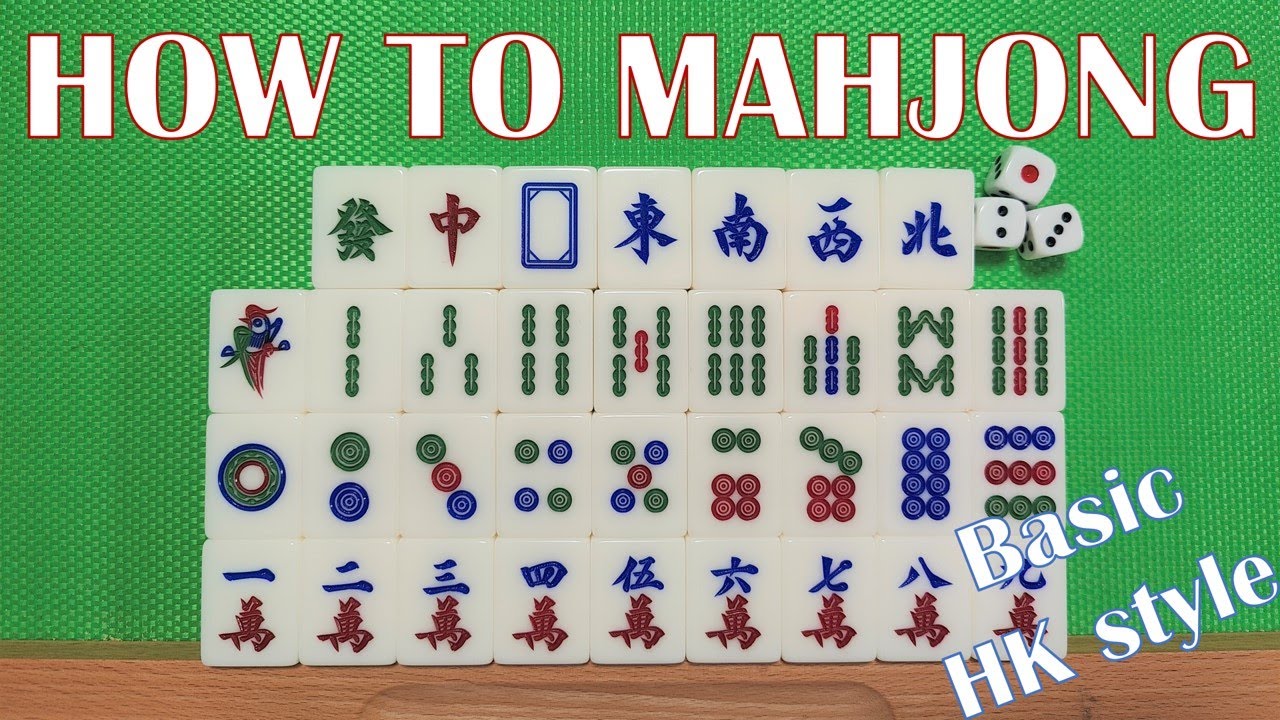
A standard Malaysian set has 144 tiles:
- Suits (108 tiles): Circles ('tong'), Bamboos ('sok'), and Characters ('man'). Each suit is numbered 1-9, with four identical tiles for each number.
- Honour Tiles (28 tiles): These have no numerical sequence.
- Winds: East, South, West, North (four of each).
- Dragons: Red Dragon ('hong zhong'), Green Dragon ('faat choy'), White Dragon ('baak baan') (four of each).
- Bonus Tiles (8 tiles): These are not used to form sets but add 'fan' to your score.
- Flowers: Numbered 1-4.
- Seasons: Numbered 1-4.
Gameplay Actions
During the game, after a player discards a tile, you can interrupt the normal turn order to claim it. The priority of claims is crucial: Mahjong > Pong/Kong > Chow.
- Chow ('Sheung'): Claiming a discarded tile to complete a sequence of three, e.g., 4-5-6 of Bamboos. You can ONLY 'chow' from the player to your left (your 'upper house'). A 'chow' is an exposed set.
- Pong ('Pung'): Claiming a discarded tile to complete a set of three identical tiles, e.g., three Red Dragons. You can 'pong' from any player. A 'pong' is an exposed set.
- Kong ('Gong'): A set of four identical tiles. This can happen in three ways:
- Claiming a discard to match three identical tiles already in your hand (Exposed Kong).
- Having three identical tiles in your hand and drawing the fourth yourself (Concealed Kong).
- Having an exposed 'Pong' and then drawing the fourth identical tile yourself ('add-on' Kong).
- Mahjong ('Wu'): Declaring a win by forming a complete 14-tile hand (four sets and a pair) using a discard or a self-drawn tile.
Malaysian Scoring System ('Fan' / 'Tai')
This is where the game's depth truly lies. A winning hand must meet a minimum 'fan' count (usually 1, 2, or 3, depending on house rules). The total 'fan' determines your payout. Here are the most common scoring patterns:
- Ping Wu (平胡 - No Points Hand): Often the base hand. Four 'chows' and a pair. In many Malaysian rules, this is worth 1 'fan' if the hand has no other scoring elements.
- Dui Dui Wu (對對胡 - All Pongs): A hand made of four 'pongs' or 'kongs' and a pair. A very common and powerful hand, typically worth 3 'fan'.
- Wun Yat Sik (混一色 - Half Flush): A hand composed of only one suit (e.g., all Bamboos) plus Honour tiles (Winds/Dragons). Also a popular target hand, usually worth 3 'fan'.
- Ching Yat Sik (清一色 - Full Flush): A hand composed entirely of one suit. This is a difficult but high-scoring hand, often worth 7 'fan' or even the maximum limit.
- Siu Sam Yun (小三元 - Small Three Dragons): A hand with two 'pongs' of Dragons, and a pair of the third Dragon. Worth around 5 'fan'.
- Dai Sam Yun (大三元 - Big Three Dragons): A hand with 'pongs' of all three Dragons. A very powerful hand, often worth the maximum limit (e.g., 10 'fan').
- Bonus Tile 'Fan': Each Flower or Season tile you draw that corresponds to your seat number (East=1, South=2, West=3, North=4) gives you 1 'fan'. If you collect all four Flowers or all four Seasons, this can also award a significant 'fan' bonus.
- Special 'Laak' Rules: 'Laak' is a local rule that doubles your final score. This is often triggered by having a 'pong' of Red Dragons, Green Dragons, or your own seat's Wind. Confirm 'laak' rules before playing!
- 'Gai-Pui' (Max Limit): Most games have a maximum 'fan' limit, such as 5 'fan' or 10 'fan'. This prevents payouts from becoming excessively large and is a crucial rule to know. For example, if the limit is 10 'fan', a hand worth 13 'fan' is still only paid as 10.
Payment
- Winning from a Discard ('Chong'): The player who discarded the winning tile pays the winner's score on behalf of all three losers. This is known as 'bao' (taking responsibility).
- Winning by Self-Draw ('Zi Mo'): If you draw the winning tile yourself, all three other players must pay you. The payout is often higher for a 'zi mo' win.
From Beginner to 'Sifu': Winning Mahjong Strategy
Mahjong is a game of shifting probabilities and reading people. A good strategy involves balancing offense (building your hand) and defense (not giving your opponents their winning tile). The best players in Malaysia are masters of defensive play.
Phase 1: The Early Game (First 5-6 Discards)
Your goal is flexibility. Don't commit to a high-scoring hand like a Full Flush too early unless your starting hand is exceptional (e.g., 9-10 tiles of the same suit).
- Discard Priorities: Get rid of 'lonely' tiles first. These are tiles that have no neighbours to form a 'chow' and no pair. The typical order is: lonely Winds, lonely Dragons, then lonely terminal tiles (1s and 9s).
- Observe Discards: Pay close attention to what others are throwing away. If two players discard the Green Dragon early, the probability of anyone forming a 'pong' of it is very low, making the other two Green Dragons relatively safe to discard later.
- Build, Don't Commit: Keep your hand fluid. Aim for multiple possibilities. A hand with 2-3-4 of Bamboos and 6-7 of Circles is more flexible than a hand locked into one suit.
Phase 2: The Mid Game (After 6 Discards until ~12 tiles left in wall)
This is where the game is won or lost. You must now assess your hand's potential and start moving towards a specific goal. At the same time, your opponents' intentions become clearer.
- Choose Your Path: Look at your hand. Are you leaning towards an All Pongs hand ('Dui Dui Wu')? Or a Half Flush ('Wun Yat Sik')? Now is the time to start holding onto specific tiles and discarding those that don't fit your target.
- Reading the Table: This is the most important skill. Look at the exposed sets ('pongs' and 'chows') and the discard piles.
- If a player has two exposed 'pongs' of Bamboos, they are likely aiming for a Half Flush or Full Flush. Do NOT discard valuable Bamboo tiles.
- If a player discards a 7 of Circles, it's highly unlikely they need the 5, 6, 8, or 9 of Circles. These are 'safe' discards relative to that player.
- If a tile has not been seen at all in the discard piles or in exposed sets, it's a 'live' or dangerous tile. Someone is probably holding them, waiting for a pair or a 'pong'.
- To 'Pong' or Not to 'Pong'?: Exposing a 'pong' gets you closer to winning but reveals your hand and reduces your flexibility. Only 'pong' if it's a key part of your target hand (like in an All Pongs hand) or if it's a high-value set like Dragons. Resisting the urge to 'pong' everything is a sign of a strong player.
Phase 3: The Late Game (Last ~12 tiles in wall)
The walls are thin, and someone is likely 'ting' (waiting for one tile to win). Your priority might need to shift entirely to defense.
- Play Defensively ('Gu Wan'): If your hand is weak and far from winning, STOP trying to win. Your new goal is to not discard the winning tile and force a draw ('lau gok'). This is a respectable and strategically sound tactic.
- Discard Safe Tiles: The safest tiles to discard are those that have been discarded recently by other players. If someone just threw a 2 of Bamboos, throwing another 2 of Bamboos is almost perfectly safe. Discarding tiles you see on the table (e.g., if all four 5-Circles are visible, any other Circle tile becomes slightly safer).
- The 'Bao' Risk: In the late game, be extremely careful. Discarding a Dragon or a prominent Wind tile that hasn't been seen can be catastrophic, as you might be the one to 'bao' a high-scoring hand like Big Three Dragons. If in doubt, break up a safe, low-value set in your own hand to discard.
Mahjong Odds & Scoring Table
Unlike games with a fixed house edge, mahjong 'odds' are about probability and risk management. Understanding the relative frequency and value of different hands is key to making good strategic decisions. A player who consistently aims for low-probability, high-reward hands will lose more often than a player who flexibly targets more common hands.
The table below shows common Malaysian Cantonese 'fan' hands, their relative difficulty/frequency, and their typical 'fan' value. Note that values can vary based on house rules and the maximum limit ('gai-pui').
| Hand Name (Cantonese) | Composition | Relative Frequency | Typical 'Fan' Value |
|---|---|---|---|
| Ping Wu (平胡) | All Chows, simple pair | High | 1 Fan |
| Dui Dui Wu (對對胡) | All Pongs/Kongs, pair | Medium | 3 Fan |
| Wun Yat Sik (混一色) | One suit + Honour tiles | Medium | 3 Fan |
| Fa Pai (花牌) | Matching Bonus Tile | Varies (Luck) | 1 Fan per tile |
| Siu Sam Yun (小三元) | 2 Dragon Pongs, 1 Dragon Pair | Low | 5 Fan |
| Ching Yat Sik (清一色) | Entirely one suit | Very Low | 7-10 Fan (often Max) |
| Zi Yat Sik (字一色) | All Honour tiles | Extremely Low | Max Fan |
| Siu Sei Hei (小四喜) | 3 Wind Pongs, 1 Wind Pair | Extremely Low | Max Fan |
| Dai Sam Yun (大三元) | 3 Dragon Pongs | Extremely Low | Max Fan |
| Sap Saam Jiu (十三幺) | 13 Orphans (1&9 of each suit, all 7 Honours, plus one duplicate) | Extremely Low | Max Fan |
Probabilities to Keep in Mind
- Waiting on an Edge vs. Middle Tile: If you are waiting on a 3 or 7 to complete a sequence (e.g., you have 1-2 or 8-9), there are only two possible tiles (the 3 or 7). If you are waiting on a middle tile (e.g., you have 4-6 and wait for a 5), there are four possible tiles. A middle wait is twice as likely to be completed.
- Waiting on a Pair vs. a Sequence: Waiting to complete a pair (e.g., you need one more 8-Bamboos to make a pair) means you are waiting for one of only two remaining tiles in the wall. This is a very difficult wait. A sequence ('chow') wait is generally easier to complete.
- Concealed vs. Exposed Hand: A fully concealed hand ('men qing' or 'tai pai') is harder to achieve but is often awarded an extra 'fan'. It also keeps your opponents guessing, which is a massive strategic advantage.
How to Play a Hand of Mahjong: Step-by-Step
Here’s a simplified walkthrough of a typical hand, from setup to scoring.
Step 1: Setup and Dealing
All 144 tiles are placed face-down and shuffled thoroughly. Each of the four players then builds a 'wall' in front of them, two tiles high and 18 tiles long. The four walls are pushed together to form a square. A dice roll determines the 'dealer' (East player) and where to 'break' the wall to begin dealing.
Step 2: The Deal
Starting from the break in the wall, each player is dealt 13 tiles in a counter-clockwise direction. The East player is dealt an extra 14th tile to begin the game.
Step 3: Sorting Your Hand
Players arrange their tiles, usually standing them up on a rack, concealed from others. Group them by suit and honours to see potential sets and sequences. At this point, you should also check for any Bonus Tiles (Flowers/Seasons). If you have any, you must declare them, place them face-up, and draw a replacement tile from the back of the wall.
Step 4: The First Turn
The East player, having 14 tiles, starts the game by discarding one tile into the center of the table, announcing its name (e.g., '8 Bamboo').
Step 5: The Cycle of Play (Draw, Discard)
The game proceeds counter-clockwise. The player to the right of East (the South player) draws a new tile from the wall. They now have 14 tiles. They must then choose one tile to discard, placing it face-up in the center. This cycle of 'draw, think, discard' continues around the table.
Step 6: Claiming Discards ('Sheung', 'Pong', 'Kong')
This is where the game gets interactive. If a player discards a tile you need, you can shout the appropriate action to claim it, interrupting the turn order.
- If you need it for a 'Chow': Shout 'Sheung!' (but only if it's the player to your left). Take the tile, lay down the completed sequence of three, and then discard a different tile from your hand. Play then continues from you.
- If you need it for a 'Pong': Shout 'Pong!' (can be from any player). Take the tile, lay down the set of three identical tiles, and discard. Play then continues from you.
- If you need it for a 'Kong' or 'Mahjong': Shout 'Kong!' or 'Mahjong!'. These actions take priority over 'Chow' and 'Pong'.
Step 7: Reaching 'Ting' (Ready Hand)
As you form sets, your hand gets closer to completion. When you are just one tile away from a winning hand of 4 sets and 1 pair, you are 'ting' or 'ready'. Your next draw or a discard from another player could be your winning tile.
Step 8: Winning ('Wu!') and Scoring
When you acquire the final tile needed to complete your hand, you declare 'Wu!' or 'Mahjong!'. You then lay down your entire hand for all to see. You calculate the 'fan' value of your hand based on the agreed-upon scoring rules. Based on the total 'fan' and whether you won by self-draw ('zi mo') or from a discard ('chong'), the other players pay you accordingly. The tiles are then reshuffled, and a new hand begins.
Expert Verdict: The Heart of Malaysian Mahjong
Cantonese Mahjong in Malaysia is far more than a simple pastime; it's a deeply ingrained social ritual and a formidable mental sport. While luck plays its part in the tiles you draw, the game is consistently dominated by players who master strategy, observation, and discipline.
Our expert analysis concludes that the single most important skill for long-term success is defensive play. The ability to recognize when your hand is weak and shift your focus from winning to preventing others from winning is what separates the novices from the 'sifu'. In a game where one player's catastrophic discard can pay for a massive win ('bao'), avoiding that mistake is often more valuable than chasing a low-probability, high-fan hand.
Furthermore, the Malaysian variant, with its specific 'fan' rules, 'laak' doubles, and 'gai-pui' limits, requires a unique strategic approach. You must constantly calculate risk versus reward. Is it worth breaking up a safe hand to chase that extra 'fan' for a Half Flush? Can you afford to discard a 'live' Dragon tile in the late game? These are the questions that winning players constantly ask themselves.
Ultimately, to master Malaysian Mahjong is to master a balance of aggression, defense, and psychological awareness. Pay attention to the discards, learn the 'fan' values by heart, and never underestimate the power of a well-timed defensive move. Embrace the social aspect, enjoy the friendly banter, but always keep your strategic mind sharp. Do this, and you'll not only win more games but also gain a deeper appreciation for this beloved Malaysian tradition.