An Introduction to Malaysian Mahjong
Welcome, future Mahjong 'sifu'! In Malaysia, the clatter of Mahjong tiles is more than just a game; it's a soundtrack to family gatherings, festive seasons like Chinese New Year, and late-night 'lepak' sessions with friends. It’s a game of skill, strategy, and a little bit of luck that has been woven into the cultural fabric of the nation. But for a beginner, the array of tiles, cryptic calls of 'Pong!' or 'Chow!', and the complex scoring can be intimidating. Fret not! This guide is your ultimate ticket from a curious novice to a confident player, tailored specifically for the Malaysian style of play.
Unlike the poker face required in card games, Mahjong is a vibrant, social affair. It's about reading the table, calculating probabilities, and making bold decisions. This guide will demystify the entire process. We'll cover everything from identifying the tiles and setting up the game to mastering beginner and intermediate strategies. You'll learn the crucial differences in Malaysian Mahjong, including the role of the unique Animal and Flower tiles, and how to calculate 'tai' (or 'fan') to secure those satisfying wins. Whether your goal is to join the family table with confidence or to start your own Mahjong 'kaki' (group), you're in the right place. Let's begin your journey to mastering this timeless game.
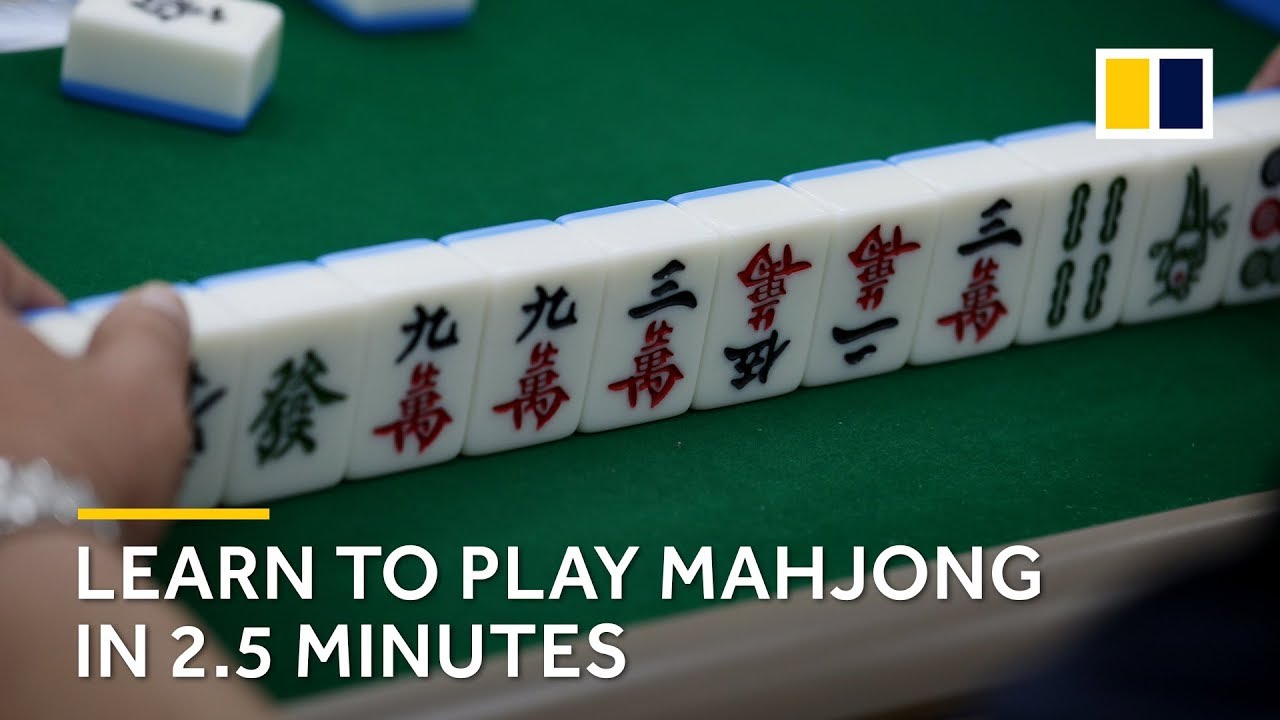
This video provides a great visual starting point for understanding the basic flow and components of the game. Watch it to familiarize yourself with the look and feel of the tiles and the table setup before we dive into the nitty-gritty details.
Malaysian Mahjong Rules & Game Setup
Understanding the rules is the first wall you need to break. While Mahjong has many regional variations, Malaysian Mahjong has its own distinct flavour. Let's break it down.
The Mahjong Tiles (148 Tiles)
A standard Malaysian Mahjong set consists of 148 tiles. Let's categorize them:
- Suited Tiles (108 tiles): These are the bread and butter of your hand, divided into three suits, numbered 1 through 9.
- Circles (Tongzi / 筒子): Representing coins or dots.
- Bamboos (Suozi / 索子): Representing strings of coins or bamboo sticks. Note that the 1-Bamboo is often depicted as a bird (the sparrow).
- Characters (Wanzi / 萬子): Representing multiples of 10,000, marked with the Chinese character 'Wan' (萬).
- Honour Tiles (28 tiles): These are powerful tiles that don't belong to a suit.
- Winds (Feng / 風): East (東), South (南), West (西), North (北). There are four of each.
- Dragons (Sanyuanpai / 三元牌): Red Dragon (中), Green Dragon (發), White Dragon (白). There are four of each. The White Dragon is often a blank tile or has a rectangular frame.
- Bonus Tiles (12 tiles): These tiles provide bonus points ('tai') and are not used to form sets. When you draw one, you declare it, place it face up, and draw a replacement tile from the back of the wall.
- Flowers (4 tiles): Each corresponds to a season (Spring, Summer, Autumn, Winter).
- Animals (8 tiles): In many Malaysian sets, you'll find Cat, Rat, Rooster, and Centipede, plus four 'Fly' or Joker tiles. Getting your own animal or a full set of four can lead to special payouts.
The Objective
The primary goal in Mahjong is to form a complete, winning hand. A standard winning hand consists of 14 tiles arranged into: Four Sets and One Pair (an 'eye').
- A Set can be:
- Chow (吃): A sequence of three consecutive tiles of the same suit (e.g., 3, 4, 5 of Circles).
- Pong (碰): A triplet of three identical tiles (e.g., three Red Dragons or three 8-Bamboos).
- Kong (杠): A quadruplet of four identical tiles (e.g., four East Winds). A Kong acts as a set, but you must draw a replacement tile after declaring it, maintaining 14 tiles in your hand for a win.
- A Pair (The Eye / 眼): Two identical tiles (e.g., two 9-Characters).
Game Setup and Flow
- Seating and Dealing: Players sit around a square table. The 'East' wind position is the dealer for the first round. All 148 tiles are shuffled face down. Each of the four players then builds a 'wall' in front of them, 18 or 19 tiles long and 2 tiles high.
- Breaking the Wall: The dealer (East) throws two dice to determine where the wall is 'broken'. The count starts from the dealer's wall and proceeds counter-clockwise. The player whose wall is selected then uses the dice total to count that many stacks from the right end of their wall. The tiles are drawn starting from the left of that break.
- Dealing: The dealer takes the first four tiles (2 stacks), followed by the other players in a counter-clockwise direction. This is repeated three times until everyone has 12 tiles. Then, the dealer takes two more tiles (one from the top row, one from the bottom), and everyone else takes one, giving the dealer 14 tiles and others 13.
- Gameplay: The dealer starts by discarding one tile into the center of the table. Play proceeds counter-clockwise. Each player's turn consists of drawing one tile from the wall and then discarding one tile.
Special Moves: Interrupting the Flow
This is where the game gets exciting. You don't always have to wait for your turn.
- Chow (吃): If the player to your immediate left discards a tile that completes a sequence in your hand, you can call 'Chow'. You must then reveal the sequence, place it face-up on the table, and discard a different tile from your hand. You cannot 'Chow' a discard from any other player.
- Pong (碰): If any player discards a tile that you have a pair of in your hand, you can call 'Pong'. This is a higher priority than 'Chow'. You shout 'Pong!', reveal your triplet, place it face-up, and discard a tile. The turn then skips to you, and play continues counter-clockwise from your position.
- Kong (杠): If any player discards a tile and you hold three identical tiles, you can call 'Kong'. You take the tile, reveal the set of four, and draw a replacement tile from the back of the wall before discarding. If you draw a fourth matching tile to a 'Pong' you already have exposed, you can also declare a 'Kong'. If you have four identical tiles concealed in your hand, you can also declare a 'Kong' on your turn. A Kong is the highest priority move.
- Mahjong / Hu (胡): If any player discards a tile that completes your winning hand (4 sets and a pair), you can declare 'Mahjong!' or 'Hu!'. This ends the round. You can also win by drawing the winning tile yourself, which is called 'Zimo' (自摸) and often scores higher.
Scoring in Malaysian Mahjong: The 'Tai' (台) System
Winning isn't enough; your hand must have a minimum value, calculated in 'tai' (also called 'fan' or 番). The minimum 'tai' required to win is determined by the house rules of your 'kaki' (e.g., 1 tai, 2 tai, or even 3 tai minimum). Here are some common scoring combinations:
- Pong Pong / Dui Dui Hu (對對胡): Hand consists of four 'Pongs' and a pair. (Usually 2-3 tai).
- Half Flush / Ban Se Yik (半色): Hand consists of only one suit plus Honour tiles. (Usually 2-3 tai).
- Full Flush / Qing Se Yik (清色): Hand consists of only one suit (no Honour tiles). (High scoring, e.g., 5-10 tai).
- All Honours / Zi Se Yik (字色): Hand consists of only Wind and Dragon tiles. (Very rare, very high scoring).
- Ping Hu (平胡): The most basic winning hand, consisting of four 'Chows' and a pair, with no bonus 'tai' from Pongs of Dragons/Winds. This is often the 0 or 1 'tai' baseline.
- Bonus Tai: You get extra 'tai' for having Pongs/Kongs of Dragons, your seat wind, or the prevailing round wind. Animal and Flower tiles also add 'tai'.
Winning Strategy Guide for Beginners
Knowing the rules is one thing, but winning requires strategy. Mahjong is a dynamic game of balancing offense (building your own hand) and defense (preventing others from winning). Here’s how to think like a 'sifu'.
Early Game Strategy (First 5-6 Discards)
The early game is about building a flexible foundation and getting rid of useless tiles.
- Discard Honours First: Isolated Wind and Dragon tiles are usually the first to go. Why? They can't form 'Chows' and are liabilities early on. If another player 'Pongs' your discarded Dragon early, it gives them a 'tai' and reveals their intentions. It's better to let them go when everyone's hand is still developing. An exception is if you have a pair of Dragons or your own Seat Wind – these are valuable and worth keeping.
- Discard Terminal Tiles Next: Tiles numbered 1 and 9 are called terminals. They are less flexible than middle tiles (3-7) because they can only form one 'Chow' (e.g., 1-2-3 or 7-8-9). A 5-tile, on the other hand, can form three potential 'Chows' (3-4-5, 4-5-6, 5-6-7). Discard isolated terminals before breaking up potential sequences.
- Aim for Flexibility: Don't commit to a specific hand too early. Keep your options open. A hand like '2-3-5-6-8-9' of a suit is much weaker than '2-3-4-5-6-7'. The latter has multiple connected pairs and sequences, giving you more ways to draw a useful tile.
- Avoid Calling 'Chow' Prematurely: Calling 'Chow' early locks a set and reveals part of your hand to your opponents. It reduces your hand's flexibility. Only 'Chow' in the early game if it significantly improves your hand, for example, by getting you closer to a high-scoring hand like a Full Flush or if it gets you to a 'waiting' state (Ting).
Mid-Game Strategy (After 6 Discards)
The discard piles are now full of information. It's time to pay attention and adjust.
- Read the Discards (The 'River'): Look at what your opponents are throwing away. If a player is discarding a lot of Bamboo tiles, they are likely not collecting Bamboos. This makes Bamboo tiles 'safer' to discard. Conversely, if a player never discards Character tiles, they are probably building a hand with them, possibly a Half or Full Flush. Avoid discarding Character tiles in their direction.
- Defensive Play ('Kiasi' Mentality): By the mid-game, someone is likely 'waiting' (one tile away from winning). Your priority might shift from winning yourself to not being the one who discards the winning tile. A 'safe' tile is one you've seen discarded recently or one that you know is unlikely to complete an opponent's hand based on their exposed sets and discards. Discarding a tile that matches an opponent's exposed 'Chow' (e.g., they showed 4-5-6, you discard a 4) is generally safe.
- The Power of 'Pong': Unlike 'Chow', calling 'Pong' can be a powerful strategic move. It gives you an immediate 'tai' (if it's a Dragon/valuable Wind), messes up the turn order, and accelerates your hand towards the 'Pong Pong' pattern. However, it also reveals a third of your hand. Use it wisely. 'Pong' to get to a 'waiting' hand or to secure a valuable triplet.
- Commit or Fold: Now is the time to decide on your primary goal. Is your hand strong enough to win? Go for it aggressively. Is your hand weak and disconnected? Switch to defensive mode. Break up valuable pairs if necessary to discard a safe tile and avoid a big loss. It's better to lose a small amount in a draw than to pay for a big winning hand.
Late Game Strategy (Last Wall)
The walls are short, and the tension is high. Every discard is critical.
- Ultimate Defense: If you are not in a 'waiting' position, your absolute priority is to discard safe tiles. The safest tiles are those that have been discarded already. If no such tiles are available in your hand, discard tiles that are likely safe based on the 'river'. For example, if the 4-Circle has been discarded three times, the fourth 4-Circle is completely safe unless someone is trying for a very rare single-wait hand.
- The 'Kanasai' Discard: Sometimes you're forced to discard a dangerous tile. If multiple players seem to be waiting, try to discard a tile that might play into a smaller hand. Discarding a Dragon or Wind tile is often riskier than a simple suit tile, as it could complete a high-scoring hand for someone.
- Going for the Win: If you are 'waiting', be patient. Don't change your hand unless you draw a tile that allows you to wait on more potential tiles (a better 'wait'). If you have a choice, try to wait on tiles that haven't appeared much in the discard pile, as they are more likely to still be in the wall or in other players' hands.
Mahjong Odds, Probabilities & Statistics
Top-tier Mahjong players don't just rely on gut feeling; they have an innate understanding of probability. While you don't need to be a math genius, knowing some basic odds can drastically improve your decision-making.
The fundamental concept is tile efficiency. You want to maximize the number of 'outs' or useful tiles you can draw. A hand that can be improved by 8 different tiles is statistically superior to a hand that can only be improved by 2.
Hand Rarity and Scoring Potential
Not all winning hands are created equal. Some are common and score low, while others are legendary. Understanding their frequency helps you decide which hands are realistic to pursue.
| Hand Name (Pinyin/English) | Rarity | Typical Malaysian 'Tai' Value | Strategic Notes |
|---|---|---|---|
| Ping Hu (All Chows) | Very Common | 0-1 Tai | The most basic win. Focus on this as a beginner. Easy to form but needs other elements for a minimum 'tai' win. |
| Dui Dui Hu (All Pongs) | Uncommon | 2-3 Tai | A strong hand. Requires aggressive 'Pong' calls. Less flexible and very obvious to opponents. |
| Ban Se Yik (Half Flush) | Uncommon | 2-4 Tai | Good balance of scoring and feasibility. Requires collecting one suit plus honours. Watch discards carefully. |
| Qing Se Yik (Full Flush) | Rare | 5-10 Tai | A game-winning hand. Difficult to assemble without being noticed. You must be willing to discard all other suits early. |
| Hun Yao Jiu (All Terminals & Honours) | Very Rare | 5-8 Tai | Consists only of 1s, 9s, Winds, and Dragons. A difficult and inflexible hand to build. |
| Xiao San Yuan (Small Three Dragons) | Rare | 4-6 Tai | Two Pongs and one pair of Dragons. A very powerful and high-scoring hand. Keep dragon pairs secret for as long as possible. |
| Da San Yuan (Big Three Dragons) | Extremely Rare | Max Limit (e.g., 10 Tai) | Three Pongs of all three Dragons. One of the highest scoring hands in the game. If you have two Dragon pongs, opponents will stop discarding the third. |
| Shi San Yao (Thirteen Wonders) | Astronomically Rare | Max Limit (e.g., 10 Tai) | A unique hand of one of each 1, 9, Wind, and Dragon tile, plus one duplicate to form the pair. Doesn't follow the 4 sets/1 pair rule. |
Probabilistic Decision-Making
- Chow vs. Pong: A sequence wait like 4-5 waiting for a 3 or 6 has 8 potential tiles (four 3s, four 6s). A pair waiting for a third tile to 'Pong' has only 2 potential tiles left in the game. From a pure drawing perspective, 'Chow' formations are more efficient. However, a 'Pong' can be claimed from anyone and often adds 'tai'.
- Concealed vs. Exposed Hand: Keeping your hand concealed (no exposed Chows or Pongs) is statistically advantageous. It keeps opponents guessing, preserves your flexibility to change strategies, and is a requirement for certain high-scoring hands. An exposed hand reduces your potential winning tiles and makes you a predictable target.
- Tile Distribution: There are four of every tile. Keep a mental count. If you see three 8-Bamboos in the discard piles, you know your pair of 8-Bamboos can never become a 'Pong'. This information is critical for deciding which parts of your hand to abandon.
How to Play: A Step-by-Step Round Guide
Let's walk through a simplified round of Malaysian Mahjong to see how all the rules and strategies come together.
Players: Ali (East), Bala (South), Chan (West), Devi (North).
- Setup & Deal: The 148 tiles are shuffled and walls are built. Ali, as East Wind (dealer), rolls the dice. The wall is broken, and tiles are dealt. Ali gets 14 tiles; everyone else gets 13.
- Round Start: Ali examines his 14 tiles. He has a mix of suits and a few isolated honour tiles: a North Wind and a White Dragon. Following early game strategy, he discards the White Dragon.
- Bala's Turn: Bala needs the White Dragon for a Pong, but decides it's too early to reveal his hand. He ignores it. He draws a tile from the wall. It's not useful. He discards an isolated 9-Circle.
- Chan's 'Chow' Interruption: Chan has the 7-Circle and 8-Circle in his hand. Bala's discarded 9-Circle completes his sequence. He calls out, 'Chow!' He picks up the 9-Circle, lays the 7-8-9 Circle sequence face-up in front of him, and then discards an unwanted tile, say, a 2-Bamboo. Devi's turn is skipped because Chan interrupted the flow.
- Devi's Turn: Play now continues from Chan, so it's Devi's turn. She draws a tile. It's a Red Dragon. She already has a pair of Red Dragons! This is a valuable 'tai'-scoring set. She keeps it and discards a 'safe' tile she saw discarded earlier, another 9-Circle.
- Ali's 'Pong' Interruption: Ali, who is East, sees Devi's Red Dragon discard. He has a pair of Red Dragons in his hand. He yells 'Pong!' This is a higher priority than a Chow and can be called from any player. He takes the Red Dragon, reveals his triplet of Red Dragons face-up, and discards a tile. The turn order is now reset from him. Bala and Chan have been skipped.
- Mid-Game & Waiting: The game continues. Players are drawing and discarding, reading the 'river' of discards to guess what others are collecting. Chan has his 'Chow' exposed, so players avoid giving him nearby Circle tiles. Ali has his Red Dragon 'Pong' exposed, so players know he has at least 1 'tai'. Bala has been quietly collecting Bamboo tiles. His hand is now '1-1-2-3-4-5-6-7-8' of Bamboos and a pair of 5-Circles. He is 'waiting' (Ting). He needs a 3, 6, or 9 of Bamboos to win with a Full Flush hand.
- End of the Round: 'Zimo!' It's Bala's turn. He draws from the wall. It's the 6 of Bamboos! He has completed his hand (two chows 2-3-4, 7-8-9, a pong of 5s he formed by drawing them, and a pair of 1s). He dramatically slams the tile on the table and declares 'Zimo!' (self-drawn win).
- Scoring: The round ends. Bala reveals his full hand. It's a Full Flush ('Qing Se Yik'), a very high-scoring hand. Because it was a 'Zimo', he often gets paid double by everyone. Ali, Chan, and Devi calculate the total 'tai' value of Bala's hand according to their house rules and pay him accordingly.
- Next Round: Because Bala (South) won, the Wind positions might rotate, or if the house rule says the winner becomes East, Bala is now the new dealer. The tiles are shuffled, and a new round begins.
Expert Verdict: Why You Should Play Mahjong
Mahjong is more than just a game; it's a mental workout, a social ritual, and a fantastic pastime. For beginners in Malaysia, taking the step to learn can feel daunting, but the rewards are immense. This guide has equipped you with the foundational knowledge of rules, scoring, and strategy, but the true learning happens at the table.
The beauty of Malaysian Mahjong lies in its nuances. The 'kaki' culture means that rules can be fluid, with each group having its own 'house rules' about minimum 'tai', special payouts for animal tiles, or penalties for certain mistakes. This is part of the charm. The core skills you've learned here—tile efficiency, defensive play, and reading the table—are universal and will serve you in any game you join.
Our expert advice is simple: Play. Don't be afraid to make mistakes. Join a friendly game with family or friends who are willing to teach you. Announce your actions clearly ('Chow', 'Pong') and don't hesitate to ask 'Why?' when an experienced player makes a move you don't understand. Every round is a lesson. You'll learn to spot the player going for a flush, feel the tension when the walls get short, and experience the pure joy of a 'Zimo' on a big hand.
Mahjong teaches patience, observation, and calculated risk-taking. It’s a game that will challenge you for a lifetime, with layers of strategy that reveal themselves the more you play. So gather your friends, get a set (or download an app to practice), and start shuffling. The clatter of tiles is calling.