Overview: Splitting to Win in Malaysian Blackjack
Welcome to the ultimate guide for Malaysian Blackjack enthusiasts looking to master one of the game's most powerful and misunderstood moves: splitting pairs. While many players view Blackjack as a simple game of luck, seasoned pros know it's a battle of skill, strategy, and calculated risk. The decision of when to split a pair of cards is a critical moment that separates casual players from serious strategists. Get it right, and you can turn a losing hand into a double win; get it wrong, and you could double your losses. This guide is designed specifically for players in Malaysia, whether you're playing at the vibrant tables of Resorts World Genting or enjoying the convenience of online casinos. We'll demystify the art of splitting, providing you with a clear, actionable strategy based on mathematical principles. By understanding not just *what* to do, but *why* you're doing it, you can dramatically reduce the house edge and significantly increase your chances of walking away a winner.
This comprehensive guide will cover everything you need to know. We'll start with the fundamental rules of splitting, including common variations you'll encounter. Then, we'll dive deep into the core strategy, breaking down every pair into three simple categories: 'Always Split', 'Never Split', and 'Conditional Splits'. We will back this strategy with hard data, exploring the odds and expected values that govern these decisions. Finally, we'll walk you through a step-by-step process of how to execute a split at the table, complete with practical scenarios to solidify your understanding. Prepare to transform your Blackjack game from a hopeful gamble into a calculated assault on the dealer's hand.
The Golden Rules: When and How You Can Split in Blackjack
Before you can apply a winning strategy, you must first understand the mechanics and rules governing the split. A 'split' is an option offered to you only when your first two cards dealt are a pair of the same rank, such as two 7s or two Kings. When you choose to split, you are essentially turning one hand into two separate hands, giving you two chances to beat the dealer. Here's how it works and the crucial rule variations Malaysian players must be aware of.
The Splitting Procedure
- Initial Deal: You are dealt two cards of the same value (e.g., two 8s).
- Decision and Bet: You decide to split. To do this, you must place an additional wager on the table equal to your original bet. This second bet covers your new, second hand.
- Separation: The dealer will separate your two original cards. They become the first card of two new, independent hands.
- Playing the Hands: The dealer will deal a second card to your first hand (the one on your right). You then play this hand to completion (hit, stand, double down) as you normally would. Once you stand or bust on the first hand, you move to the second hand, receive a second card for it, and play that hand to completion.
Critical Rule Variations to Watch For
The profitability of splitting is heavily influenced by the specific rules at your table. These can vary between different casinos in Malaysia and online platforms. Always check the table rules before you play. Here are the most important variations:
- Double After Split (DAS): This is a very player-friendly rule. It means you are allowed to double down on your new hands after you have split them. For example, if you split a pair of 8s and the first hand receives a 3 (for a total of 11), DAS allows you to double your bet on that promising hand. If a table offers DAS, it makes splitting certain pairs (like 2s, 3s, and 4s against weak dealer cards) much more attractive. Always look for tables with this rule.
- Re-Splitting Pairs (RSA): What happens if you split a pair of 6s, and one of your new hands receives another 6? The rule on re-splitting determines if you can split again. Most casinos allow you to re-split up to a total of three or four hands. This is generally a favourable rule for the player, as it allows you to press your advantage when the situation is right.
- Splitting Aces: Aces are a special case. While you should always split them, the rules are often more restrictive. Typically:
- You are only allowed to split Aces once (no re-splitting Aces).
- You will only receive one additional card on each split Ace. The hand is then final, and you cannot hit again, regardless of the card you receive. For example, if you split Aces and receive a 4 on one of them, you are stuck with a hand of 15. Despite this limitation, splitting Aces remains the single most powerful play in the game.
- Hitting Split Aces: In very rare, player-friendly games, you might be allowed to hit on split Aces. If you find a game with this rule, it's incredibly advantageous. However, the standard rule in Malaysia and worldwide is that you only get one card per split Ace.
- Splitting Unlike 10-Value Cards: Can you split a hand containing a King and a Jack? In virtually all Blackjack games, the answer is yes. Any two cards with a value of 10 (10, Jack, Queen, King) can be treated as a pair for the purpose of splitting. However, as we will see in the next section, you should never do this.
Understanding these rules is non-negotiable. They directly impact the mathematical correctness of your splitting decisions. Before placing your first bet at a new table, take a moment to read the felt or ask the dealer about the rules on DAS, re-splitting, and handling Aces. This knowledge is your first step towards strategic play.
The Unbreakable Strategy: Always, Sometimes, Never Split
This is the heart of the guide. To make splitting simple, we can divide all pairs into three distinct groups based on basic Blackjack strategy. This strategy is mathematically proven to be the optimal way to play every hand, maximising your potential return over thousands of hands. Memorise these rules, and you'll be making pro-level decisions in no time.
Category 1: ALWAYS Split
These are the two pairs you should split every single time you get them, regardless of what the dealer is showing. The maths is so overwhelmingly in your favour that any other decision is a significant mistake.
- Aces (A,A): This is the golden rule of Blackjack. Always split Aces. A hand of two Aces is a very weak starting point. It can be counted as either 2 or a soft 12. Hitting a 12 is risky, and a total of 2 is useless. By splitting, you transform this terrible hand into two incredibly powerful starting hands, each valued at 11. Now, any 10-value card gives you an instant Blackjack (or 21, depending on house rules for split Aces), and many other cards give you a very strong total. The potential reward of creating two powerhouse hands far outweighs the risk. Not splitting Aces is one of the biggest and most common errors made by novice players.
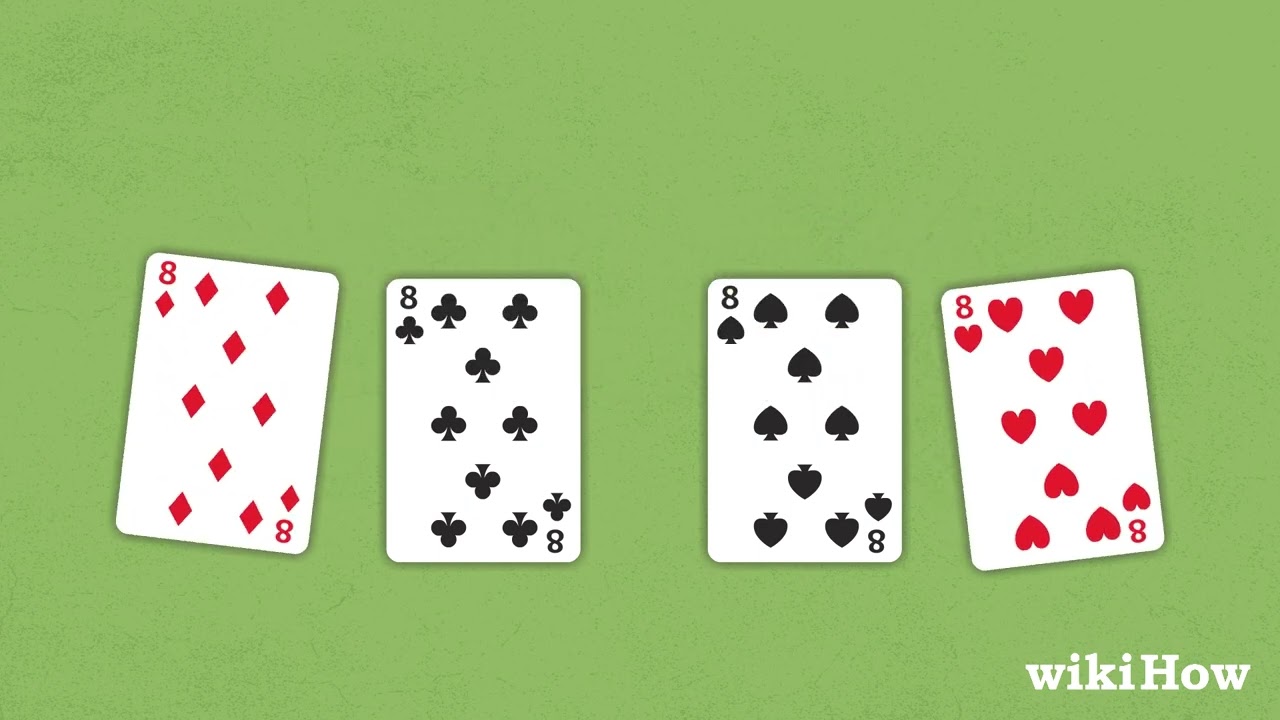
- Eights (8,8): This is the second unbreakable rule. Always split Eights. A hand of two 8s gives you a total of 16. This is widely considered the worst possible hand in Blackjack. It's too low to feel comfortable standing (you'll lose if the dealer has 17 or better), but it's very risky to hit (any card higher than a 5 will cause you to bust). By splitting the 8s, you break up this terrible hand and create two new hands, each starting with a value of 8. This is a much more flexible and promising position. You have a decent chance to make two hands of 18 or 19, turning a near-certain loss into a potential win or push on two separate hands. You are playing defensively here, mitigating a bad situation.
Category 2: NEVER Split
Just as some pairs are always good to split, some are always bad. Splitting these pairs means giving up a strong position or creating two weak hands from a good one. Avoid splitting these at all costs.
- Tens (10,10, J,J, Q,Q, K,K): Never split 10s. A hand of two 10-value cards gives you a total of 20. This is the second-best hand in Blackjack, beaten only by a natural Blackjack. It is a winning hand an overwhelming majority of the time. Splitting a 20 is a classic amateur mistake. You are voluntarily breaking up a powerhouse hand in the hope of getting two better hands, which is statistically very unlikely. You are trading a near-certain win for two highly uncertain hands. The dealer would love for you to split 10s. Don't give them the satisfaction. Stand on your 20 and take your likely win.
- Fives (5,5): Never split 5s. A hand of two 5s gives you a total of 10. This is a fantastic starting hand, not for splitting, but for doubling down. When you have a 10, you have a great chance of drawing a 10 or an Ace to make 21 or 20. Doubling down on 10 is one of the most profitable offensive plays in the game. If you split the 5s, you create two very weak hands, each starting with 5. These hands are difficult to improve and have a high chance of ending up as poor totals like 15 or 16. Always treat a pair of 5s as a total of 10 and double down if the dealer shows anything from 2 through 9. Otherwise, just hit.
- Fours (4,4): For basic strategy, it's simplest to say never split 4s. A hand of two 4s gives you a total of 8. This is a good hand to hit. You cannot bust, and you have a chance to improve to a strong total. Splitting them creates two weak hands starting with 4. While there are very specific, nuanced situations where splitting 4s is marginally better (specifically, if the dealer shows a 5 or 6 and the rules allow Doubling After Split), the gain is tiny. For 99% of players, the simple, effective rule is to just treat it as an 8 and hit.
Category 3: SOMETIMES Split (The Conditional Splits)
This is where your strategy becomes more dynamic. For these pairs, your decision to split depends entirely on the dealer's upcard. The core principle is to split when the dealer is weak (showing a 2 through 6, making them more likely to bust) and you want to get more money on the table. You avoid splitting when the dealer is strong (showing a 7 through Ace).
- Nines (9,9): Split against a dealer's 2, 3, 4, 5, 6, 8, or 9. Do NOT split against a dealer's 7, 10, or Ace. A hand of 18 is quite strong. You don't want to risk breaking it up when the dealer is also showing a strong hand (a 7, 10, or Ace). In those cases, you should stand. However, if the dealer shows a weak card (2-6) and is likely to bust, splitting gives you a great chance to win two bets instead of one. You also split against an 8 or 9 because your two hands starting with 9 have a good chance of beating the dealer's likely 18 or 19.
- Sevens (7,7): Split against a dealer's 2, 3, 4, 5, 6, or 7. A hand total of 14 is awkward. Hitting is risky. By splitting against a weak dealer, you turn this one bad hand into two new hands where a 10 gives you a solid 17. You even split against a dealer's 7, as your potential 17 would push, and you have a chance to draw better. Against a dealer's 8 or higher, your 14 is too weak, and splitting is even weaker; it's better to just hit and hope for a small card.
- Sixes (6,6): Split against a dealer's 2, 3, 4, 5, or 6. A hand of 12 is another awkward spot. Splitting it against a dealer who is likely to bust is a good strategic move. You're taking a bad situation and giving yourself two chances to win against a dealer who is in trouble. If the dealer shows a 7 or higher, your two hands starting with 6 are at a major disadvantage. In that case, it's better to just hit your 12 and hope for the best.
- Twos & Threes (2,2 & 3,3): Split against a dealer's 2, 3, 4, 5, 6, or 7. The logic is similar to splitting 6s and 7s. Your starting totals of 4 or 6 are not great. When the dealer is showing a weak card and is vulnerable to busting, you want to be aggressive. Splitting allows you to put more money on the layout when the odds are in your favour. If the dealer shows an 8 or higher, it's better to just hit your weak starting hand rather than invest more money into a disadvantageous situation.
Splitting by the Numbers: Odds & Probabilities
The splitting strategy outlined above isn't based on guesswork or gut feeling; it's derived from rigorous mathematical analysis. Every decision in Blackjack—hit, stand, double, or split—has an Expected Value (EV). This value represents the average amount you can expect to win or lose on a bet over the long term. A positive EV means the play is profitable, while a negative EV means it's a losing play. The goal of basic strategy is to always choose the action with the highest EV. Splitting is a powerful tool because, in the right situations, it has a significantly higher EV than any other option.
Expected Value (EV) in Action
Let's look at why we make these specific splitting decisions. The data below shows the average return on a RM1 bet for different actions. A value of +0.50 means you'll profit 50 sen on average, while -0.50 means you'll lose 50 sen on average. Even when both options are negative, we choose the one that is 'less bad'—the one that loses us less money in the long run.
This table illustrates the maths behind some of the key splitting decisions. The data assumes a standard 6-deck game where the dealer stands on a soft 17, and Double After Split (DAS) is allowed.
| Your Pair | Dealer's Upcard | EV of Splitting | EV of Alternative Play | Correct Decision |
|---|---|---|---|---|
| A, A | 6 | +0.48 | -0.18 (Hit) | Split |
| 8, 8 | 10 | -0.48 | -0.54 (Hit) | Split |
| 10, 10 | 6 | +0.58 | +0.73 (Stand) | Stand |
| 5, 5 | 9 | -0.21 | +0.06 (Double) | Double |
| 9, 9 | 7 | -0.11 | +0.03 (Stand) | Stand |
| 7, 7 | 7 | +0.06 | -0.40 (Hit) | Split |
| 2, 2 | 5 | +0.18 | -0.03 (Hit) | Split |
Analysis of the Data
- Splitting Aces: Look at the first row. Facing a dealer's 6, hitting your soft 12 (A,A) will lose you 18 sen on average. Splitting them, however, will win you 48 sen on average. The choice is clear and massively profitable.
- Splitting Eights: The second row is a perfect example of damage control. A hand of 16 against a dealer's 10 is a terrible situation. Hitting it is expected to lose you 54 sen per RM1 bet. Splitting, while still a losing play overall (EV of -0.48), is significantly *less* of a loss. You are choosing the option that saves you the most money in a bad spot.
- Not Splitting Tens: The third row proves why you never break up a 20. Standing on your 20 against a dealer's 6 is expected to win 73 sen. Splitting is also profitable (winning 58 sen), but it's clearly the inferior play. You are voluntarily giving up 15 sen of expected profit for no reason.
- Not Splitting Fives: When you have 5,5 against a dealer's 9, splitting is a losing play (EV -0.21). The correct move, doubling down, is a profitable play (EV +0.06). You're turning a loss into a win by choosing correctly.
- Conditional Splits: The last three rows show the conditional logic. Splitting 9,9 against a 7 is a bad idea compared to standing. But splitting 7,7 against a dealer's 7 is a great idea compared to hitting. And splitting 2,2 against a dealer's 5 turns a small loss into a significant profit, especially with DAS.
Impact on House Edge
The 'house edge' is the casino's built-in mathematical advantage. For a player who doesn't use basic strategy and makes frequent mistakes (like not splitting Aces/8s or splitting 10s), the house edge can be 2% or even higher. This means for every RM100 bet, they can expect to lose RM2. By strictly adhering to basic strategy, including the correct splitting rules, players can slash the house edge to approximately 0.5%. This is a monumental difference and is the primary reason why strategic play is so crucial. Correctly splitting pairs is not just one small part of the strategy; it's a cornerstone that accounts for a huge portion of that reduction in the house edge.
From Theory to Table: A Step-by-Step Splitting Guide
Knowing the strategy is one thing; executing it flawlessly under pressure at a casino table is another. This section provides a practical, step-by-step guide to follow when you're dealt a pair, helping you move from theoretical knowledge to confident action.
Step 1: Identify the Splitting Opportunity
The game begins, and the dealer deals your first two cards. The first thing you must do is check if they are a pair. Remember, this means two cards of the same rank (e.g., two Kings, two 3s). In most Malaysian casinos, this also includes any two 10-value cards (e.g., a Queen and a Jack).
Step 2: Assess the Full Picture
You have a pair. Don't act yet. The next crucial piece of information is the dealer's upcard. Your decision for most pairs is entirely dependent on this card. You now have the two data points you need: your pair and the dealer's upcard.
Step 3: Consult Your Mental Strategy Chart
This is the moment of decision. Quickly run through the strategy you've learned:
- Is it an 'Always Split' pair? If you have Aces or 8s, your decision is already made. You will split, 100% of the time.
- Is it a 'Never Split' pair? If you have 10s or 5s, your decision is also made. You will stand (on 10s) or double/hit (on 5s). You will not split.
- Is it a 'Conditional Split' pair? If you have 2s, 3s, 4s, 6s, 7s, or 9s, you must now compare it to the dealer's upcard. Does the situation call for a split? For example, you have 7,7 and the dealer shows a 5. Your rule is 'Split 7s against 2 through 7'. This is a clear signal to split. If the dealer showed a 9, your rule would tell you to hit instead.
Step 4: Signal Your Intention Clearly
Once you've decided to split, you need to communicate this to the dealer. How you do this depends on whether you're playing live or online.
- At a Physical Casino (e.g., Resorts World Genting): Place a second bet equal to your original wager next to your first bet in the betting circle. Do not place it on top. To be extra clear, you can also give a 'peace sign' (two fingers held up) to signify you are splitting your hand into two. The dealer will understand and proceed to separate your cards.
- At an Online Casino: The user interface will make this very simple. When you are dealt a pair, a button labelled 'SPLIT' will become active. Simply click this button. The software will automatically take the additional bet from your balance and create the two new hands on your screen.
Step 5: Play Out Your New Hands
Your single hand has now become two. They are played sequentially, from your right to your left.
- The dealer gives a second card to your first hand.
- You now treat this as a brand new hand. Based on its new total and the dealer's upcard, you decide to hit, stand, or double down (if allowed).
- You continue playing this first hand until you either stand or bust.
- Once the first hand is complete, you move to your second hand. The dealer will give it a second card.
- You repeat the process, playing this second hand to completion.
Practical Scenarios for Malaysian Players
Let's walk through two common scenarios to see the strategy in action.
Scenario A: The Perfect Split (Player has 8,8 vs. Dealer 6)
- The Deal: You bet RM50. You are dealt 8 of Hearts, 8 of Spades. The dealer's upcard is the 6 of Diamonds.
- The Decision: You have a pair of 8s. This is an 'Always Split' hand. The dealer's 6 is a weak card, making the split even more attractive.
- The Action: You place another RM50 chip next to your original bet. The dealer separates your 8s.
- Hand 1: The first 8 gets a 3 of Clubs, for a total of 11. This is a perfect doubling opportunity. You place another RM50 bet to double down. You receive one card: the King of Spades. Your first hand is a powerful 21.
- Hand 2: The second 8 gets an Ace of Hearts, for a soft total of 19. This is a strong hand, so you stand.
- The Outcome: The dealer reveals their hole card is a 10, for a total of 16. The dealer must hit. They draw an 8 and bust with 24. You win both of your hands. Your original RM50 bet has resulted in a total profit of RM200 (RM100 for the doubled hand, RM50 for the second hand). You turned a certain loser (16 vs dealer bust) into a massive win.
Scenario B: The Costly Mistake (Player has Q,J vs. Dealer 5)
- The Deal: You bet RM50. You are dealt a Queen of Hearts and a Jack of Clubs (total 20). The dealer shows a 5.
- The Wrong Decision: You see two 10-value cards and think 'It's a pair, I should split to win more!'. This is a 'Never Split' hand.
- The Action: You place a second RM50 bet and split the hand.
- Hand 1: Your Queen gets a 2 of Diamonds, for a total of 12. You hit and get a 10. You bust with 22. You lose RM50.
- Hand 2: Your Jack gets a 5 of Spades, for a total of 15. You hit and get another 10. You bust with 25. You lose another RM50.
- The Outcome: The dealer flips their hole card, a 9, for a total of 14. They hit, get a 10, and bust with 24. If you had just stood on your original 20, you would have won RM50. Instead, by making an incorrect split, you broke up a winning hand and lost RM100. This demonstrates the financial penalty of ignoring correct splitting strategy.
Expert Verdict: Is Splitting the Ultimate Blackjack Power Move?
After diving deep into the rules, strategy, and mathematics of splitting pairs, the verdict is clear: mastering the art of the split is not just an advanced tactic, it's an essential component of a winning Blackjack game. It is, without a doubt, one of the most significant power moves a player can make, capable of fundamentally altering the outcome of a session. For Malaysian players aiming to elevate their game beyond casual luck, understanding and applying correct splitting strategy is non-negotiable.
The power of the split lies in its dual function. Offensively, it allows you to press an advantage. When you split Aces, you're not just playing a hand; you're launching a two-pronged attack from the most advantageous starting position possible. When you split pairs against a weak dealer upcard, you're strategically increasing your investment at the precise moment the dealer is most vulnerable, maximizing your potential profit from their likely bust.
Defensively, splitting is an act of brilliant damage control. Being dealt a pair of 8s for a total of 16 is like being backed into a corner. Splitting them is your way of breaking out, dismantling a near-certain loss and fighting back with two new, more manageable hands. This ability to mitigate losses is just as important as maximizing wins over the long term. It's what keeps your bankroll healthy and allows you to stay in the game long enough for your strategic advantages to pay off.
However, it's crucial to contextualize this power. Splitting is not a magic wand that guarantees a win on every hand. It's a tool of probability. By following the 'Always, Sometimes, Never' framework, you are consistently making the play with the highest positive (or least negative) expected value. You are playing the long game, making decisions that, over hundreds or thousands of hands, will inevitably lead to better results and a lower house edge.
Final Recommendations for Players in Malaysia
- Memorize the Core Rules: At a minimum, burn the 'Always' and 'Never' rules into your memory. Always split Aces and 8s. Never split 10s and 5s. This alone will prevent the most costly mistakes.
- Use a Strategy Chart: For the conditional splits, don't be afraid to use a basic strategy chart. Many online casinos allow it, and you can practice with one until the decisions become second nature. There's no shame in using the right tool for the job.
- Practice for Free: Before risking your Ringgit at a live table or online casino, use the many free-to-play Blackjack games available online. Practice identifying pairs, assessing the dealer's card, and making the correct split decision until it's automatic.
- Stay Disciplined: The biggest challenge is sticking to the strategy, even when your gut tells you otherwise. You might split 8s and end up with two worse hands. You might stand on 10s and watch the dealer get a lucky 21. Ignore these short-term results. Trust the math. Discipline is the bridge between knowing the strategy and profiting from it.
In conclusion, splitting pairs is a defining skill in Blackjack. It transforms the player from a passive recipient of cards into an active strategist who manipulates the game to their advantage. By learning when to split, you are taking control, making mathematically sound investments, and giving yourself the best possible chance to conquer the game of 21. Embrace this strategy, practice it diligently, and you will see a tangible improvement in your performance and confidence at the Blackjack table.