Mastering Multi-Deck Blackjack in Malaysia
Welcome to the ultimate guide for Malaysian players looking to conquer multi-deck Blackjack. Unlike games of pure chance like baccarat or roulette, Blackjack stands out as a battle of wits where skill, discipline, and strategy can dramatically shift the odds in your favour. Whether you're planning a trip to the vibrant tables of Genting Highlands or diving into the world of online casinos in Malaysia, understanding the nuances of multi-deck play is your first step towards playing like a professional.
The goal is simple: achieve a hand total closer to 21 than the dealer's, without going over. But within this simple premise lies a deep well of strategy. The vast majority of Blackjack games played today, both live and online, use multiple decks (typically 6 or 8) dealt from a 'shoe'. This changes the game dynamics compared to single-deck variants and makes a solid, mathematically-backed strategy absolutely essential. Forget gut feelings and lucky guesses; this guide is about making the optimal decision every single time. By mastering what is known as 'Basic Strategy', you can slash the casino's inherent advantage (the house edge) from a costly 2-4% down to a razor-thin 0.5% or even less. This guide will provide you with the knowledge, charts, and expert tips to transform your game, manage your bankroll effectively, and approach the Blackjack table with newfound confidence.
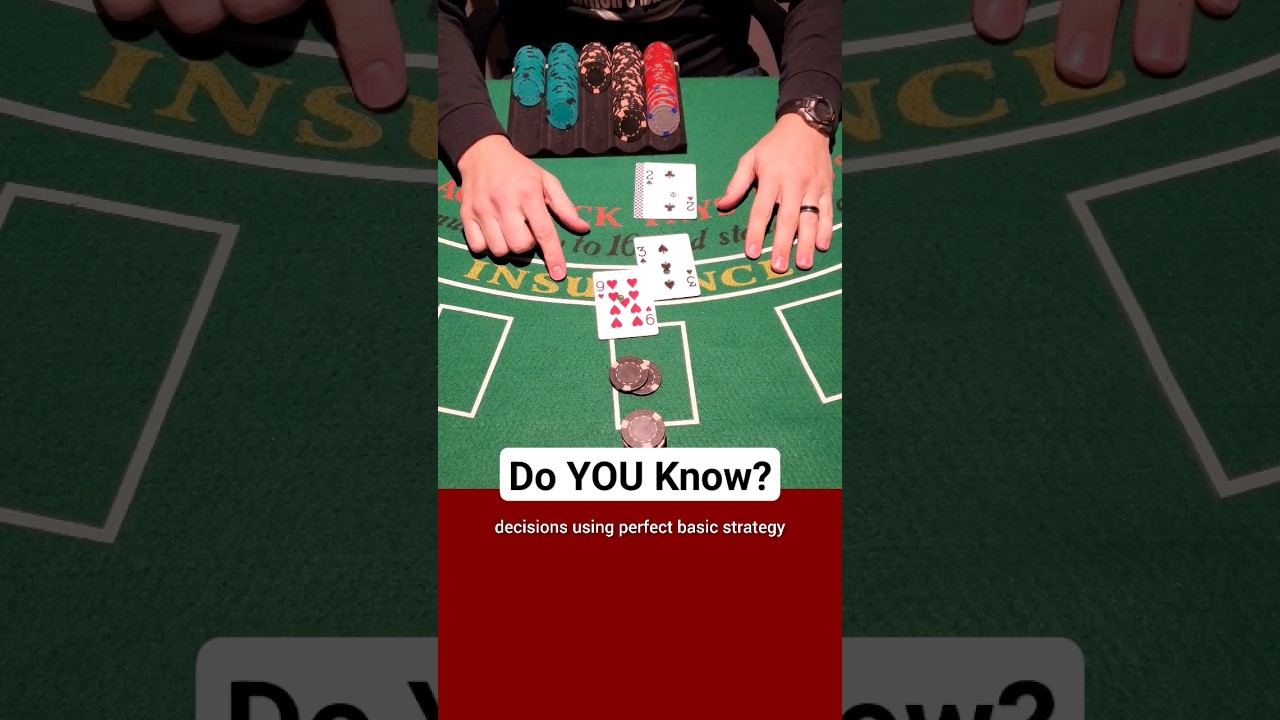
This journey will cover everything from the fundamental rules and player actions to the intricate details of the Basic Strategy Chart. We'll explore how to handle every possible hand, from hard totals to soft totals and tricky pairs. We'll also delve into bankroll management, table selection, and the statistical realities of the game, empowering you to play smarter, extend your time at the table, and maximize your chances of walking away a winner. Prepare to leave luck behind and embrace the power of strategy.
The Rules of the Game: Multi-Deck Blackjack
Before deploying any strategy, a rock-solid understanding of the rules is paramount. While the core objective remains the same, specific table rules can vary, directly impacting the house edge and your strategic decisions.
The Objective
Your primary goal is not to get 21, but to beat the dealer's hand. You win if:
- Your hand total is higher than the dealer's without exceeding 21.
- The dealer busts (exceeds 21) and you do not.
- You are dealt a 'Blackjack' (an Ace and a 10-value card) on your first two cards, and the dealer does not have one.
Card Values
- Cards 2 through 10: Count as their face value.
- Face Cards (Jack, Queen, King): All count as 10.
- Ace: The most flexible card, counting as either 1 or 11. A hand containing an Ace that counts as 11 is a 'soft hand' because it cannot bust with a single hit. A hand where the Ace must count as 1 to avoid busting is a 'hard hand'.
Player Actions
After the initial two cards are dealt, it's your turn to act. You must use clear hand signals at a live table. Your options are:
- Hit: Take another card. Signal by tapping the table behind your cards.
- Stand: Take no more cards and end your turn. Signal by waving your hand horizontally over your cards.
- Double Down: You can double your initial bet in exchange for receiving only one more card. You then must stand. This is a powerful move when you have a strong starting hand. You signal by placing an additional bet equal to your original bet next to it.
- Split: If your first two cards are of the same value (e.g., two 8s or a King and a Queen), you can split them into two separate hands. You must place a second bet equal to your first. You then play each hand independently. A crucial rule to look for is 'Double After Split' (DAS), which allows you to double down on one or both of your new hands, a very player-favourable rule.
- Surrender: Some tables offer 'Late Surrender'. After the dealer checks for Blackjack, you can choose to fold your hand and forfeit half of your bet. This is a strategic move used in very specific, unfavourable situations (like having a hard 16 against a dealer's 10).
- Insurance: When the dealer's upcard is an Ace, you'll be offered an 'insurance' bet. This is a side bet, typically half your original wager, that pays 2:1 if the dealer has a Blackjack. For a basic strategy player, this is statistically a bad bet and should almost always be avoided. It increases the house edge significantly.
Dealer's Gameplay & Payouts
Unlike the player, the dealer has no choice in how they play their hand. Their actions are dictated by fixed house rules. The most common rule is that the dealer must hit until their hand totals 17 or more. A critical rule variation to watch for is:
- Dealer Stands on Soft 17 (S17): The dealer stands on all hands totaling 17, including an Ace and a 6. This is more favourable for the player.
- Dealer Hits on Soft 17 (H17): The dealer must hit on a hand of Ace-6. This gives the house a slightly larger edge.
Payouts are straightforward:
- Standard Win: Pays 1:1 (even money). A RM50 bet wins RM50.
- Blackjack Win: Traditionally pays 3:2. A RM50 bet wins RM75. Crucially, avoid tables that pay 6:5 for Blackjack, as this significantly increases the house edge and is terrible for the player.
- Push: Your bet is returned.
The Winning Formula: Core Blackjack Strategy
This is where you separate yourself from the average gambler. Basic Strategy is a complete blueprint that dictates the single best mathematical play for every possible combination of your hand against the dealer's visible card. It was developed through computer simulations of millions of hands and is the cornerstone of playing smart Blackjack. By adhering to it perfectly, you reduce the house edge to its absolute minimum, typically around 0.5%.
How to Read a Basic Strategy Chart
A basic strategy chart is a grid. The player's hand is on the vertical axis, and the dealer's upcard is on the horizontal axis. You find the intersection of your hand and the dealer's card to see the correct action: Hit, Stand, Double, Split, or Surrender. We will break down the logic behind the chart into three categories of hands.
1. Hard Hands (No Ace or Ace as 1)
A 'hard' total is any hand without an Ace, or where the Ace must be counted as 1 to avoid busting. These are the most common hands and have rigid rules.
- 8 or less: Always Hit. You cannot bust and will always improve your hand.
- 9: Double Down if the dealer shows a 3, 4, 5, or 6. Otherwise, Hit. You are capitalizing on the dealer's weakness.
- 10: Double Down if the dealer shows a 2 through 9. Otherwise, Hit. This is a strong doubling hand.
- 11: Always Double Down (unless the dealer shows an Ace, then you Hit). This is the single best starting hand to double.
- 12: Stand if the dealer shows a 4, 5, or 6. Otherwise, Hit. This is a tricky hand; you stand because the dealer is likely to bust, and you don't want to risk busting yourself with a 10-value card.
- 13 to 16 (The 'Stiff' Hands): This is the decision zone that costs amateur players the most money. The rule is simple: Stand if the dealer shows a 2, 3, 4, 5, or 6. Hit if the dealer shows a 7, 8, 9, 10, or Ace. The logic is that when the dealer has a low card (2-6), they are in a weak position and have a higher chance of busting. Your goal is to not bust before they do. When they have a high card (7-Ace), they are likely to make a strong hand, so you must hit to improve your own total, despite the risk.
- 17 or more: Always Stand. The risk of busting is too high to justify hitting. Let the dealer try to beat you.
2. Soft Hands (Ace as 11)
A 'soft' total contains an Ace counted as 11. These hands are great because you can hit without any risk of busting. They offer excellent opportunities for doubling down.
- Soft 13 (A-2) to Soft 15 (A-4): Hit, but Double Down if the dealer shows a 5 or 6.
- Soft 16 (A-5) to Soft 17 (A-6): Hit, but Double Down if the dealer shows a 4, 5, or 6.
- Soft 18 (A-7): Stand if the dealer shows a 2, 7, or 8. Double Down if the dealer shows a 3, 4, 5, or 6. Hit if the dealer shows a 9, 10, or Ace. This is a complex but important play.
- Soft 19 (A-8) or more: Always Stand. You have a strong total that is likely to win.
3. Pairs (Splitting)
Splitting pairs is a powerful strategic option that can turn one mediocre hand into two strong ones, or get you out of a terrible situation.
- Always Split Aces and 8s: This is the most important splitting rule. Splitting Aces gives you two chances to hit a 10-value card for a powerful 21. Splitting 8s breaks up a terrible hand of 16 (the worst total in Blackjack) into two new hands starting with 8, which are much easier to play.
- Never Split 10s (10, J, Q, K) and 5s: A hand of 20 is a winning hand; don't break it up. A pair of 5s gives you a total of 10, which is an excellent hand to double down on, not split.
- Split 2s, 3s, and 7s: Split against a dealer's upcard of 2 through 7. Hit otherwise.
- Split 4s: Only split if the dealer shows a 5 or 6, and the rules allow Doubling After Split (DAS). Otherwise, just hit.
- Split 6s: Split against a dealer's upcard of 2 through 6. Hit otherwise.
- Split 9s: Split against a dealer's 2 through 6, and also against 8 and 9. Stand against a 7, 10, or Ace. You stand because your 18 is likely to beat a dealer's 7 and is a push against their potential 18, but it's not strong enough to risk splitting against a 10 or Ace.
Advanced Considerations for Malaysian Players
Bankroll Management: Never play with money you can't afford to lose. A good rule of thumb is to have a total bankroll that can sustain at least 50-100 minimum bets. Use a flat betting strategy (betting the same amount each hand) to minimize risk. Avoid chasing losses and set clear win/loss limits for each session.
Table Selection: Before you even sit down, inspect the table rules. Always prioritize tables with:
- Blackjack pays 3:2 (this is non-negotiable)
- Dealer Stands on Soft 17 (S17)
- Double After Split (DAS) is allowed
- Late Surrender is offered
Blackjack by the Numbers: Odds and Probabilities
Understanding the math behind Blackjack is what elevates your game from guesswork to calculated strategy. While you don't need to be a math genius, knowing key statistics illuminates why Basic Strategy works and reinforces your discipline at the table.
The entire game revolves around the dealer's upcard. This single piece of information dictates your strategy because it gives you a clue about the dealer's likely final hand. The most critical statistic to understand is the dealer's probability of busting based on their upcard.
Dealer's Bust Probability:
- If the dealer's upcard is a 2, 3, 4, 5, or 6, their chance of busting is significantly higher (around 35-42%). This is why Basic Strategy tells you to be more conservative with your own hand (e.g., standing on a hard 12-16). You are playing the odds that the dealer will bust.
- If the dealer's upcard is a 7, 8, 9, 10, or Ace, their chance of busting is much lower (around 17-26%). They are more likely to make a strong hand of 17 or higher. This is why Basic Strategy tells you to be more aggressive and hit your stiff hands (12-16), as you need a better total to compete.
Below is a table highlighting some crucial statistics and the impact of rule variations on the house edge. A positive percentage represents a gain for the player, while a negative percentage is a loss.
| Statistic / Rule Variation | Effect on House Edge | Comment |
|---|---|---|
| Player uses Basic Strategy | +2.0% to +3.0% | Reduces house edge from ~2.5% to ~0.5%. The single biggest factor. |
| Blackjack pays 6:5 instead of 3:2 | -1.39% | Drastically increases the house edge. Avoid these tables. |
| Dealer Hits on Soft 17 (H17) | -0.22% | This rule helps the dealer improve their hand, increasing the house edge. |
| Double After Split (DAS) Allowed | +0.14% | A very player-favourable rule. |
| Late Surrender Offered | +0.08% | A helpful option that slightly reduces the house edge. |
| Number of Decks (8 vs 1) | -0.61% | More decks slightly increase the house edge compared to single-deck games. |
| Probability of Player Busting on Hit | Varies Greatly | 16% on a total of 11 or less, 31% on 12, up to 69% on 16. |
| Probability of getting a Natural Blackjack | ~4.8% | This happens roughly 1 in every 21 hands. |
The table clearly shows why table selection is so important. Playing at a table with a 6:5 payout is like giving the casino an extra 1.4% advantage right from the start, effectively wiping out most of the gains from using Basic Strategy. Similarly, seeking out tables where the dealer stands on soft 17 (S17) and allows doubling after a split (DAS) are small but meaningful ways to chip away at the house advantage.
Another common misconception is the 'flow' of the cards or being 'due' for a win. In a multi-deck game dealt from a shoe, each hand is an independent event with probabilities that are only marginally affected by the cards already played. The idea that a string of losses means a win is coming soon is the Gambler's Fallacy. The only way to track the changing composition of the deck is through card counting, a very advanced skill that is less effective with 6-8 decks and often impossible with Continuous Shuffling Machines (CSMs) used in many modern casinos. For 99% of players, sticking to Basic Strategy on every single hand is the only 'system' that works.
A Step-by-Step Guide to Playing a Hand
Knowing the rules and strategy is one thing; applying them smoothly at a live casino table is another. This walkthrough will guide you through the process, from sitting down to cashing out, ensuring you look and play like a seasoned player.
Step 1: Joining a Table & Buying In
Find a table with a free spot and betting limits that suit your bankroll. In casinos like Genting Highlands, it's proper etiquette to wait until the current round is over before joining. Do not hand your money directly to the dealer. Instead, place your cash on the felt outside the betting areas. The dealer will exchange it for chips, and the pit boss will oversee the transaction. This is a standard security procedure. Stack your chips neatly in front of you.
Step 2: Placing Your Bet
Before the dealer starts a new round, place your desired amount of chips in the betting circle or square in front of you. Be sure to do this before the dealer waves their hand over the table and announces 'No more bets'.
Step 3: The Deal
The dealer will deal two cards to each player, usually face up in multi-deck games. They will also deal two cards to themselves, one face up (the upcard) and one face down (the hole card). Your first task is to assess your hand: calculate your initial total and identify the dealer's upcard. This pairing is all you need to consult your mental Basic Strategy chart.
Step 4: Making Your Decision
The dealer will move around the table, starting from their left (first base), prompting each player for a decision. When it's your turn, you must make a clear decision using standard hand signals. Verbal commands may not be accepted for security reasons, as the cameras need to see your actions.
Let's use a scenario: You are dealt a 9 and a 2 (total 11). The dealer's upcard is a 5.
- Your Thought Process: 'My hand is a hard 11. Basic strategy for 11 is always to double down, especially against a weak dealer card like a 5.'
- Your Action: You place a second bet equal to your first one just next to your original wager in the betting circle. The dealer will understand this as the signal to Double Down. They will give you one, and only one, additional card. Let's say it's a King. Your final total is 21. You now must stand.
Common Hand Signals:
- Hit: Tap your finger(s) on the table behind your cards.
- Stand: Wave your hand horizontally, palm down, over your cards.
- Double Down/Split: Place the secondary bet next to your original bet. For splitting, you can also hold up two fingers to clarify.
Step 5: The Dealer's Turn
After all players have completed their hands (either by standing or busting), the dealer will reveal their hole card. They will then play out their hand according to the fixed house rules (e.g., hit until 17 or more). In our scenario, the dealer's 5 is joined by a hole card of 10, for a total of 15. The house rule dictates they must hit. They draw an 8, busting with a total of 23.
Step 6: The Payout (The Settlement)
The dealer will now settle the bets. They will collect the chips from all players who busted or had a lower total than them. Then, they will pay the winners. In our scenario, since the dealer busted, all remaining players win. You doubled your bet on 11 and made 21. Your original bet and the doubled portion both win a 1:1 payout. The dealer will place the winning chips next to your wager.
Step 7: Cashing Out
When you are ready to leave, wait for the end of a round. Then, push your stacks of chips forward and inform the dealer you'd like to 'colour up'. They will consolidate your smaller denomination chips into larger ones, making them easier to carry. You then take these chips to the casino cage to exchange them for cash.
Expert Verdict: Is Multi-Deck Blackjack Beatable?
After diving deep into the rules, statistics, and strategies, we arrive at the ultimate question for every Malaysian player: can you consistently win at multi-deck Blackjack? The answer is nuanced but encouraging. No, you cannot guarantee a win every time you play. The casino always maintains a slight mathematical edge in the long run. However, Blackjack is unequivocally 'beatable' in the sense that you can dramatically reduce that house edge to one of the lowest of any game in the casino, giving you a legitimate fighting chance to walk away with a profit in any given session.
The key takeaway from this entire guide can be distilled into one principle: master and trust Basic Strategy. This is not a suggestion; it is the absolute foundation of successful play. Players who rely on gut feelings, follow the dealer, or mimic other players' incorrect decisions are effectively donating money to the casino, playing with a house edge of 2% or more. By contrast, the disciplined player who makes the correct mathematical move on every single hand—hitting a hard 16 versus a dealer's 10, doubling a soft 18 versus a 6, and always splitting Aces and 8s—is playing a completely different game. They are operating with a house edge of just ~0.5%.
What does this mean in practical terms? It means your bankroll lasts longer. It means you experience less volatility. It means you get to play more hands for your money, maximizing your entertainment and your opportunities to hit a hot streak. While the house still expects to make 50 cents for every RM100 wagered in the long run, the short-term variance can easily swing in your favour.
Our expert verdict is this: Multi-deck Blackjack is the thinking player's game. It rewards preparation, discipline, and knowledge. Your success is not determined by a lucky charm but by your commitment to strategy. For players in Malaysia, whether at a physical casino or online, the path to becoming a better Blackjack player is clear:
- Learn Basic Strategy: Memorize the chart or print one out and practice with free online games until the decisions become second nature.
- Select the Right Table: Never compromise on a 3:2 payout. Look for other player-favourable rules like S17 and DAS.
- Manage Your Money: Play within your limits, use a consistent betting strategy, and know when to walk away.
- Play Responsibly: The goal is to use skill to have the best possible chance to win, not to treat it as a source of income. Enjoy the challenge and the thrill of playing a casino game intelligently.
By following this blueprint, you are no longer just a passive participant hoping for luck. You become an active challenger, making optimal decisions to pressure the dealer and exploit the statistical realities of the game. That is how you truly master multi-deck Blackjack.