Mastering Blackjack: The Hi-Lo System for Malaysian Players
Welcome to the definitive guide to the Blackjack Hi-Lo card counting system, tailored specifically for players in Malaysia. For decades, Blackjack has been more than just a game of chance; it's a battle of wits where skill and strategy can genuinely turn the tables on the house. While most players rely on luck, a select few use a powerful technique to gain a statistical advantage: card counting. This guide demystifies the most popular and effective method, the Hi-Lo system, providing you with the knowledge to elevate your game from a simple pastime to a calculated discipline.
Card counting is not about memorising every card played. It's a system for tracking the ratio of high-value cards to low-value cards left in the deck or shoe. When the remaining cards are rich in high cards (Aces and 10s), the advantage shifts to the player. When they are rich in low cards, the advantage swings back to the dealer. The Hi-Lo system is a simple yet potent way to quantify this advantage, allowing you to bet more when the odds are in your favour and less when they are not. It's a skill, not a form of cheating, and it's your key to unlocking long-term profitability in Blackjack.
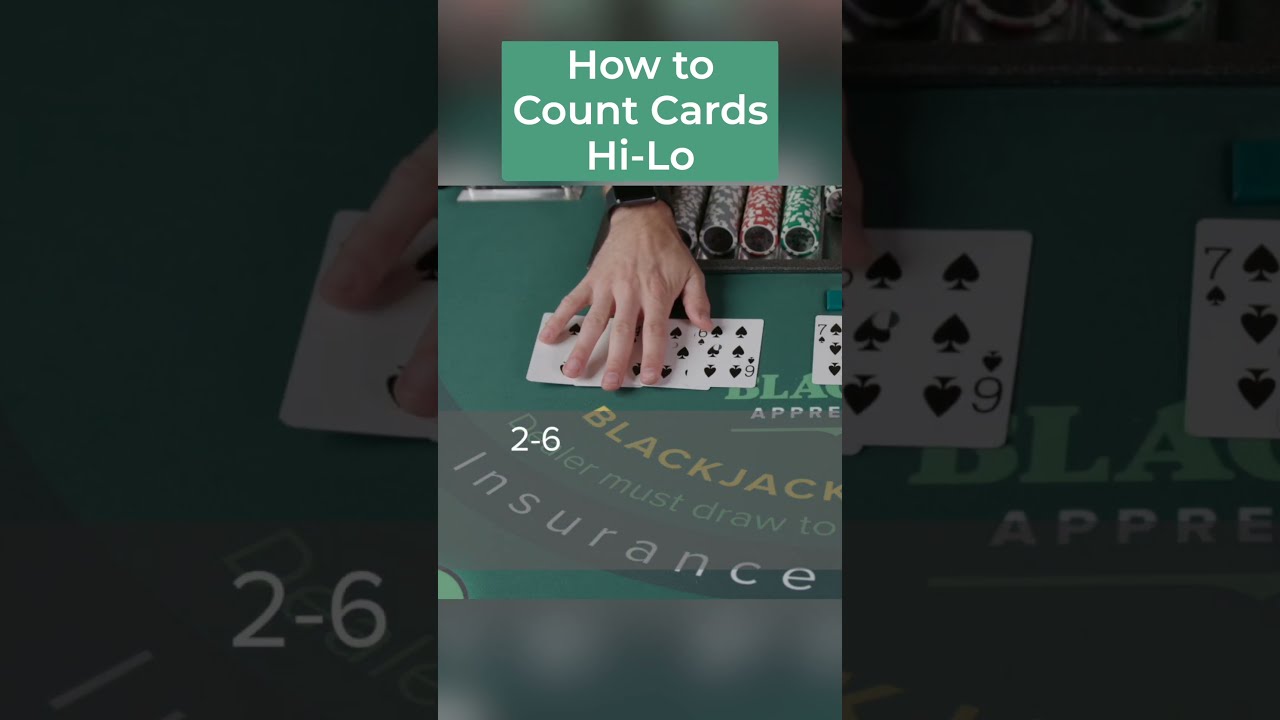
For Malaysian players, who often engage with Blackjack through sophisticated online live dealer platforms, mastering the Hi-Lo system is more accessible than ever. This guide will walk you through every aspect, from the basic principles to advanced tactics like bet spreading and playing deviations. We will cover the mathematics behind the strategy, provide a step-by-step practice regimen, and offer an expert verdict on its viability in the modern gaming landscape. Prepare to transform your understanding of Blackjack and learn the skills that separate the amateurs from the pros.
Hi-Lo Rules & Core Concepts
Before you can apply the Hi-Lo system, you must understand its fundamental 'rules'. This isn't about the rules of Blackjack itself—which you should already know perfectly—but the mechanics of the counting system. Hi-Lo is revered for its simplicity and power, making it the ideal starting point for any aspiring card counter.
The Card Values
The entire Hi-Lo system is built on assigning a simple point value to every card that is dealt from the shoe. This allows you to maintain a single number, the 'running count', which reflects the composition of the cards played. The values are straightforward:
- Low Cards (2, 3, 4, 5, 6): These cards are assigned a value of +1. They are 'good' for the dealer, as they help make low, stiff hands (like 12-16) without busting. Removing them from the deck is therefore good for the player.
- Neutral Cards (7, 8, 9): These cards are assigned a value of 0. They do not significantly favour the player or the dealer, so they are ignored in the count.
- High Cards (10, Jack, Queen, King, Ace): These cards are assigned a value of -1. They are 'good' for the player, increasing the chances of getting a Blackjack (which pays 3:2), making double downs more profitable, and increasing the dealer's probability of busting. Removing them from the deck is bad for the player.
The Running Count (RC)
The running count is the continuous tally you keep in your head as cards are dealt. You start at zero after a shuffle. For every card you see, you add or subtract its assigned Hi-Lo value. For example, if the first hand dealt shows a 5 (+1), a King (-1), a 2 (+1), and an 8 (0), your running count would be +1 -1 +1 +0 = +1. You do this for every player's cards and the dealer's upcard. A positive running count means more low cards have been removed, leaving a higher concentration of high cards. A negative running count means the opposite.
The True Count (TC) - The Key to Accuracy
The running count is useful, but it's not the whole story. A running count of +10 is incredibly powerful if there's only one deck left to be played, but it's almost meaningless if there are seven decks remaining. To account for this, we must convert the running count into the true count. The true count is the real measure of your advantage.
The formula is simple: True Count = Running Count / Number of Decks Remaining
This is the most challenging part of counting for beginners. It requires two skills: maintaining the running count and accurately estimating the number of decks left in the shoe or discard tray.
Deck Estimation
Casinos typically use a 6 or 8-deck shoe. To estimate the remaining decks, look at the discard tray. If you're playing with 6 decks and you estimate that 2 decks' worth of cards are in the tray, you have 4 decks remaining. You then divide your running count by 4 to get your true count. For example, if your running count is +12 and you estimate 4 decks remaining, your true count is +3 (12 / 4). It's this true count of +3, not the running count of +12, that dictates your betting and playing strategy. Most counters don't calculate precise fractions; they round down or to the nearest integer to be more conservative. For instance, if the RC is +7 and 3 decks remain, the TC is 7/3 = 2.33. You would typically use a TC of +2 for your strategic decisions.
The Complete Hi-Lo Strategy Guide
Knowing the Hi-Lo system's rules is one thing; applying it effectively under pressure is another. A successful card counter integrates four distinct skills into a seamless strategy: perfect basic strategy, count-based bet spreading, strategic playing deviations, and casino camouflage.
Prerequisite: Flawless Basic Strategy
Let's be unequivocally clear: card counting is utterly useless without perfect mastery of Basic Strategy. Basic strategy is the mathematically correct way to play every possible hand against every dealer upcard. It reduces the house edge to a mere ~0.5%. Card counting provides the small, additional edge on top of this foundation. If you make basic strategy errors, you will lose more money than counting can ever make you. Before even attempting to count, you must be able to play basic strategy automatically, without hesitation. Download a basic strategy chart for the specific rules of your game (e.g., 6 decks, dealer stands on soft 17) and drill it until it's second nature.
Bet Sizing: The Bet Spread
The primary way card counters make money is by betting more when they have an advantage. This is called bet spreading. The size of your bet should be directly correlated to the true count.
- Negative or Zero True Count (TC ≤ +1): The house has the edge. You should place your smallest possible wager, the 'unit' bet. This could be RM25, RM50, or whatever your minimum is.
- Positive True Count (TC ≥ +2): The edge is shifting to you. Now is the time to increase your bet. A common strategy is to multiply your unit bet by the true count minus one.
Example Bet Spread (1-8 Units):
- TC +1 or lower: Bet 1 unit (e.g., RM25)
- TC +2: Bet 2 units (e.g., RM50)
- TC +3: Bet 4 units (e.g., RM100)
- TC +4: Bet 6 units (e.g., RM150)
- TC +5 or higher: Bet 8 units (e.g., RM200)
Your bet spread is a balance between maximising profit and avoiding detection. A wider spread (e.g., 1-12 units) is more profitable but also more likely to attract unwanted attention from the pit boss. A narrower spread (e.g., 1-4 units) is safer but less profitable.
Playing Deviations: The 'Illustrious 18'
While basic strategy is your foundation, extremely high or low true counts can make it mathematically correct to deviate from it. These are advanced plays that squeeze out extra profit. The most important deviations are known as the 'Illustrious 18'. Here are some of the most crucial ones:
- Insurance: Basic strategy says to never take insurance. However, with Hi-Lo, you should take insurance at a True Count of +3 or higher. At this point, the deck is so rich in 10-value cards that the dealer is statistically likely to have Blackjack.
- Player 16 vs. Dealer 10: Basic strategy says to hit. At a TC of 0 or higher, you should stand.
- Player 15 vs. Dealer 10: Basic strategy says to hit. At a TC of +4 or higher, you should stand.
- Player 12 vs. Dealer 3: Basic strategy says to hit. At a TC of +2 or higher, you should stand.
- Player 12 vs. Dealer 2: Basic strategy says to hit. At a TC of +3 or higher, you should stand.
- Player 13 vs. Dealer 2: Basic strategy says to hit. At a TC of -1 or lower, you should hit instead of standing. (A negative count deviation).
- Player 10 vs. Dealer 10: Basic strategy says to hit. At a TC of +4 or higher, you should double down.
Mastering these deviations adds another layer of profitability to your game, but they should only be attempted after you have perfected counting and bet spreading.
Camouflage and Casino Etiquette
Card counting is legal, but casinos are private businesses and can ask you to leave for any reason. If they identify you as a counter (an 'advantage player'), they will either 'back you off' (tell you to stop playing Blackjack) or ban you entirely. This is less of a physical threat in Malaysian online casinos but their software and live dealer managers are trained to spot counters. Here’s how to blend in:
- Don't be a robot: Don't stare intently at the cards. Engage in light conversation with the dealer or other players.
- Control your bet jumps: Jumping from a RM25 bet to a RM300 bet is a massive red flag. Try to 'parlay' your wins to mask your big bet increases. For example, after winning a RM100 bet, press it to RM200 on the next hand if the count is still high.
- Don't play every hand: If the count is deeply negative, sit out a hand or two. Take a 'phone call' or go to the toilet.
- Tip the dealer: This makes you look like a regular gambler, not a professional.
- Don't play for hours at one table: Keep your sessions short (45-60 minutes) and move around.
Blackjack Hi-Lo: The Numbers Game
The Hi-Lo system isn't magic; it's pure mathematics. Understanding the statistics behind why it works will solidify your confidence and improve your execution. The core principle is that a deck rich in high cards (Aces and 10s) systematically benefits the player, while a deck rich in low cards (2s through 6s) benefits the dealer.
Why High Cards Help the Player
- More Blackjacks: The player is paid 3:2 for a Blackjack (an Ace and a 10-value card). The dealer is only paid 1:1. Therefore, a higher frequency of Blackjacks disproportionately benefits the player.
- Better Doubling Hands: Many player hands, such as 10 or 11, are ideal for doubling down. A high-card-rich deck increases the probability of receiving a 10 or Ace to complete a strong total of 20 or 21.
- Dealer Busts More Often: The dealer must hit on hands of 12-16. A deck full of 10s makes it much more likely that the dealer will bust when forced to take a card. The player, in contrast, has the option to stand on these totals.
Why Low Cards Help the Dealer
Low cards are the dealer's best friend. When the dealer has a 'stiff' hand like 14, 15, or 16, a low card (like a 4, 5, or 6) allows them to draw to a competitive total (18, 19, 20) without busting. When these low cards are removed from the deck (resulting in a positive count), the dealer's chances of busting on these stiff hands increase dramatically, which is great for the player.
From House Edge to Player Advantage
By playing with perfect basic strategy, you reduce the casino's inherent advantage to approximately 0.5%. Card counting allows you to identify moments when this advantage flips in your favour. A good rule of thumb is that for every +1 point of the True Count, the player's advantage increases by about 0.5%. This means:
- TC +1: The game is roughly even (0% edge for either side).
- TC +2: The player has a ~0.5% advantage.
- TC +3: The player has a ~1.0% advantage.
- TC +4: The player has a ~1.5% advantage.
- TC +5: The player has a ~2.0% advantage.
While a 2% edge might sound small, when combined with a significant bet spread, it generates substantial long-term profit.
| Metric | Condition | Statistic |
|---|---|---|
| Player Advantage | True Count +1 | ~0.0% |
| Player Advantage | True Count +3 | ~1.0% |
| Player Advantage | True Count +5 | ~2.0% |
| Insurance Bet | True Count +3 | Becomes a profitable play |
| Player 16 vs Dealer 10 | True Count 0 | Stand becomes correct play |
| Bankroll Swing | Standard Deviation | High; large fluctuations are normal |
| Required Bankroll | For 1-10 spread, <1% Risk of Ruin | ~1000 betting units |
| Game Impact | 6:5 vs 3:2 Blackjack Payout | Increases house edge by ~1.4% (Avoid 6:5 games) |
How to Practice and Play Hi-Lo Like a Pro
Becoming a proficient card counter is a journey of dedicated practice. You can't just read this guide and expect to win. You must build muscle memory for each component of the strategy until it becomes automatic. Here is a step-by-step training regimen for Malaysian players looking to master Hi-Lo.
Step 1: Master Basic Strategy to Perfection
This is non-negotiable. Use a basic strategy chart and practice until you achieve 100% accuracy. Use online trainers or deal cards to yourself. You should be able to answer 'What do you do with a 12 against a dealer's 3?' instantly ('Hit'). Do not proceed until basic strategy is as natural as breathing.
Step 2: Practice the Running Count (Single Deck)
Take a single deck of cards. Start your count at 0. Deal the cards one by one, face up, calling out the count with each card. 'Five, plus one. King, zero. Ace, minus one. Two, zero...' and so on. When you reach the end of the deck, your final count must be exactly 0. If it's not, you made a mistake. Reshuffle and do it again. Time yourself. Your goal is to be able to count down a full deck accurately in under 25 seconds.
Step 3: Practice with Distractions
A casino, whether online or physical, is a distracting environment. You need to be able to maintain your count amidst noise and activity. Practice counting while the TV is on, while listening to music, or while having a conversation. Have a friend try to distract you. This is a critical step in making your skill robust enough for real-world application.
Step 4: Practice Deck Estimation and True Count Conversion
This is where the real mental gymnastics begin. Take a 6-deck shoe (or just a large pile of cards). Practice grabbing a chunk of cards, putting them in a 'discard tray', and estimating how many decks are left. For example, if you start with 6 decks and the discard pile looks about the size of 2 decks, you have 4 remaining. Now, practice doing the mental division. If your running count is +9 and you estimate 3 decks left, you must instantly know the true count is +3. Drill this over and over with random running counts and deck estimations.
Step 5: Full Simulation
Now, combine everything. Use a free online blackjack game or a dedicated card counting trainer software. Or, simply deal a full game to yourself and imaginary players at home. You must simultaneously:
- Play every hand according to perfect basic strategy.
- Keep an accurate running count of all cards seen.
- Estimate the remaining decks after each hand.
- Calculate the true count.
- Adjust your bet for the next hand based on the true count.
- Look for and apply any relevant playing deviations.
This is the full process. It will feel overwhelming at first, but with hours of practice, it will become a fluid, integrated skill.
Step 6: Applying the Skill in Malaysia
For most Malaysian players, the primary venue will be online live dealer casinos. This has pros and cons.
Pros: You can be more discreet. You can have a basic strategy chart open on another screen. The financial transactions are digital and private.
Cons: The pace can be very fast, giving you little time to think. The casino uses software to track betting patterns, which can flag large, correlated bet spreads. Deck penetration (how much of the shoe is dealt before shuffling) might be poor (e.g., shuffling after only 50% is dealt), which limits high-count opportunities. Start with very low stakes to get a feel for the pace and environment before committing a real bankroll.
Is the Hi-Lo System Worth It in Malaysia?
After exploring the intricacies of the Hi-Lo system, the ultimate question remains: is it a worthwhile endeavour for a player in Malaysia? The answer is a qualified 'yes', but it depends entirely on your dedication, discipline, and expectations.
The Unquestionable Effectiveness
Mathematically, the Hi-Lo system is sound. For over 50 years, it has been proven to give players a consistent, long-term advantage over the casino. By betting more when the deck is favourable and less when it is not, a skilled counter can achieve a player edge of up to 2%. This is not a theoretical advantage; it's a real, achievable edge that has been used to win millions of dollars over the years. The logic is undeniable: when you know there are more Aces and 10s left to be played, you are in a powerful position, and Hi-Lo is the most efficient way to identify these situations.
Legality and Practicality in the Modern Era
It is crucial to understand that card counting is not illegal. You are simply using your brain to play the game skillfully, which is the definition of an advantage player. However, casinos are private establishments and reserve the right to refuse service to anyone. If they suspect you are counting, they will take action. In a physical casino, this might mean a tap on the shoulder from the pit boss. In the online live dealer casinos popular in Malaysia, this 'tap' comes from sophisticated software algorithms that monitor your betting patterns. If your bets consistently rise and fall with the count, you risk having your account flagged or limited.
This is why the art of camouflage is just as important as the skill of counting. Blending in, making your bet spreads look natural, and avoiding robotic play are essential for longevity. The online environment offers some cover, but the digital surveillance is relentless.
The Crucial Factor: Commitment and Bankroll
Card counting is not a get-rich-quick scheme. It is a serious skill that requires a significant investment of time and capital. Expect to spend at least 100 hours of dedicated, focused practice before you are proficient enough to play with real money. You must be able to count flawlessly in a distracting environment and have basic strategy and key deviations memorised.
Furthermore, you need a substantial bankroll to withstand the natural variance of the game. Even with a positive edge, you will experience losing streaks. A common rule is to have a bankroll of at least 100 times your maximum bet to keep your risk of ruin below 1%. If your max bet is RM200, you need a dedicated blackjack bankroll of at least RM20,000.
Final Expert Recommendation
For the casual Malaysian player who enjoys Blackjack as a fun night out or a way to pass the time, card counting is likely not worth the immense effort. The time investment required far outweighs the potential returns for infrequent play.
However, for the serious, disciplined player who sees Blackjack as a solvable puzzle and is willing to dedicate the time to master a complex skill, the Hi-Lo system is the gold standard. It is a proven path to turning a game of chance into a source of long-term profit. If you are patient, analytical, well-capitalised, and ready to put in the work, the Hi-Lo system offers you the rare opportunity to beat the house at its own game.